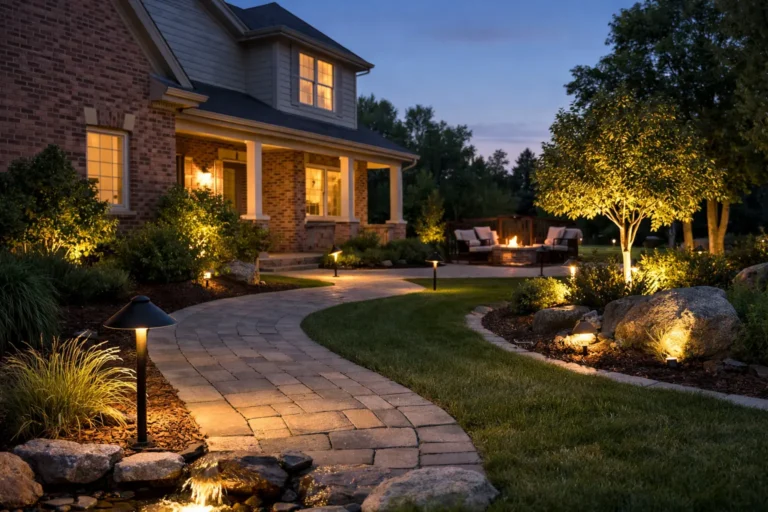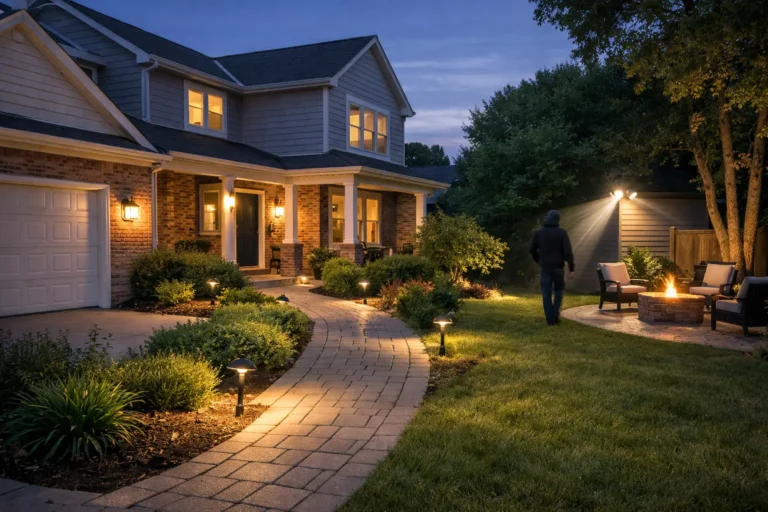
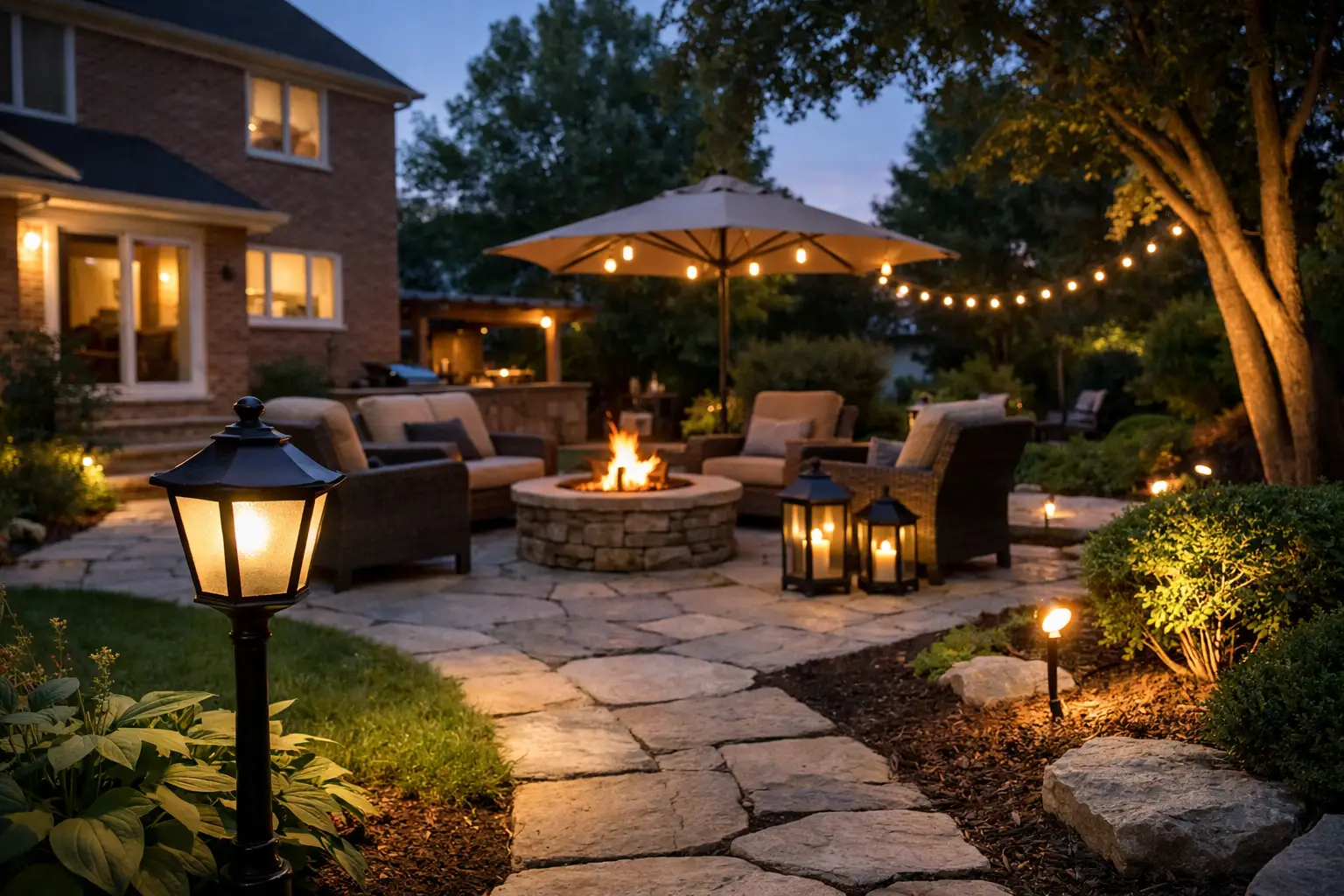
A lot of homeowners start thinking about outdoor lighting after one of two things happens. Either they pull into the driveway at night and the house disappears into the dark, or somebody misses a step on the walkway and suddenly lighting becomes a lot more than a nice extra. If you are wondering how to choose outdoor lighting, the best place to start is not with fixture styles. It is with how you actually use your yard, driveway, entry, and outdoor living space.
That is where many people get off track. They shop for lights before they decide what the lights need to do. A good lighting plan should make your home look better, feel safer, and work well through real Illinois weather. It should also fit the shape of your property instead of just checking a box.
How to choose outdoor lighting starts with the goal
Before you pick one fixture, ask yourself a simple question: what am I trying to improve? For some Chicagoland homeowners, the main issue is safety. Maybe the front walk is too dark, the side yard has poor visibility, or the back steps need better light in winter. For others, the goal is curb appeal. They want the front of the house to stand out at night instead of going flat and dark.
Sometimes the goal is both. That is common in the Chicago suburbs, especially on properties with longer driveways, mature landscaping, patios, or uneven grade changes. Lighting can help guests move around more safely, but it can also show off stonework, planting beds, trees, and architectural details.
Here is what to look for. If your main problem is visibility, focus first on paths, stairs, entries, and transitions between spaces. If your main goal is appearance, think about where the eye should go. That might be the front door, a large tree, columns, a pergola, or a sitting area in the backyard.
Pick the areas that matter most
You do not need to light every inch of the property. In fact, too much lighting can make a yard feel harsh and overdone. The better approach is to light the areas people actually use and the features worth showing off.
For most Illinois homes, the priority areas are the front entry, front walk, driveway edges, back patio, stairs, and any dark side yards. If you have a fence gate, detached garage, or a path to a backyard entertaining area, those can matter too. On larger lots in the western suburbs, you may also want to light deeper parts of the yard so the property does not just fall off into darkness a few feet past the house.
This is where layout matters. A narrow front walk needs a different setup than a wide paver path. A small ranch home needs a different look than a two-story home with a deep setback. Good outdoor lighting should feel balanced. It should guide movement without making the yard look like a parking lot.
Choose fixture types based on function
Once you know your priorities, fixture selection gets much easier. Different lights do different jobs, and trying to force one type of fixture to handle everything usually leads to disappointment.
Path lights are great for walkways, garden edges, and low-level guidance. They help define where to walk, but they are not meant to flood the whole yard with brightness. Spotlights and uplights are better when you want to highlight trees, house features, or stone columns. Downlights can work well for larger areas like patios or seating spaces, especially when mounted from a structure. Step lights help with changes in elevation, which is a big deal on properties with retaining walls, stoops, or raised patios.
Wall-mounted fixtures near doors and garages are important too, but they need the right size and brightness. If they are too small, they get lost. If they are too bright, they create glare and make it harder to see beyond the immediate area.
A good landscape should look nice, but it also needs to work. That means choosing fixtures based on what each area needs, not just what looks best in a catalog.
Brightness matters more than most homeowners think
One of the biggest mistakes people make is assuming brighter always means better. It usually does not. Too much light creates glare, strong shadows, and an uneven look. It can also make your home feel less welcoming.
The goal is layered light. You want enough brightness to move safely and see key features, but not so much that every surface looks washed out. Softer, well-placed light tends to look better than a few overpowering fixtures.
In Illinois, this matters because outdoor spaces get used differently throughout the year. During the long dark stretch of late fall and winter, lighting has to do more work. You may be getting home after dark for months at a time. Snow can also reflect light and make bright fixtures feel even more intense. A well-balanced setup handles that better than one that is overly aggressive from the start.
Think about color temperature and the look of the home
Not all white light looks the same. Some lighting has a cooler, whiter tone. Other lighting has a warmer tone that feels softer and more natural around homes. For most residential properties, warmer light is the better fit.
Why? Because it tends to flatter brick, stone, siding, and landscaping better than colder light. Many homes in Naperville, Downers Grove, Hinsdale, and nearby suburbs have materials and architecture that look best with a warm, inviting glow instead of a sharp bluish tone.
This may sound like a small detail, but it changes the whole feel of the property at night. The wrong light color can make a beautiful front elevation feel sterile. The right one can make the house look finished and comfortable.
Durability is a real part of how to choose outdoor lighting
Outdoor lighting in Illinois has to deal with freeze-thaw cycles, rain, summer heat, wind, and snow. So when you are deciding how to choose outdoor lighting, do not just focus on the nighttime look. Pay attention to how the system will hold up.
This is where many homeowners run into trouble. They buy lower-quality fixtures that look fine at first, then start seeing rust, loose connections, shifting lights, or inconsistent performance. The ground moves. Mulch gets refreshed. Snow gets piled near beds and walkways. Lawns get edged. A lighting system has to survive real yard conditions, not just ideal ones.
Materials matter. Installation depth matters. Wire routing matters. Placement matters. If the fixture is in the wrong spot, even a good product can become a headache. That is one reason professional planning pays off. A system should be designed around how the yard is maintained, not just where lights can fit on day one.
Match the lighting to the landscape and hardscape
The best outdoor lighting feels connected to the whole property. It should work with your landscaping, not compete with it. If you already have paver walkways, retaining walls, ornamental trees, or a patio, the lighting should support those features.
For example, a front yard with strong foundation plantings may benefit from subtle uplighting on a few key shrubs or a specimen tree. A backyard patio may need a mix of functional light near steps and softer ambient light near the seating area. A long driveway may need gentle edge definition, not a row of glaring fixtures.
If your property also has drainage challenges, grade changes, or heavy water flow in certain areas, that should be part of the conversation too. You do not want water sitting near your foundation, and you also do not want lighting installed in places where standing water or runoff will keep causing problems.
Control options should fit your routine
A good system is only helpful if you actually use it. Some homeowners want simple automatic scheduling. Others prefer app-based controls, dimming, or seasonal adjustments. There is no single right answer.
The main thing is to choose a setup that fits your routine. If you want the lights on every evening without thinking about it, automatic timing makes sense. If you entertain often or want flexibility for different seasons, more control may be worth it. What you do not want is a setup that feels fussy or gets ignored because it is inconvenient.
Know when a custom plan makes more sense
Some homes only need a few key upgrades. Others need a full lighting plan because the property has multiple use areas, deep setbacks, larger beds, or architectural features worth highlighting. That is why cookie-cutter layouts rarely give the best result.
A custom plan helps you avoid common problems like overlighting the front and ignoring the sides, placing fixtures too close together, or highlighting the wrong features. It also helps you phase the project if needed. You may start with the front entry and walk, then add backyard lighting later.
For many Chicagoland homeowners, that practical approach works well. You improve safety and curb appeal now, then build on it over time.
If you are looking at your yard and not sure where to begin, start with the places that need to function better after dark. From there, add the features that make the property feel more finished, more usable, and more like home.