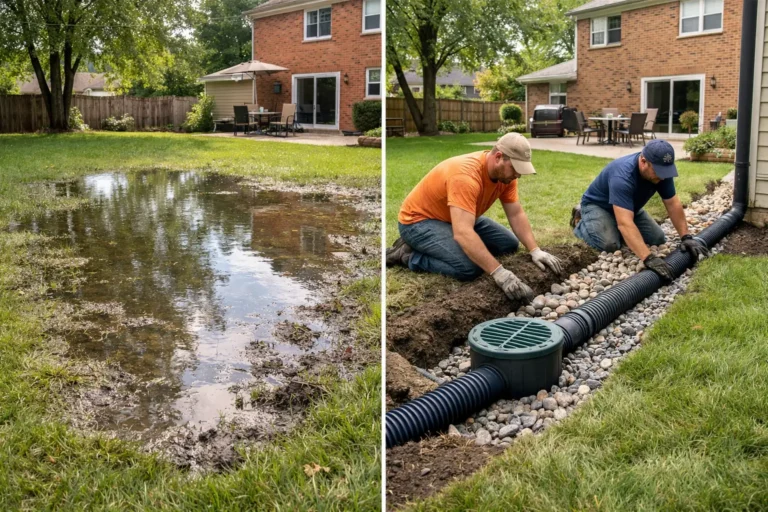
If you have puddles that hang around for days, soggy grass near the house, or mulch that keeps washing into the lawn, you are already dealing with a drainage issue whether it feels serious yet or not. This residential drainage guide is built for Illinois homeowners who want to understand what is happening in their yard and what to do next before water starts causing bigger problems.
In the Chicago suburbs, drainage issues show up in a lot of different ways. Some yards stay muddy after every storm. Some have water pooling near the foundation. Others get ice on walkways in winter because water never drains the right way in the first place. A good landscape should look nice, but it also needs to work. If the water has nowhere to go, the rest of the yard usually pays for it.
Why drainage matters more in Illinois
In Illinois, this matters because our weather puts a lot of pressure on residential properties. We get spring rains, summer downpours, falling leaves that clog gutters, and freeze-thaw cycles that make low spots and drainage failures worse over time. Add in heavy clay soil, which is common in many Chicagoland neighborhoods, and water can sit much longer than homeowners expect.
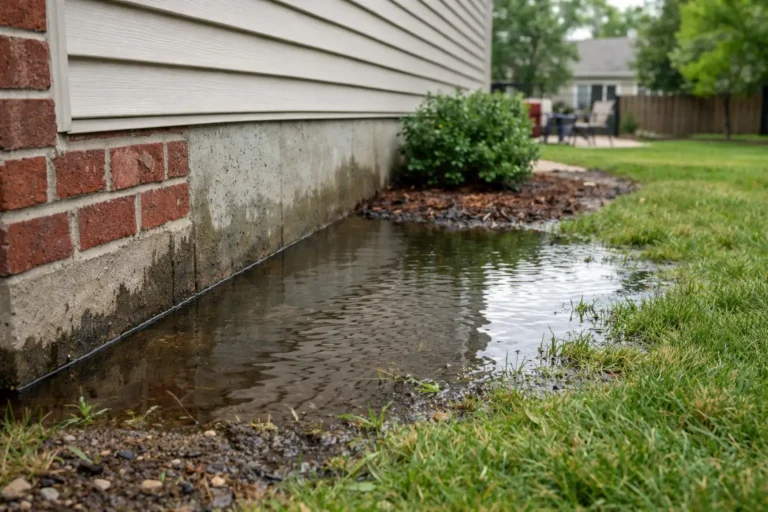
That standing water is not just an eyesore. It can lead to dead turf, mosquito activity, slippery sidewalks, erosion around beds, and water pushing toward the foundation instead of away from it. You do not want water sitting near your foundation. Even when it does not turn into a major basement issue, it can still cause settling, staining, and long-term wear around the home.
A residential drainage guide to what causes yard problems
Here is where many homeowners run into trouble. They assume the issue is just one bad area in the lawn, when the real problem usually starts somewhere else. Water follows the path of least resistance, so what you see in one spot may actually begin with the roof, the gutters, the grading, or a neighboring section of yard.
Poor grading
Grading simply means the slope of the ground. If the yard tilts toward the home, even a little, rainwater will collect where you do not want it. This is common around newer patios, additions, flower beds, and areas where soil has settled over time. A low spot may seem minor, but if it keeps filling up after every storm, it is a sign the yard is not directing water correctly.
Gutter and downspout problems
A lot of drainage issues start at the roofline. If gutters overflow, downspouts dump water too close to the house, or extensions are missing, that concentrated flow can soak the same area over and over. In many Illinois homes, this creates muddy trenches, washed-out mulch, and wet corners near the foundation.
Compacted or clay-heavy soil
Many yards in the western suburbs and across Chicagoland have dense soil that drains slowly. Water cannot soak in fast enough, especially after repeated rain. That does not always mean the whole property needs a major system. Sometimes it means the yard needs better surface flow, relief in low areas, or a more thoughtful drainage plan tied to the landscape.
Hardscape and landscape layout
Patios, walkways, retaining edges, and planting beds can all change how water moves. A patio that looks level to the eye may actually be trapping runoff against the home. A berm or raised bed may be blocking water from escaping. This is why drainage and landscaping should be looked at together, not as separate projects.
What to look for around your property
A good residential drainage guide should help you notice early warning signs before things get expensive. Start by walking your yard a day or two after a storm. If water is still standing, that tells you something.
Pay attention to soggy lawn areas, bare spots where grass keeps failing, mulch washing out of beds, soil erosion near downspouts, water marks on the foundation, and puddles near patios or sidewalks. Also look for gates that drag, pavers that shift, or fence posts that seem loose in wet areas. Those can all be signs that too much water is moving through the wrong part of the yard.
Inside the home, musty smells in lower levels or dampness near basement walls may also point to exterior drainage trouble. The fix does not always start indoors. A lot of the time, the smartest first step is correcting how water behaves outside.
The right fix depends on the source
This is the part many homeowners appreciate hearing clearly: there is no one-size-fits-all drainage solution. A French drain might make sense in one yard and be the wrong choice in another. Regrading may solve one property completely, while another needs downspout drainage, a catch basin, or a combination of improvements.
Regrading the yard
If the slope is wrong, regrading is often one of the best long-term fixes. That means reshaping the ground so water moves away from the house and toward a better drainage path. It can be simple in some cases and more involved in others, especially if landscape beds, fencing, patios, or neighboring lots affect the layout.
Downspout drainage extensions or buried lines
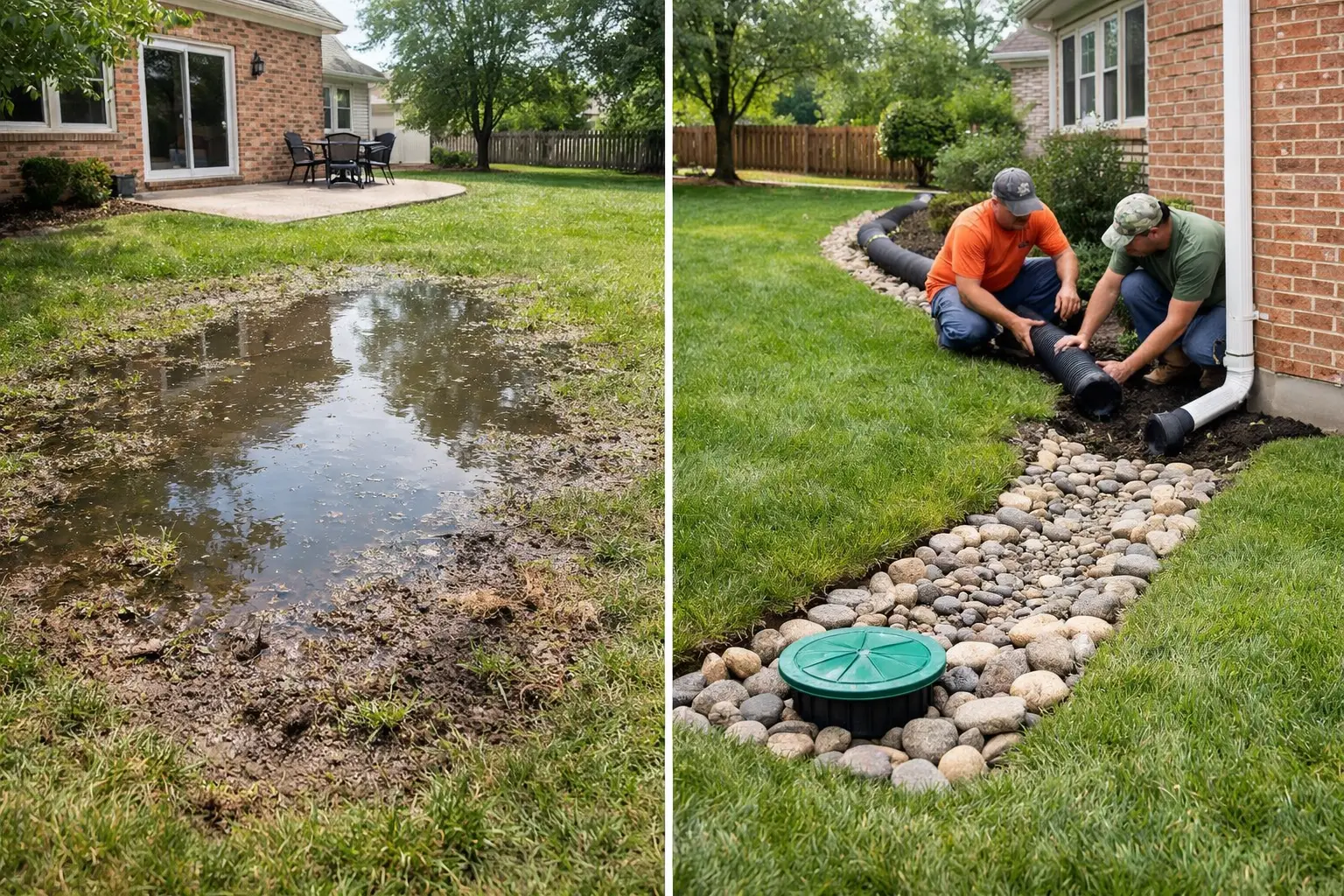
When roof runoff is the main issue, extending downspouts farther away from the house can make a big difference. In some yards, buried drain lines create a cleaner and more effective solution. This helps move concentrated water to a safer discharge area instead of flooding one corner of the property.
Catch basins and channel drains
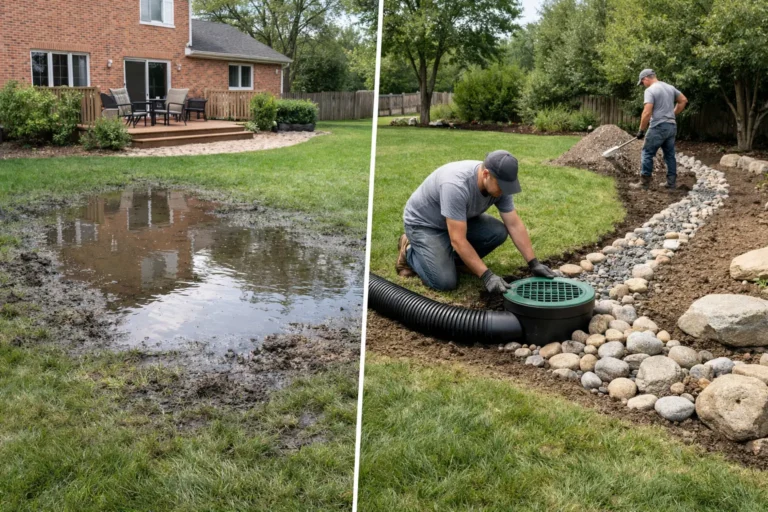
These are useful where water collects on the surface, especially near patios, walkways, driveways, or low lawn sections. A catch basin acts like a collection point for runoff, and then connects to piping that moves water away. This can be a strong option when the property has a clear low area and enough pitch to carry water out.
French drains
French drains are common, but they are not magic. In plain English, they are gravel-and-pipe systems that help collect and redirect groundwater or trapped surface water. They can work well in the right setting, especially where water lingers in one strip or near a foundation edge. But they still need proper slope, a discharge point, and correct installation to be worth doing.
Common mistakes homeowners make
The biggest mistake is treating the symptom and not the cause. Filling a puddle with topsoil might help for a few weeks, but if the water is still pouring from an overloaded downspout, the puddle usually comes back.
Another common problem is installing something without thinking through winter conditions. In Illinois, drainage systems need to handle freezing temperatures, leaf debris, and seasonal ground movement. A fix that looks fine in July may become a problem by January if it creates slick spots or clogs easily.
Some homeowners also wait too long because the issue feels manageable. Then a wet corner turns into damaged turf, foundation concerns, or a muddy yard no one wants to use. It is usually easier and less disruptive to solve drainage early.
When to call a professional
If the same area stays wet after normal rain, water is collecting near your house, or one fix after another has not worked, it is time to have someone look at the full picture. The best drainage plans are based on how the whole property works together, including gutters, grading, hardscape, lawn areas, and where the water can realistically be sent.
For many Chicagoland homeowners, that outside perspective matters because drainage can be deceptive. What looks like a simple low spot may actually be a grading issue running across the yard. What feels like a gutter problem may need both gutter improvement and drainage work below.
A contractor who understands both drainage and landscaping can usually give better guidance than someone looking at only one piece. That is especially true if you want the yard to function well and still look clean when the work is done.
Drainage should protect the home and improve the yard
Good drainage does not have to make your property look torn up or overly engineered. Done right, it should blend into the landscape and make the yard easier to maintain. You get less mud, fewer washouts, safer walkways, healthier turf, and outdoor spaces you can actually enjoy after it rains.
That is the goal for a lot of homeowners in Naperville, Downers Grove, and nearby western suburbs. They do not just want the water gone. They want the yard to feel usable again and the property to look cared for.
If you are seeing standing water, soft spots, or runoff heading the wrong direction, trust what your yard is telling you. Small drainage problems have a way of becoming larger ones. A smart plan now can save a lot of frustration later, and it can make the whole property work better every season.