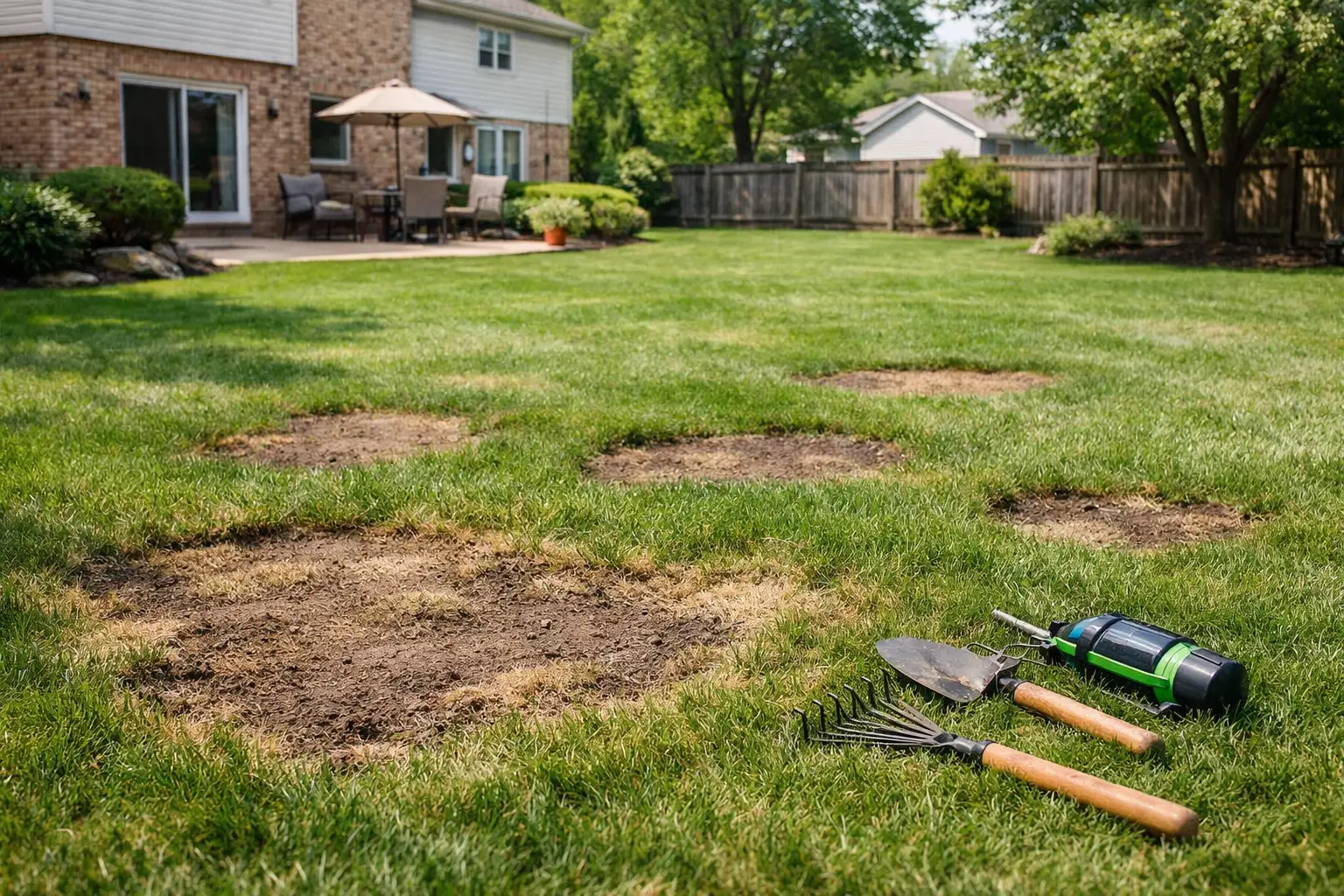
One week your grass looks mostly fine, and the next you notice a few thin, ugly spots spreading across the yard. If you are wondering why lawn has bare patches, the answer is usually not just one thing. In Illinois yards, bare spots often come from a mix of foot traffic, compacted soil, drainage issues, pet damage, insects, disease, or simple stress from weather.
That is where many homeowners run into trouble. They throw down seed, water for a few days, and hope for the best. Sometimes that works. A lot of times it does not, because the real problem underneath never got fixed.
Why lawn has bare patches in Illinois yards
In the Chicago suburbs, lawns deal with a pretty tough cycle. We get snow and ice, wet springs, hot summer stretches, heavy clay soil in many neighborhoods, and plenty of wear from kids, pets, and regular yard use. Grass can recover from some stress, but not when the same issue keeps showing up in the same area.
A bare patch is usually a symptom. The patch itself is not the whole problem. The bigger question is why grass cannot hold in that spot while the rest of the lawn survives.
Compacted soil is one of the biggest causes
If the ground feels hard and packed down, grass roots have a hard time growing. Water may sit on top instead of soaking in, and air cannot move well through the soil. This happens a lot along walkways, near patios, around play areas, and in backyards where dogs run the same path every day.
In western suburb lawns, compaction is common because many properties have dense clay-heavy soil. That type of soil can support a nice lawn, but it needs proper care. If it gets too tight, seed struggles to take, roots stay shallow, and patches keep coming back.
Water problems can thin out grass fast
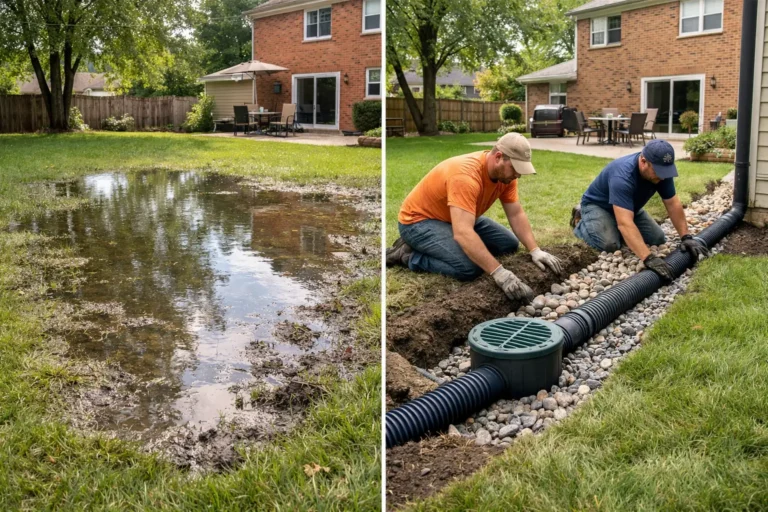
Too much water and not enough water can both create bare spots. If a section of lawn stays soggy after a rain, the roots may start to rot or weaken. If a spot dries out faster than the rest of the yard, especially near driveways, south-facing areas, or heat-reflecting surfaces, grass can burn out.
In Illinois, this matters because our weather swings hard. A cool, wet stretch can be followed by summer heat and dry wind. If your yard already has poor grading or low spots, those conditions can make patchy grass worse in a hurry.
You do not want water sitting near your foundation, and you also do not want it pooling in the lawn. A good landscape should look nice, but it also needs to work.
Dog urine and pet traffic can leave repeat spots
This is a common one, especially in fenced backyards. Pet urine can overload small areas with nitrogen and salts, which burns the grass. Repeated running and pacing can also wear down the same route until the soil gets compacted and the lawn disappears.
If the bare spots are scattered and roughly circular, pets may be the main issue. If there is a worn trail along the fence or from the door to the gate, traffic is likely part of it too. In those cases, grass repair works better when you address both the damage and the habit causing it.
Insects and lawn disease can be part of the problem
Grubs and other lawn pests can damage roots, which makes turf pull up easily or die off in patches. Some fungal lawn diseases can also create brown or bare areas, especially during warm, humid stretches.
The tricky part is that bug damage and disease can look a lot like drought stress from a distance. Homeowners sometimes water more, which may actually make a fungus problem worse. This is where a close look matters. If the grass lifts easily like loose carpet, root damage may be involved. If the edges of the patch look odd or fast-moving, disease may be worth checking.
The most common reasons bare patches keep coming back
A lot of lawns can be patched once. The harder part is getting the fix to last.
Usually, repeat bare spots happen because the lawn was repaired at the surface only. Seed was added, but the compacted soil stayed compacted. Sod was installed, but the drainage problem stayed in place. Fertilizer was applied, but the area still gets hammered by shade, traffic, or dog use.
Shade can work against you
Not every part of a yard wants to grow thick grass. Areas under mature trees or between homes may not get enough sunlight for strong turf. Grass can survive there for a while, but it often gets thin first and then opens up into bare patches.
This is especially common in older Chicagoland neighborhoods with large established trees. The lawn may also be competing with tree roots for water and nutrients. In that case, it is not about doing more lawn care. It is about choosing the right approach for that spot.
Mowing habits matter more than most people think
Cutting grass too short weakens it. It exposes the soil, dries things out faster, and gives weeds a better chance to move in. Dull mower blades can also tear grass instead of cutting it cleanly, which puts extra stress on the lawn.
If a bare area starts as a thin area, poor mowing can help push it in the wrong direction. It may not be the only cause, but it adds up over a full season.
Timing matters with seeding and repair
Spring is when many homeowners notice bare patches, but fall is often the better time to do lasting lawn repair in Illinois. Cooler temperatures, more dependable moisture, and less weed pressure give new grass a better chance to establish.
That does not mean spring repair never works. It just means results can be less predictable if summer heat shows up before the new grass is rooted in. It depends on the weather, the condition of the soil, and what caused the patch in the first place.
What to do when your lawn has bare patches
Start by figuring out whether the problem is wear, water, soil, shade, pets, or pests. If you skip that step, you are mostly guessing.
Rake out dead grass and loosen the top layer of soil. If the ground is hard as a rock, that is your clue that compaction needs attention. In some yards, aeration helps open things up so water, oxygen, and seed can actually get where they need to go. If drainage is the issue, surface repair alone will not hold up for long.
For smaller patches, overseeding or spot seeding may be enough if the area gets decent sun and the soil is still workable. For larger dead sections, sod can give a faster and cleaner result, especially when you want the lawn usable sooner. But even with sod, the base matters. If the soil underneath is poor or the area stays too wet, the new grass can struggle just like the old grass did.
If pets are involved, it helps to rinse problem areas, rotate where possible, and protect fresh seed while it is getting established. If shade is the issue, a different grass mix may help, but there are some spots where lawn will always be a challenge.
When bare patches point to a bigger yard problem
Sometimes a patchy lawn is really a drainage warning sign. If water collects in one section after every heavy rain, if downspouts dump into the same area, or if the lawn stays muddy long after the rest of the yard dries out, the grass is telling you something.
This is where many Illinois homeowners waste time and money. They keep repairing turf in the same wet spot without correcting the runoff, grading, or drainage pattern causing the damage. The lawn never gets a fair shot.
The same idea applies to heavy traffic areas. If a side yard is constantly used as a path, it may need more than grass seed. Sometimes the better long-term fix is improving flow through the yard, adjusting the layout, or creating a more durable surface where people naturally walk.
How to get better results without chasing the same patch every year
The best lawn repairs are the ones that match the real condition of the yard. That might mean seeding and aeration. It might mean sod. It might mean fixing water movement first and then restoring the grass after. There is no single answer for every property.
For many Chicago suburbs homes, the right plan is a combination of lawn repair and problem-solving. Healthy grass needs decent soil, enough sunlight, proper water, and a chance to root. If one of those pieces is missing, the same spots usually return.
Here is what to look for: whether the patch stays wet, gets baked by sun, sits in deep shade, lines up with dog traffic, or feels rock hard underfoot. Those clues tell you a lot.
If your lawn has a few random bare spots, a basic repair may do the trick. If the same areas fail season after season, it is worth stepping back and looking at the bigger picture. A lawn should not be a constant battle, and in most cases, there is a clear reason those patches keep showing up once you know where to look.