
Water rarely stays where you wish it would in a Chicagoland yard. It follows low spots, settles beside patios, and can work its way toward the foundation after a heavy spring storm or fast snowmelt. If you are looking up how to install french drain systems, you are already asking the right question. The bigger question is whether a French drain is the right solution for where the water is coming from and where it can safely go.
A good drainage system should solve a problem without creating a new one downhill. That takes more than digging a trench and dropping in a pipe. In Illinois, clay-heavy soil, flat lots, freeze-thaw cycles, and close-together homes all make planning especially important.
How to Install a French Drain Starts With the Water Source
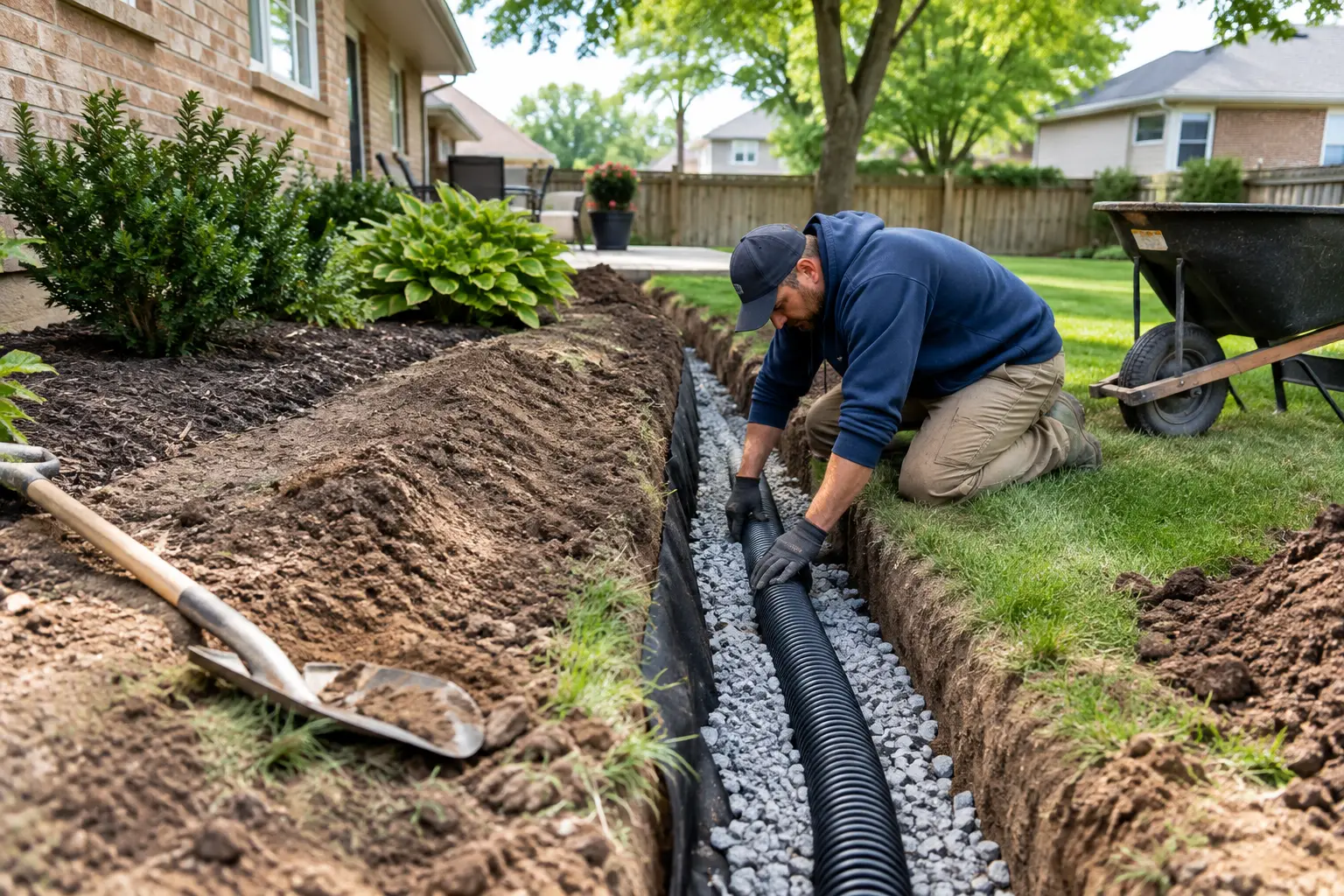
A French drain is a gravel-filled trench with a perforated pipe at the bottom. Water enters through the gravel and small holes in the pipe, then travels to a proper discharge point. It is designed to collect water moving through the soil, not just handle a quick puddle on the surface.
Before any digging begins, identify the source of the water. Walk the property during or soon after a hard rain. Look for water collecting near the foundation, a soggy strip along a fence, muddy turf at the bottom of a slope, or runoff that spills from downspouts and overwhelms one area.
Here is where many homeowners run into trouble: they install a drain where they see the puddle, but the actual problem begins 20 feet away. A downspout may be dumping too close to the house. A patio may be pitched toward the lawn. Or the yard may simply have a low area with nowhere for water to escape. The layout has to address the cause, not only the wettest spot.
A French drain is often a good fit for water that keeps soaking into a lawn or moving toward a foundation. It may not be the best first answer for every problem. Surface grading, downspout extensions, a catch basin, or a combination of solutions can make more sense depending on the yard.
Plan the Route and a Safe Outlet
Every drain needs a destination. The pipe cannot just end underground and expect water to disappear. It needs to discharge at a lower point on the property, connect to an approved drainage location, or daylight at a safe outlet where water will not wash out soil or affect a neighbor’s yard.
For many Naperville-area homes and other western suburb properties, this is the most important part of the project. Lots can be fairly flat, property lines are close, and local drainage rules may limit where runoff can go. Water should never be directed onto a sidewalk, driveway, neighboring property, or toward another foundation.
The trench also needs consistent slope. As a general working target, drainage pipe should drop about 1 inch for every 8 to 10 feet of run. The exact slope depends on the site, but the principle stays the same: water needs a clear downhill path. Too little fall and the pipe may hold water and sediment. Too much fall can allow water to move so quickly that it leaves debris behind in certain setups.
Before digging, have underground utilities marked. This is not optional. Utility lines, irrigation wiring, landscape lighting, and invisible dog fences can all be buried in areas that look clear from the surface. A professional drainage crew also checks for buried structures, tree roots, existing drain lines, and the practical path for equipment.
Dig the Trench at the Right Depth
The trench depth depends on what the drain needs to collect and where the pipe must travel. A yard drain handling shallow groundwater or wet turf may be different from a system intended to protect a basement wall or move water below a patio area.
For a typical lawn installation, the trench is commonly wide enough to hold gravel around the pipe, often around 12 inches across. Depth can vary significantly, but the pipe needs enough cover to protect it from lawn traffic, weather, and future landscaping work. In Illinois, drainage components should also be planned with winter conditions in mind. A system that holds standing water near the surface can be more likely to freeze and create problems.
The bottom of the trench must follow the planned slope from start to finish. This is not something to eyeball. A laser level or transit level helps confirm that the route is actually falling toward the outlet. Small dips in the trench can become low spots where water and sediment collect.
If the trench runs near the home, take extra care around the foundation. You do not want to dig in a way that compromises soil support around the structure. Foundation drainage should be evaluated carefully, especially on older Illinois homes with basement water concerns.
Build the French Drain From the Bottom Up
Once the trench is properly shaped, the installation follows a simple order. The materials matter, but how they are assembled matters just as much.
Start by lining the trench with a water-permeable filter fabric. This fabric separates the surrounding soil from the drainage gravel. Without it, fine clay and silt can work into the gravel over time and reduce the system’s ability to carry water.
Next, add a layer of clean, washed drainage stone at the bottom. The perforated pipe sits on this stone bed with the perforations positioned according to the pipe manufacturer’s design. Many professional installations use rigid perforated pipe rather than the thin, flexible black corrugated pipe often sold for quick projects. Rigid pipe holds its slope better and is less likely to crush or sag when installed correctly.
After the pipe is set and checked for slope, add more clean stone around and above it. The goal is to create an open path for water to move through the soil, into the gravel, and down to the pipe. Then wrap the remaining filter fabric over the top of the stone like a burrito. That extra step helps keep the gravel bed cleaner over the long term.
The final surface depends on the location. In a lawn, the trench can be topped with soil and sod so it blends back into the yard. In a landscape bed, decorative stone or mulch may be appropriate. A good landscape should look nice, but it also needs to work. The finished area should still shed surface water properly instead of becoming a hidden low spot.
Test Before Restoring the Lawn
Do not wait for the next thunderstorm to find out whether the drain works. Before the trench is fully closed, run water into the upper collection area and watch the outlet. You want to see steady movement, no obvious backup, and no water surfacing where it should not.
This test can reveal a blocked outlet, a missed low spot in the pipe, or an issue with the collection point. It is much easier to make corrections before sod is replaced, mulch is spread, or a patio edge is restored.
Also look at the outlet after the test. Water should leave the system without eroding the ground. Depending on the setup, the outlet may need stone protection, a pop-up emitter, or another controlled discharge detail. The right choice depends on the grade and how much water the system is expected to handle.
Know When a French Drain Needs Professional Planning
A short drain for one small wet lawn area can be straightforward. But several situations call for a closer look from a drainage professional: repeated water near the foundation, a basement that takes on moisture, a lot with little natural slope, major runoff from neighboring properties, or a project near patios, retaining walls, and mature trees.
There is also a difference between a French drain and a surface drainage system. If water is rushing across the top of the yard during storms, a catch basin and solid pipe may be more effective than a perforated pipe alone. If a downspout is the main source, extending or burying the downspout line may solve the issue without a full French drain.
At Revive Your Lawn, we look at the whole property before recommending a route. That includes grading, gutters, downspouts, hardscapes, landscape beds, and the condition of the lawn. The goal is not to install the most pipe. It is to give water a sensible path away from the places where it causes damage.
A properly installed French drain can make a muddy yard more usable, protect planting areas, and help keep water away from your home. The best result is usually the one you barely notice later: a lawn that dries out, walkways that stay safer, and a yard that works the way it should after an Illinois rain.


