If your lawn looks great in May but tired by August, that usually is not bad luck. In Illinois, lawns go through a lot – snow, soggy spring ground, summer heat, compacted soil, and leaves piling up fast in fall. That is why an Illinois lawn care annual guide helps. It gives you a simple plan for what to do, when to do it, and where many homeowners run into trouble.
Around the Chicago suburbs, lawn care is not just about keeping grass short. A good yard has to handle our weather, drain well, recover from winter, and still look clean and cared for through the busy season. If you stay ahead of the timing, your lawn usually needs fewer rescue treatments later.
How to use this Illinois lawn care annual guide
The easiest way to think about lawn care in Illinois is by season, not by one big spring push. A lot of homeowners try to do everything in April, then get busy and hope for the best. That is usually when weeds spread, thin spots stick around, and the lawn starts struggling by midsummer.
A better approach is to match the work to what the grass is doing. Cool-season lawns, which are common across Chicagoland, grow strongest in spring and fall. Summer is more about protection and maintenance. Winter is the time to prevent damage and plan ahead.
Early spring – clean up and check for problems
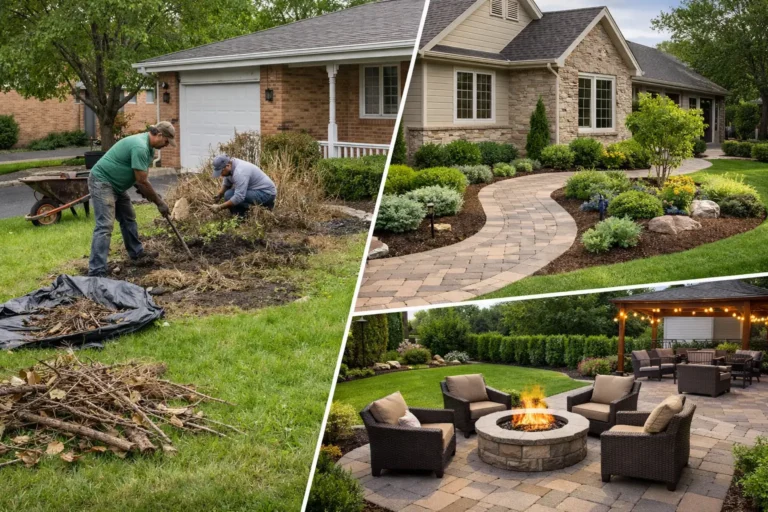
As the snow melts and the ground starts to dry out, your first job is not fertilizer. It is cleanup and inspection. Sticks, leftover leaves, and matted grass can block sunlight and trap moisture where disease likes to start.
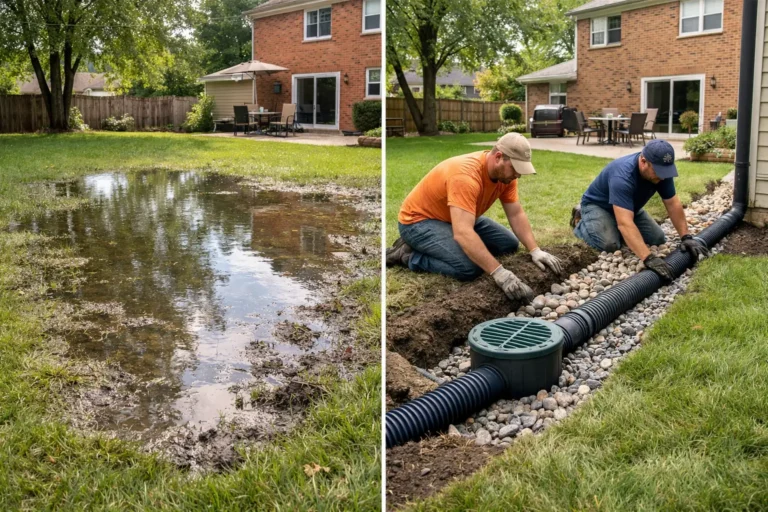
This is also when drainage problems show themselves. You may notice muddy patches, standing water, or areas near the foundation that stay soggy long after everything else dries. You do not want water sitting near your foundation, and you also do not want turf roots constantly soaked. In Illinois, this matters because spring can go from frozen ground to heavy rain in a hurry.
Start with a spring cleanup, edge the beds, and look closely at the lawn. If the grass pulls up easily, there may be snow mold or root damage. If certain spots are bare every year, there is usually a reason beyond simple wear. It could be poor drainage, shade, pet traffic, compacted soil, or winter salt exposure near walks and driveways.
Mowing should start once the grass is actively growing, but do not scalp it. Cutting too short early in the season stresses the lawn and gives weeds an opening.
Late spring – feed growth and control weeds
Once the lawn is actively growing, late spring is the time to build density. Thick grass is one of the best weed defenses you can have. This is where many homeowners run into trouble. They focus only on weed control, but if the lawn is thin and weak, weeds keep coming back.
A spring fertilizer application can help green things up and support steady growth. Weed control may also make sense, especially if crabgrass or broadleaf weeds have been a recurring issue. Timing matters here. Too early or too late, and the results are not the same.
It also helps to be realistic. If your lawn has deeper issues like compacted clay soil, poor drainage, or heavy shade, fertilizer alone will not fix it. A good landscape should look nice, but it also needs to work. Sometimes the right move is improving soil conditions, adjusting maintenance, or changing the area around the lawn so water flows better.
Summer – protect the lawn from stress
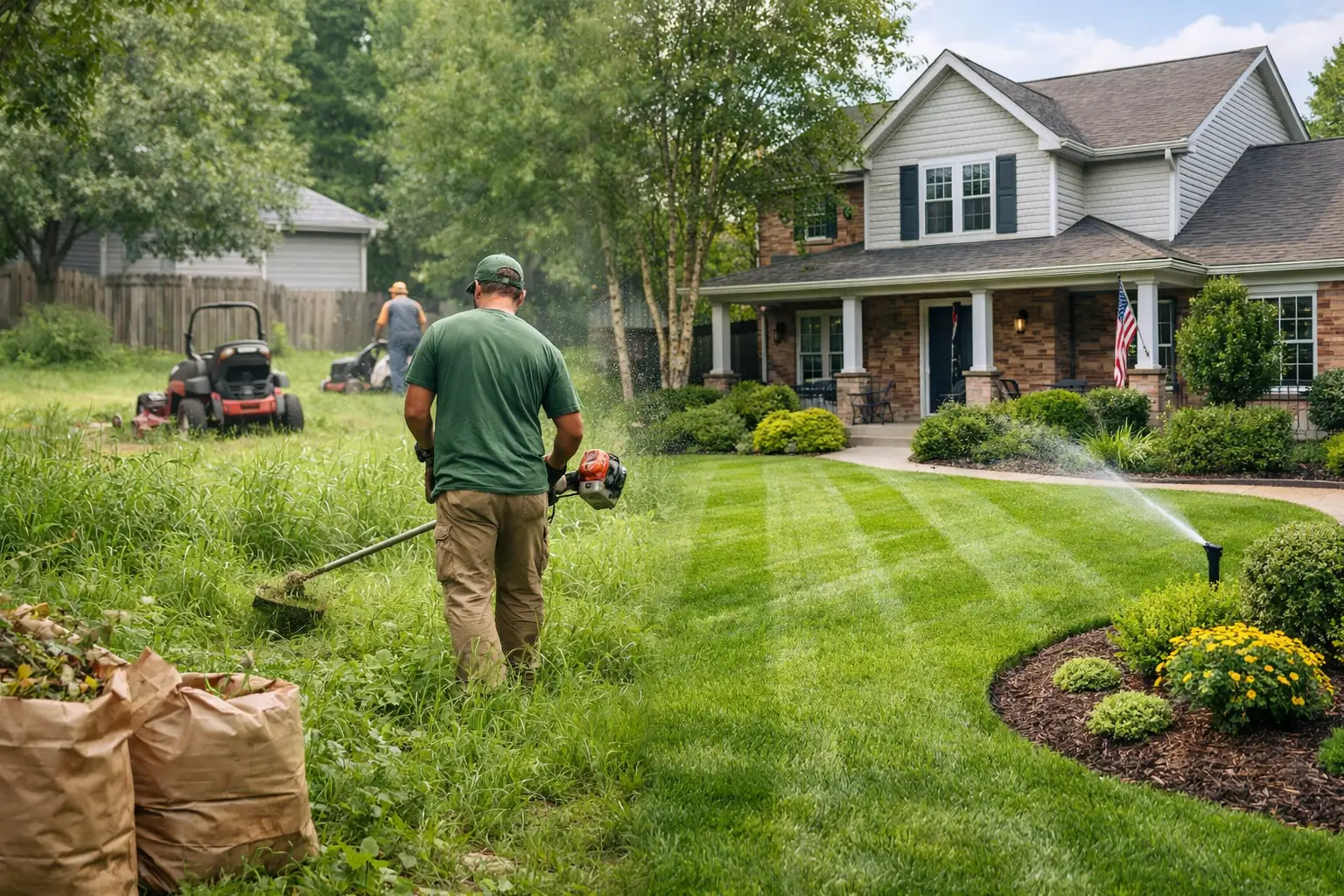
Summer lawn care in Illinois is mostly about avoiding damage. When the heat and humidity settle in, cool-season grass naturally slows down. That does not always mean the lawn is failing. It may just be trying to survive.
During hot stretches, mow a little higher. Taller grass shades the soil, helps hold moisture, and protects the crown of the plant. If you water, water deeply instead of giving the lawn a quick sprinkle every day. Shallow watering encourages shallow roots, and that makes the lawn less resilient.
This is also the season to watch traffic patterns. Kids, pets, backyard parties, and contractor access can wear down the same spots over and over. If an area turns to dirt every summer, it may need more than seed. You may be dealing with compaction, poor sun exposure, or a grading issue.
Try not to push heavy treatments during extreme heat. Aggressive work in midsummer can create more stress than benefit. Sometimes the smartest summer plan is to maintain, monitor, and save corrective work for early fall.
Fall – the most important season for Illinois lawns
If you only remember one part of this Illinois lawn care annual guide, make it this: fall is your best chance to improve the lawn for next year. In the Chicago suburbs, early fall gives you cooler temperatures, more dependable moisture, and strong root growth.
This is when aeration and overseeding often make the biggest difference. Aeration pulls small plugs from the soil so air, water, and nutrients can move down into the root zone. That matters a lot in our area, where clay-heavy soil and foot traffic can compact the ground fast. Overseeding after aeration helps fill in thin turf and improve lawn density.
Dethatching may also help if the lawn has a heavy layer of built-up dead material at the surface. But it depends on the lawn. Not every yard needs it, and doing too much can be rough on stressed grass. This is where a trained eye helps.
Fall fertilizer is also valuable because it supports root development instead of just top growth. That sets the lawn up better for winter and gives it a stronger start in spring.
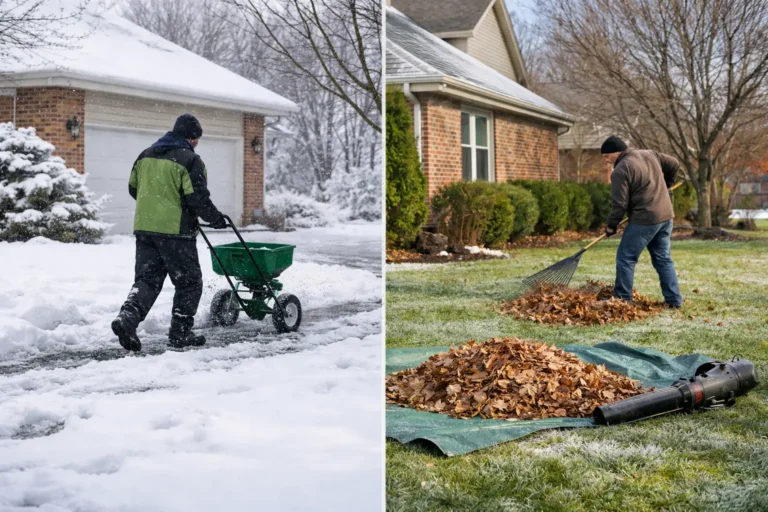
Do not ignore leaves, either. A thin layer for a day or two is one thing. Weeks of wet leaf cover is another. Too many leaves block sunlight, trap moisture, and create weak, patchy turf underneath.
Late fall and pre-winter – set the property up right
As the season winds down, keep mowing as needed until growth stops. Grass that goes into winter too long can mat down and invite disease. Too short is not ideal either. You want a clean, even lawn heading into the cold months.
Late fall is also a good time to look beyond the grass. Are gutters overflowing onto planting beds? Do downspouts dump water right where snow and ice will build up? Are walkways edged cleanly and ready for winter weather? In many Illinois homes, lawn issues connect to bigger exterior issues.
That is one reason homeowners often benefit from working with a company that sees the whole property, not just the mowing. A lawn can struggle because of drainage, shade from overgrown trees, hardscaping runoff, or repeated winter salt damage near the driveway.
Winter – prevent damage and make a plan
You will not be feeding the lawn in January, but winter still counts. Try to limit repeated foot traffic on frozen or snow-covered grass, especially in the same path. That can leave compressed, damaged areas behind.
Keep an eye on snow piles too. Where snow gets stacked, salt and compaction often become spring problems. If you have had puddling, muddy edges, washout, or trouble spots during the year, winter is a good time to plan improvements before the rush of spring.
For some properties, the best next step is regular maintenance. For others, the real fix may be drainage work, fresh sod in damaged areas, grading correction, bed redesign, or cleanup around trees and shrubs to let the lawn compete better.
Common mistakes Illinois homeowners make
Most lawn problems are not from one big mistake. They come from a few small ones repeated through the year. Cutting the grass too short is a big one. So is treating every brown patch like it needs the same fix.
Another common issue is ignoring water movement. If a yard stays wet, the grass is going to struggle no matter how much seed or fertilizer you add. The same goes for compacted soil. If the roots cannot breathe, the lawn will not respond the way you want.
And finally, many homeowners wait too long. By the time summer damage is obvious, the best repair window may still be a few weeks away in fall. Planning ahead usually gets better results than reacting late.
When it makes sense to get help
Some homeowners enjoy staying on top of mowing and seasonal cleanup. Others would rather hand it off and know it is getting done right. Either way, there is a point where expert help saves time and prevents frustration.
If your lawn has recurring bare spots, standing water, heavy weed pressure, or compacted areas that never bounce back, it is worth having someone look at the bigger picture. In the western suburbs and across Chicagoland, properties often need more than a standard lawn program. They need a practical plan that fits the soil, drainage, shade, and wear patterns of that yard.
That is where local experience matters. A company like Revive Your Lawn is not just looking at grass color. The goal is to help homeowners get a cleaner-looking property, fewer drainage headaches, less weekend work, and an outdoor space that actually holds up through Illinois weather.
The best lawns around here usually are not the ones getting the most random treatments. They are the ones cared for at the right time, with attention to what the property really needs. If you keep that mindset through the year, your lawn has a much better shot at looking good and working the way it should.