
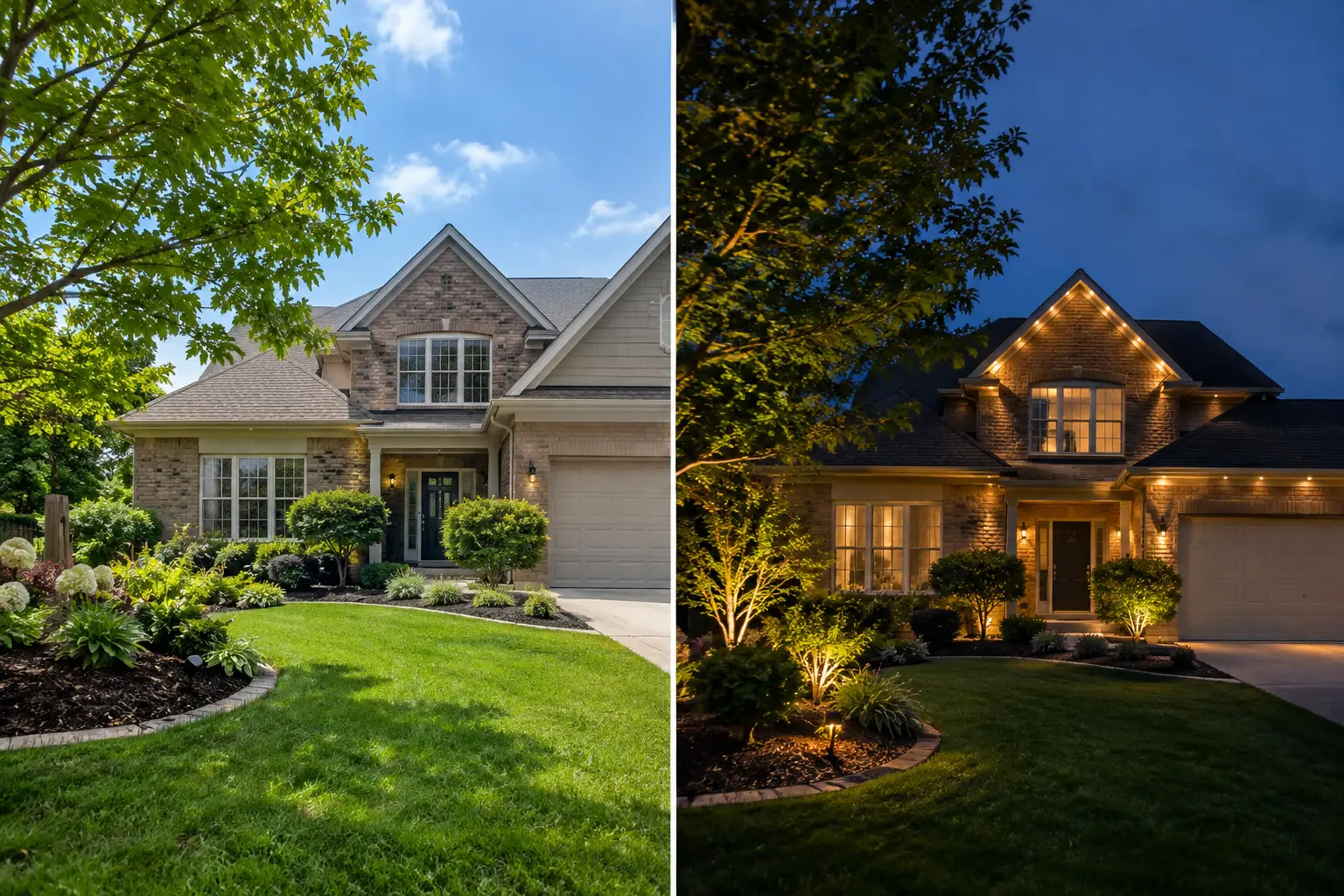
A dark front walk is more than an appearance issue when you are coming home after work in December. It can be a safety concern, especially when Illinois snow, ice, and early sunsets are part of the picture. When homeowners ask us about landscape lighting versus permanent lighting, they are usually deciding between two good options that do very different jobs. The right answer depends on what you want your home to look like, how you use the property, and whether you want light every night or color for special occasions.
Landscape Lighting Versus Permanent Lighting: The Main Difference
Landscape lighting is designed to make your property easier to see and enjoy after dark. It uses low-voltage fixtures placed around walkways, steps, driveways, planting beds, patios, trees, and the front of the home. Most fixtures give off a warm white light. The goal is to create a welcoming look while helping people move around safely.
Permanent lighting, often called permanent holiday lighting, is installed along the roofline or trim of a home or business. The lights stay in place year-round but can be turned on only when you want them. These systems use programmable LED bulbs, so you can choose colors and patterns for holidays, game days, birthdays, or a simple warm white look.
One is not a replacement for the other. Landscape lighting works from the ground up. Permanent lighting works from the roofline down. A home can benefit from either one, and many Chicagoland homeowners eventually choose both because they solve separate needs.
What Landscape Lighting Does Best
A well-planned landscape lighting system adds depth to the property at night. Instead of seeing one bright porch light and a dark yard, you see the path, the front entry, and the features that make the home stand out. A mature oak, stone retaining wall, paver walkway, or front planting bed can look completely different after sunset with the right amount of light.
Safety is a big reason to install it. Path lights and step lights can help family members, guests, delivery drivers, and visitors see changes in elevation. This matters around front stoops, side gates, patios, pool areas, and walkways that can become slick in an Illinois winter. You do not need to light every inch of the yard. In fact, too many fixtures can create glare and make the space feel harsh. The goal is useful light in the places people actually walk.
Landscape lighting can also make a home feel more secure. A properly lit entry, driveway edge, and side yard reduce the number of dark pockets around the house. That does not mean turning the property into a stadium. Soft, directed lighting usually looks better and is more comfortable for you and your neighbors.
Where it makes the most sense
Landscape lighting is a strong fit when you want to use the outdoor space after dark or improve daily visibility. Downers Grove homeowners with a patio used for summer dinners may want gentle lighting around the seating area and steps. A Naperville-area home with a long front walk may need path lights that guide guests from the driveway to the entry. Homes with attractive stonework, trees, or landscaping often benefit from uplighting that brings those features into view at night.
It is also a practical choice for a home that feels unfinished after dark. You may have invested in landscaping, a new walkway, or a patio, but once the sun goes down, none of that work is visible. Landscape lighting helps you enjoy the property for more than a few daytime hours.
What to plan for
The fixtures, wire connections, transformer, and placement all matter. In the Chicago suburbs, equipment needs to hold up through freezing temperatures, wet springs, summer storms, and lawn care activity. Cheap fixtures can fade, crack, shift in the soil, or stop working when connections are not protected correctly.
A good plan also looks ahead. If you may add a patio, expand a planting bed, install a fence, or rework drainage later, the lighting layout should account for that. This is where many homeowners run into trouble when lighting is added without considering the full yard plan. A good landscape should look nice, but it also needs to work.
What Permanent Lighting Does Best
Permanent holiday lighting takes away the seasonal ladder work. Instead of hanging strands in November, dealing with clips, and taking everything back down after the holidays, the system remains tucked along the roofline. When the season arrives, you use an app or controller to select colors and schedules.
For busy families, that convenience is the main benefit. You can switch from red and green in December to orange for Halloween, team colors for a graduation party, or a soft white setting for everyday curb appeal. The lights are installed in a clean, intentional line, rather than being draped across gutters or attached temporarily to shingles.
This type of system is especially useful for homes with steep rooflines, second-story peaks, or hard-to-reach sections. Climbing a ladder in cold weather is not everyone’s idea of a weekend project, and it is not always the safest one. Permanent lighting keeps that work off your annual to-do list.
What it does not replace
Permanent roofline lighting does not light a walkway the same way path lighting does. It can make the front of your house look great from the street, but it will not necessarily help someone see the last step off the porch or the edge of a dark side path. If safe movement around the property is your first goal, landscape lighting should come first.
It also creates a different visual effect. Permanent lighting is more noticeable, colorful, and decorative when you choose it to be. Landscape lighting is usually quieter and more architectural. Think of permanent lighting as the home’s seasonal outfit, while landscape lighting is the everyday lighting that helps the property function well after sunset.
How to Choose Between the Two
Start with the problem you are trying to solve. If your front steps disappear at night, guests have trouble finding the walk, or you want to spend more evenings on the patio, landscape lighting is likely the better first investment. If you are tired of putting up holiday lights, want flexible color options, or have a tall roofline that makes decorating difficult, permanent lighting may be the better fit.
Your home’s style matters, too. A traditional brick home in Hinsdale may look best with subtle warm landscape lighting that highlights the entry and mature trees. A newer home with clean rooflines in the western suburbs may be a great candidate for permanent lighting that can shift from a quiet white setting to holiday colors when the occasion calls for it.
Think about how visible you want the light to be. Landscape fixtures are usually meant to blend into the beds and hardscape during the day. Permanent lights are designed to stay discreet when turned off, but they are still part of the roofline installation. During a walkthrough, it helps to look at the home from the street as well as from the driveway, patio, and front door.
Why Some Homes Use Both
Using both types of lighting gives a property a more complete look. Landscape lights can guide visitors up the walkway, show off the front landscaping, and make the patio comfortable in the evening. Permanent lighting can add personality for holidays and special events without requiring seasonal installation and removal.
The key is keeping the design coordinated. Warm white landscape lighting pairs well with a warm white roofline setting for everyday use. During holidays, the permanent system can provide the color while the landscape lighting still handles the practical job of illuminating paths and steps. The result feels polished instead of overdone.
For commercial properties, the same idea can work well. A restaurant patio, office entry, or neighborhood clubhouse may need dependable pathway lighting every night, with programmable roofline lighting for seasonal events and community gatherings.
Installation Details That Matter in Illinois
Lighting has to be installed for the weather we actually get here. Landscape fixtures should be placed where they will not be buried by mulch, knocked loose by snow removal, or damaged by routine edging. Wiring needs thoughtful routing, especially near planting beds, future projects, and areas where service crews may work.
For permanent lighting, the installation should follow the roofline cleanly and account for soffits, peaks, gutters, and the location of the controller. This is not a place to guess from the ground. Each home has its own trim details, power access, and viewing angles.
It is also worth asking how the system will be controlled and maintained. You want something simple enough that you will actually use it. At Revive Your Lawn, we look at lighting as part of the full exterior picture, not as an add-on installed without a plan for the yard, home, and how your family lives there.
A Better First Step Than Picking Fixtures
Before choosing colors, fixture styles, or light patterns, walk outside after dark and notice what is missing. Can you clearly see the front door from the street? Are the steps easy to use? Does the patio feel inviting after sunset? Is holiday decorating becoming more work than fun?
Those answers usually point you in the right direction. The best lighting plan is not the brightest one. It is the one that makes your Illinois home safer, more welcoming, and easier to enjoy in every season.


