
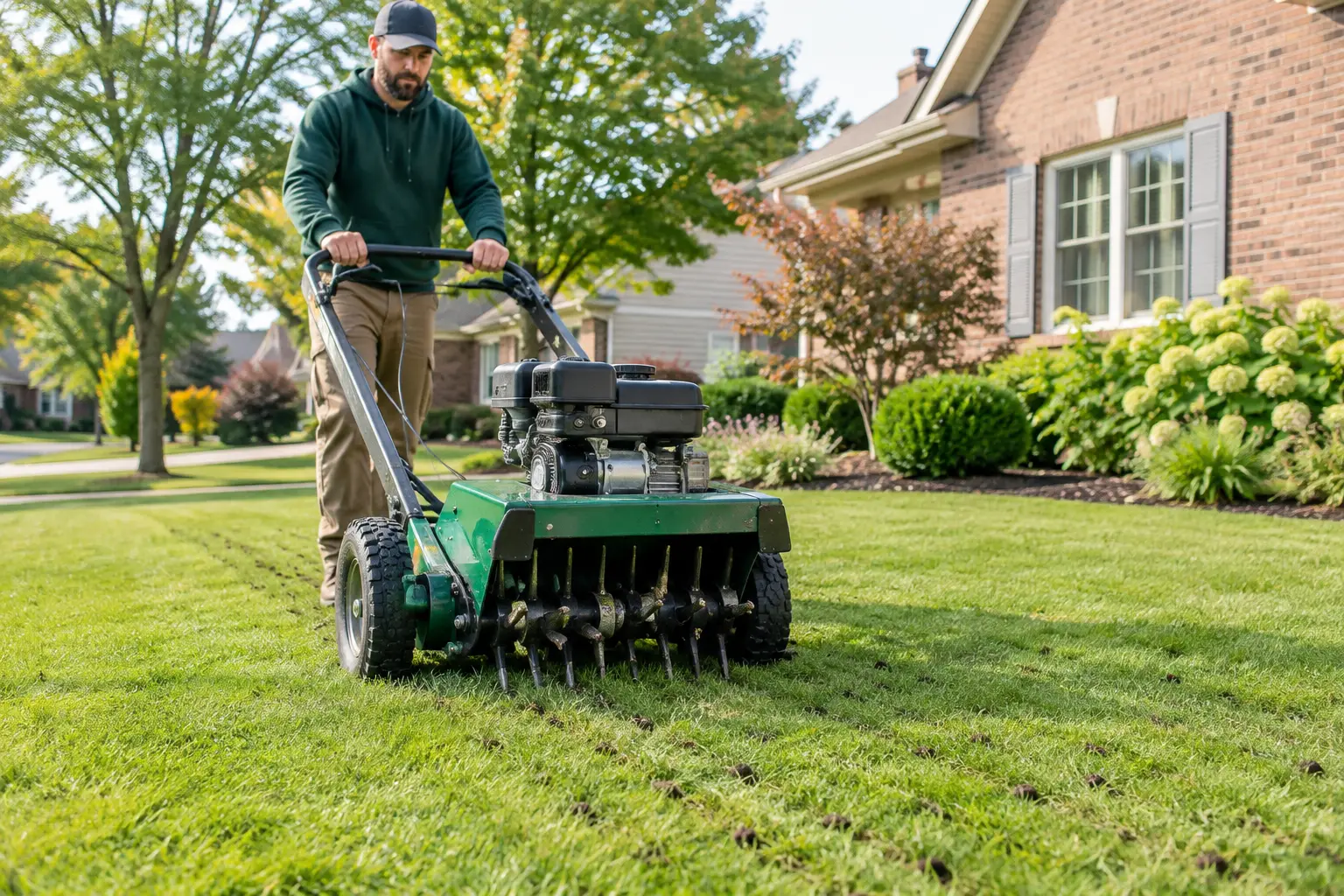
A lawn can be green and still be struggling. If your grass looks thin, water puddles after a storm, or bare spots keep returning in the same places, compacted soil may be part of the problem. The lawn aeration benefits homeowners notice most are thicker grass, better water movement, and a yard that holds up better to busy family life and changing Illinois weather.
In the Chicago suburbs, lawns take a beating. Heavy clay soil, spring rain, summer foot traffic, neighborhood dogs, mowing equipment, and winter freeze-thaw cycles can press the soil tightly together. When that happens, grass roots have a hard time getting the air, water, and nutrients they need. Aeration gives the soil room to breathe again.
What Lawn Aeration Actually Does
Core aeration uses a machine that pulls small plugs of soil from the lawn. Those little plugs may not look great for a few days, but they are a good sign. Each opening creates a path for air, moisture, and nutrients to move deeper into the root zone.
This is different from simply poking shallow holes in the turf. A proper core aerator removes soil, which does more to relieve compaction. Over time, the plugs break down naturally and settle back into the lawn.
Think of compacted soil like a packed parking lot. Rain can sit on top instead of soaking in, and roots cannot spread out easily. Aeration loosens that packed layer so the lawn has a better chance to grow from below, not just look green on top.
Lawn Aeration Benefits Homeowners Can See
Aeration is not a magic fix for every lawn issue. Poor drainage, shade, grubs, disease, and worn-out turf may need their own solutions. But when soil compaction is involved, aeration can make a noticeable difference in how your lawn performs.
Thicker, healthier grass
Grass roots need oxygen just like the rest of the living things in your yard. In tightly packed soil, roots tend to stay shallow and weak. Aeration helps roots grow deeper, which supports fuller turf and better color over time.
This is especially helpful for lawns that get regular use. A backyard where kids play, a side yard used by dogs, or the front lawn along a busy walkway can become compacted faster than the rest of the property. You may see thin grass in those areas even when you are watering and fertilizing properly.
Better water absorption after rain
Chicagoland homeowners know how quickly a normal rain can turn into a heavy downpour. When the top layer of soil is compacted, water may run across the lawn, settle in low spots, or collect near the sidewalk instead of soaking into the ground.
Aeration improves the lawn’s ability to take in water. It will not correct a grading problem or replace a drainage system where one is needed. If water repeatedly sits near your foundation, for example, that deserves a closer look. You do not want water sitting near your foundation. Still, aeration can help reduce surface runoff caused by a hard, sealed-up lawn.
Stronger response to fertilizer and overseeding
Fertilizer works best when nutrients can reach the root zone. Aeration gives those nutrients a clearer path downward instead of leaving them near the surface. The same goes for water.
Aeration is also one of the best times to overseed a thin lawn. Seed can settle into the small openings and make better contact with soil. That does not mean every seed will grow, especially during hot or dry weather, but it gives new grass a better starting point than scattering seed over hard, compacted ground.
For many Illinois homes, aeration and overseeding are a practical pair. The aeration opens the soil, while the seed helps fill in weak areas before winter.
Less thatch buildup over time
Thatch is the layer of dead stems, roots, and other plant material that can collect between green grass blades and the soil. A small amount is normal. Too much can act like a sponge, keeping water and nutrients from reaching the roots below.
Aeration helps the natural organisms in the soil break that material down. It is not always a replacement for dethatching, particularly if the thatch layer is thick. This is where many homeowners run into trouble: they assume every soft, spongy lawn only needs aeration. Sometimes it needs dethatching first, or it may need both services as part of a larger lawn recovery plan.
A lawn that handles stress better
A deeper-rooted lawn is generally better prepared for summer heat, dry stretches, and regular use. That matters in the western suburbs, where a lawn can go from cool and wet in spring to hot and dry in a matter of weeks.
Aeration cannot make grass maintenance-free, and it will not turn a shady yard into full-sun turf. What it can do is improve the soil conditions your existing grass depends on. That gives the lawn a better shot at recovering after stress.
When Illinois Lawns Usually Need Aeration
For cool-season lawns common across the Chicago suburbs, early fall is often the best time for core aeration. The weather is usually cooler, grass is actively growing again, and there is enough time for roots and new seed to establish before winter.
Spring aeration can also make sense, especially if the lawn is badly compacted after winter or if timing did not work in the fall. The trade-off is that spring brings weed pressure and wet soil. Aerating soil that is too wet can create a mess and may not give you the result you want.
Fall is usually the stronger choice for aeration and overseeding, but every yard is different. A lawn with heavy shade, drainage concerns, recent construction, or frequent dog traffic may need a different approach. The condition of the soil matters more than following a calendar blindly.
Signs Your Lawn May Be Compacted
You do not need to guess whether aeration is worth considering. Here is what to look for:
- Water puddles or runs off even after a moderate rain.
- Grass stays thin despite regular mowing, watering, and feeding.
- The ground feels hard underfoot or is difficult to push a screwdriver into.
- Bare areas keep showing up near walkways, gates, driveways, or play areas.
- Your lawn has heavy clay soil, recent construction traffic, or a lot of regular use.
One sign alone does not always mean compaction. For example, a bare patch beneath a mature tree may be more about shade and root competition than compacted soil. A quick property walkthrough can help separate a soil problem from a drainage, turf, or maintenance issue.
What to Do After Aeration
The first week after aeration can look a little rough. You will see soil plugs across the lawn and small openings in the turf. Leave the plugs alone. Rain, watering, mowing, and normal activity will break them down.
If you are overseeding, keep the seeded areas consistently moist while the new grass is getting started. Avoid soaking the lawn to the point of puddling. Once the new grass is established, return to deeper, less frequent watering based on weather conditions.
Mowing also matters. Keep the blade sharp and avoid cutting off too much grass at once. A clean cut helps the lawn recover without adding more stress. If you have a heavy lawn treatment plan, make sure the timing works with your aeration and seeding schedule.
Aeration Works Best as Part of the Bigger Picture
A good-looking lawn is not just about one service. It comes from healthy soil, smart mowing, proper watering, good drainage, and attention to problem areas before they get worse. For some Naperville-area homes, aeration and overseeding are enough to bring a tired lawn back. For others, standing water, compacted clay, shade, or damaged turf may call for a broader plan.
That is why a lawn should be evaluated as part of the whole property. A clean, healthy yard adds curb appeal, gives your family a better place to spend time, and supports the landscape work around it. Revive Your Lawn helps Chicagoland homeowners look at those details without making the process complicated.
If your grass has been thin, puddled, or hard underfoot for more than a season, do not assume it just needs more fertilizer. Start with the soil. Giving roots room to breathe is often the practical next step toward a lawn that looks better and works better.


