A lot of outdoor lighting mistakes start the same way. A homeowner adds a few fixtures near the front walk, maybe a brighter bulb by the garage, and hopes that is enough. Then winter hits, the sun goes down before dinner, and the dark spots show up fast. If you want to plan outdoor lighting for safety, you need more than a few lights. You need the right light in the right places so people can move around your property without guessing where the next step is.
Around Chicagoland homes, this matters for real-life reasons. We deal with early sunsets, snow, ice, wet leaves, and long stretches where walkways stay slick and visibility drops. A good lighting plan helps your property look better, but first it needs to help people see where they are going.
Why safety lighting needs a plan
This is where many homeowners run into trouble. They think brighter is safer, so they install one powerful fixture over the driveway or back door. That can help in one area, but it can also create glare and deep shadows nearby. Your eyes adjust to the bright spot, and suddenly the darker walkway or step off to the side is harder to see.
A safer setup usually uses layered light instead of one harsh source. The goal is not to flood the yard with light. The goal is to guide movement, reveal edges, and make changes in height easy to notice. That means thinking about how someone actually walks from the driveway to the front door, from the patio to the gate, or from the back steps to the garage.
A good landscape should look nice, but it also needs to work. Safety lighting is one of those areas where function comes first, and the best-looking result usually follows that.
How to plan outdoor lighting for safety around your home
Start by walking your property after dark. Not at dusk, but when it is truly dark and your normal outdoor lights are on. Look at the paths people use most often. Front entries, side yards, driveways, steps, patios, gates, and trash can areas are usually the first places to check.
Ask a few simple questions. Can you clearly see where pavement starts and ends? Are the steps easy to read? Is the lock at the side door visible? Are there areas where a guest might step off the walk by mistake? These are the spots that deserve attention first.
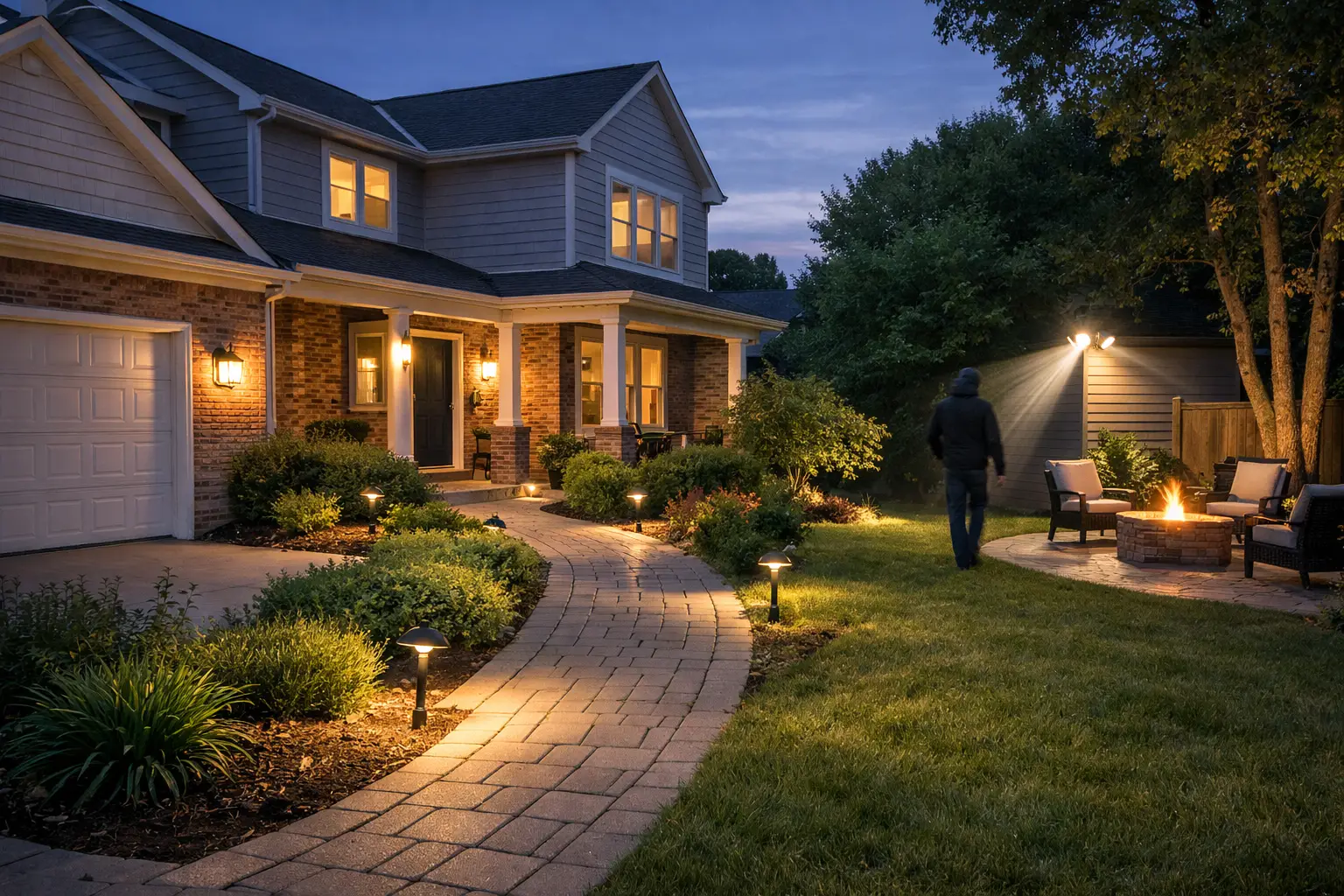
Think in terms of routes, not just fixtures. A front stoop light helps, but it does not do much for the walkway leading up to it if that path stays dark. A light over the garage is useful, but if the path from the driveway to the side entrance has shadows, it is still a safety issue. When you plan by route, the whole property starts working better.
Focus on the highest-risk areas first
Steps should be near the top of your list. Any change in height becomes more dangerous when visibility is poor, especially in an Illinois winter. Even one missed step can lead to a bad fall. You want enough light to define each tread and landing without blinding someone as they look down.
Walkways are next. A lot of suburban homes have front walks with curves, uneven pavers, or slight grade changes that disappear at night. Path lighting can help, but spacing matters. If fixtures are too far apart, you get pools of light with dark gaps in between. If they are too close, the area can look cluttered and overlit.
Entry doors also matter because people pause there. They look for keys, packages, doorbells, or house numbers. That space should feel clear and welcoming, not dim or harsh. The same goes for side doors and garage access doors, which often get less attention but are used every day.
Don’t ignore side yards and backyard access
A lot of homeowners focus on the front yard and forget about the side of the house. But side yards are common trouble spots. They are often narrow, shaded, and used for trash bins, gates, air conditioning access, or getting to the backyard. If there is mud, snow, or uneven ground, a dark side yard can become a real hazard.
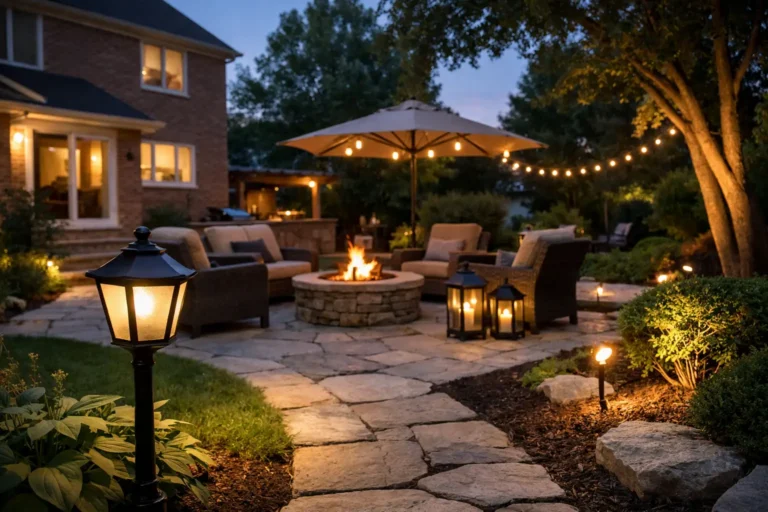
Backyards deserve the same kind of practical thinking. If you have a patio, grill area, pergola, steps off the deck, or a walkway to the garage, those spaces should be lit based on how you use them. Not every backyard needs the same amount of light. A family that entertains outside late into the evening needs a different setup than a homeowner who mostly wants to get the dog out safely after dark.
Choose the right type of light for each area
One reason lighting plans fall short is that the same fixture gets used everywhere. In practice, different areas need different jobs done.
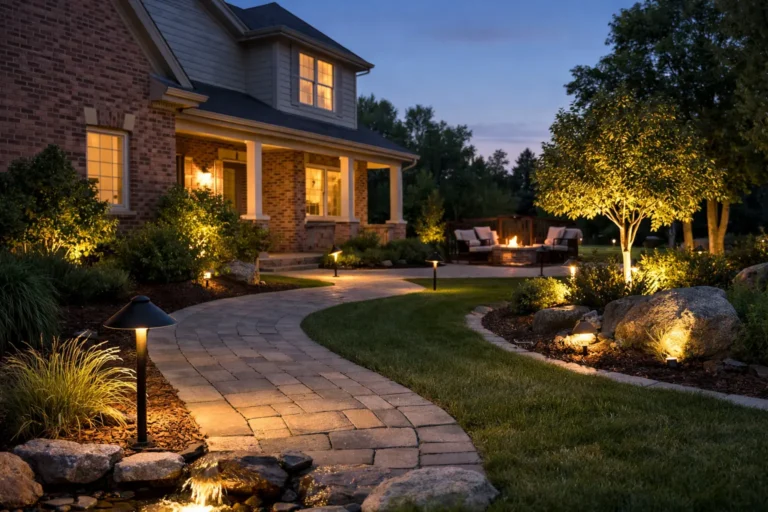
Path lights are useful for guiding people along walkways and garden edges, but they should not be your only source at a set of stairs or an entry. Step lights are better for changes in elevation because they define the surface directly. Downlighting from a structure or mounted fixture can help light a wider zone, which works well near patios or larger landings.
At doors and garages, mounted lights usually make the most sense because they give direct illumination where people need it. In landscape beds, lower fixtures can help show borders and keep the yard from disappearing into darkness. Sometimes accent lighting on a tree or architectural feature can also improve safety by balancing the overall scene and reducing extreme contrast.
It depends on the property. A narrow front walk in Downers Grove might need a simple, even path-light layout. A larger Naperville-area home with multiple elevation changes may need a mix of path lights, step lights, and mounted fixtures to make the whole route readable.
Brightness matters, but so does comfort
More light is not always better. If a fixture is too bright, it can create glare that makes it harder to see. This is especially true when lights are placed at eye level or aimed poorly. You want enough brightness to make surfaces visible, but not so much that the light feels harsh coming into the house or hitting someone in the face.
Color temperature matters too. Homeowners often notice this after the install if it was not planned well. A very cool, blue-toned light can feel stark around a home. A warmer light usually feels more natural and welcoming while still giving plenty of visibility. For most residential properties, that balance works better than the cold, commercial look people sometimes end up with by mistake.
Keep weather and maintenance in mind
In Illinois, this matters because lighting has to hold up through snow, freezing rain, spring storms, summer growth, and fall cleanup season. A fixture that looks great in a catalog still has to survive real weather and stay positioned correctly after the ground shifts or mulch gets refreshed.
You also want to think about what happens after installation. Will shrubs grow over the light? Will snow piles block it near the driveway? Will it be easy to replace a fixture if it gets damaged? A clean plan accounts for maintenance so your system still works a year or two from now.
This is another reason not to overdo it. More fixtures can mean more upkeep. The right number, placed well, usually gives a better result than adding lights everywhere.
How to plan outdoor lighting for safety without making the yard look overdone
The best safety lighting does not call attention to itself all night long. It just makes the property easier to move through. You notice the effect more than the fixtures.
That usually means keeping the design consistent. Similar fixture styles, balanced spacing, and a clear purpose for each light help the yard feel finished instead of patched together. It also helps to avoid mixing too many bulb colors or fixture types in one area. When lighting looks random, it often performs that way too.
If you are already improving the yard with new landscaping, walkways, drainage work, or a patio project, that is often the right time to think through lighting as part of the whole plan. Safety does not happen in a vacuum. A dark walkway, a low spot that holds water, and a poorly lit step can all work together to create problems. Looking at the entire outdoor space usually leads to a smarter result.
For many Chicagoland homeowners, the best approach is simple. Start with the routes people use every day. Light the steps, entries, and walking paths first. Add enough coverage to remove dark gaps, but do not turn the house into a parking lot. When the lighting is planned with real movement in mind, your property feels safer, more comfortable, and easier to enjoy year-round.
If you are standing in your yard at night wondering why it still feels dark even with lights installed, that is usually a sign the layout needs more thought, not just more fixtures.