
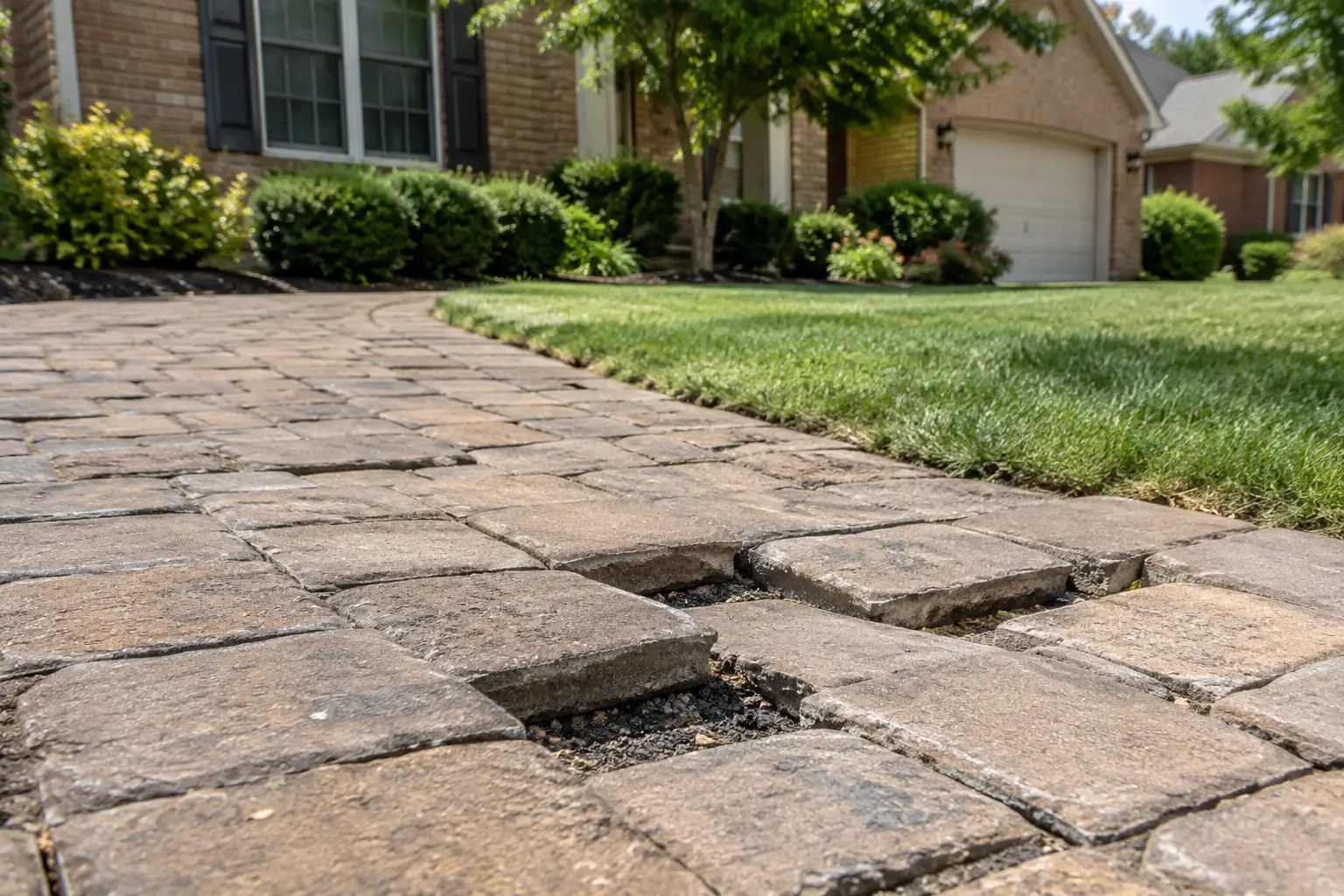
A paver patio or walkway should feel solid under your feet. When one area starts to dip, rock, or collect water, it is usually a sign of a bigger issue below the surface. Paver sinking causes are not always obvious from the top, but catching them early can help prevent a small repair from turning into a larger rebuild.
For Chicagoland homeowners, this is more than a cosmetic issue. Uneven pavers can create a trip hazard, send water toward the house, make snow removal harder, and take away from the clean look of your outdoor space. Here is what to look for and why it happens.
The Most Common Paver Sinking Causes
The base was not prepared correctly
A paver project is only as good as the foundation underneath it. Before pavers go down, the soil needs to be excavated to the proper depth, shaped for drainage, and built up with compacted gravel base material. The pavers are the finished surface, but the compacted base is what carries the weight.
When the base is too thin, uneven, or not compacted in layers, it can settle over time. You may first notice this around the edge of a patio, near a grill area, or in the path people use most often. A few sunken pavers can sometimes be reset, but widespread settling often means the base needs attention.
This is where many homeowners run into trouble with older patios or projects installed quickly. The pavers themselves may still be in good shape. The issue is that what is below them was not built to stay stable through years of use and changing Illinois weather.
Water is getting under the pavers
Water is one of the biggest reasons pavers move and sink. Rainwater that runs across a patio, spills from gutters, or drains from a nearby slope can wash away the sand and fine material below the pavers. Once that support starts disappearing, the surface above it begins to drop.
You may see puddles that keep returning in the same spot, washed-out joint sand, or a low area near a downspout. Those are clues that water is not being directed where it should go. You do not want water sitting near your foundation, and you also do not want it working its way underneath a patio or walkway.
The right fix depends on where the water starts and where it can safely go. It may involve correcting the patio slope, extending downspouts, adding a drainage solution, or rebuilding the affected paver section with proper grading underneath. Simply adding more sand on top usually will not solve the underlying water issue.
Freeze-thaw cycles move the ground
In Illinois, this matters because our winters can be tough on hardscapes. Moisture in the ground freezes, expands, and pushes soil upward. When temperatures rise, that soil thaws and settles back down. This freeze-thaw cycle can leave pavers uneven, especially if the base is holding water or was not compacted well in the first place.
Frost heave does not always make an entire patio sink at once. It can create a raised edge in one season, then a low spot after the spring thaw. Walkways and paver steps are especially worth watching because even a small change in height can become a safety concern.
A properly built base helps limit this movement, but no outdoor surface is completely untouched by Midwest weather. The goal is to give water a way out and build the base so it can handle normal seasonal movement without failing.
The soil underneath is settling
Some properties naturally have softer or more unsettled soil than others. Newer construction areas can be especially prone to settling because soil around the home, utility trenches, and landscaped areas may have been disturbed during building.
If a sunken paver area sits near the house, along a former construction path, or near a utility line, soil settlement may be part of the problem. Heavy clay soil, which is common across the Chicago suburbs, can add to the challenge. Clay holds water, expands when wet, and shrinks as it dries.
A good repair starts with removing the affected pavers and finding out how deep the settlement goes. If the soil below the base has dropped, the repair needs more than a quick surface adjustment. The area may need to be rebuilt and compacted in stages so it has lasting support.
Edging has failed or shifted
Paver edging does a lot of quiet work. It holds the outside pavers in place and keeps the whole field from spreading apart. If edging cracks, pulls loose, or was never properly secured, pavers can begin to shift outward. As gaps form, joint sand washes out and sections can settle.
This often shows up along curved walkways, patio borders, and driveway edges where vehicles or foot traffic add pressure. A loose border is not always the original cause of sinking, but it can make the problem worse quickly.
Heavy loads are stressing the surface
A patio designed for chairs and a dining table may not be built for a large outdoor kitchen, hot tub, delivery vehicle, or repeated equipment traffic. Weight alone does not always cause pavers to sink, but it can expose a weak base underneath.
If one section is sinking directly under a heavy feature, the repair plan needs to consider the load. Adding more pavers on top is not the answer. The ground and base below need to be built to support what will sit there.
How to Tell Whether the Problem Is Minor or Serious
A single low paver with no standing water may be a straightforward reset. A larger depression, however, deserves a closer look. Pay attention if you notice water flowing toward the house, pavers that rock when stepped on, open joints that keep losing sand, or a low spot that grows after every season.
Also look at nearby clues. Is a downspout dumping water beside the patio? Is the lawn sloping toward the hardscape? Is there erosion at the edge? The paver surface can tell you where the problem showed up, but the rest of the yard often explains why it happened.
For Downers Grove homeowners and other Chicago suburbs properties with basements, drainage concerns deserve prompt attention. Water problems around a patio can overlap with water problems near the foundation, so it makes sense to look at the full exterior picture rather than treating each low spot separately.
What a Proper Paver Repair Should Address
A lasting repair is usually not about replacing the visible pavers. In many cases, the original pavers can be carefully removed and reused once the base is corrected. That helps preserve the look of the patio while fixing the support underneath.
The repair should begin with identifying the water and soil conditions around the affected area. The crew can then remove the pavers, rebuild and compact the base as needed, restore the proper pitch, reset the pavers, and secure the edges. Fresh joint sand helps lock the finished surface together.
There are trade-offs. Repairing one small section may make sense when the rest of the patio is level and stable. If multiple areas are sinking or the patio drains the wrong way, patching each spot one at a time may only delay a larger repair. An honest site review should help you understand which approach fits the condition of your space.
Preventing Pavers From Sinking Again
The best prevention is proper water management and a stable base. Keep gutters and downspouts from releasing water beside patios and walks. Watch for areas where mulch, soil, or lawn grading directs water onto the pavers. After a hard rain, take a few minutes to see where water travels and where it sits.
It also helps to maintain the joints between pavers. When joint sand disappears, pavers have more room to move. If you see open gaps or recurring washout, it is worth addressing before the surface starts shifting.
A good landscape should look nice, but it also needs to work. At Revive Your Lawn, we often look at paver concerns alongside grading, drainage, and the surrounding landscape because those pieces affect one another. A stable patio starts with a yard that sends water away from the places it can cause trouble.
If your pavers are starting to dip, do not wait until a loose walkway becomes a fall risk or a puddle becomes a drainage headache. A close look at the base, slope, and water flow can point you toward a repair that protects your outdoor space for the seasons ahead.


