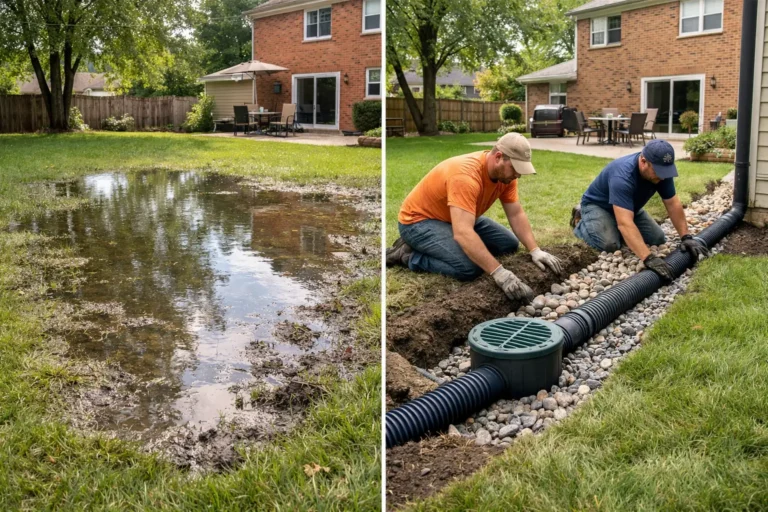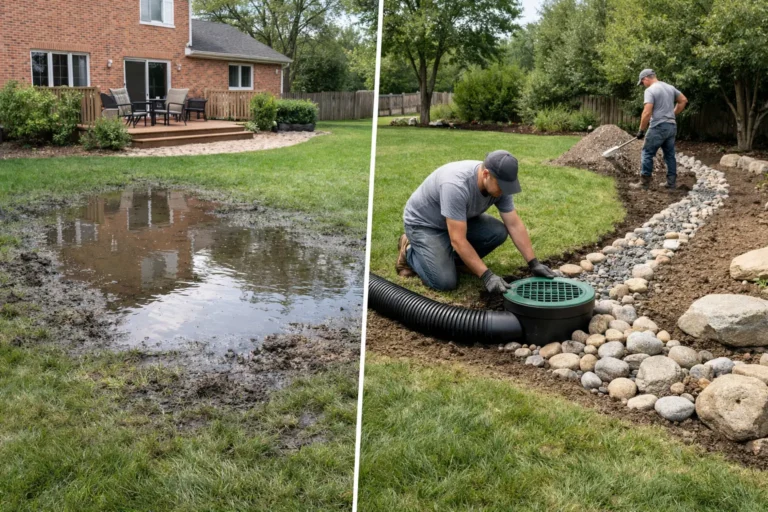
Yard flooding in the Chicago suburbs usually happens because water has no clear path out of the property. The most common causes are poor grading, clay-heavy soil, compacted lawn areas, short downspouts, clogged gutters, hardscape runoff, blocked swales, and water coming from neighboring lots.
In plain English: the rain is not always the real problem. The real problem is where that water goes after it hits your roof, patio, driveway, and lawn. Around Naperville, Downers Grove, Elmhurst, Hinsdale, Western Springs, and nearby suburbs, small drainage issues can show up fast because our lots are often flat, the soil drains slowly, and spring rain or snowmelt can hit before the ground is ready to absorb it.
Why Chicagoland Yards Flood So Easily
A yard should move water away from the house and through the property in a controlled way. When that path is too flat, blocked, or overwhelmed, the water sits. That is when you see puddles, soggy grass, mud, washed-out mulch, slick patios, or water creeping toward the foundation.
Chicagoland conditions make this worse. Many Illinois lawns are built over dense clay or post-construction soil that drains slowly. Heavy foot traffic, pets, equipment, and years of settling can pack that soil down even more. Add a few short downspouts, a patio that pitches the wrong way, or a side-yard swale that got filled in, and one hard rain can turn the yard into a mess.
Common Causes Of Yard Flooding Problems
Poor grading
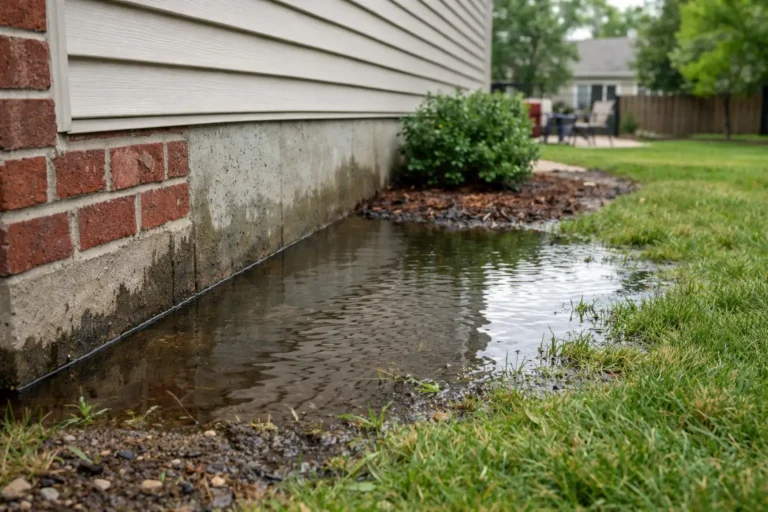
Grading is the slope of your yard. If the lawn is too flat, water slows down and collects. If the ground slopes toward the house, water can sit against the foundation, planting beds, steps, or basement walls.
This is common in older suburbs and on lots that have settled over time. It can also happen after landscaping, patios, retaining walls, sheds, or fence work changes the way water used to move.
Clay-heavy soil
Clay soil holds water longer than looser soil. That does not mean clay is bad. It just means water moves through it slowly. After a spring storm or a fast snowmelt, the top of the lawn may stay wet even when the rain is over.
If your lawn feels spongy, footprints stay visible, or puddles last into the next day, the soil may be part of the problem. For broader soggy-lawn issues, the related guide on standing water in your yard walks through the common solution types.
Compacted soil
Compacted soil has fewer open spaces for water and air. You often see it near gates, side yards, play areas, dog paths, downspouts, and spots where equipment crosses the lawn. The surface gets tight, water stays near the top, and runoff increases.
In mild cases, lawn care steps like aeration can help the soil breathe again. In more serious cases, compaction is only one part of a bigger drainage problem. Revive Your Lawn’s lawn maintenance services can help when turf health and drainage are connected.
Short downspouts and clogged gutters
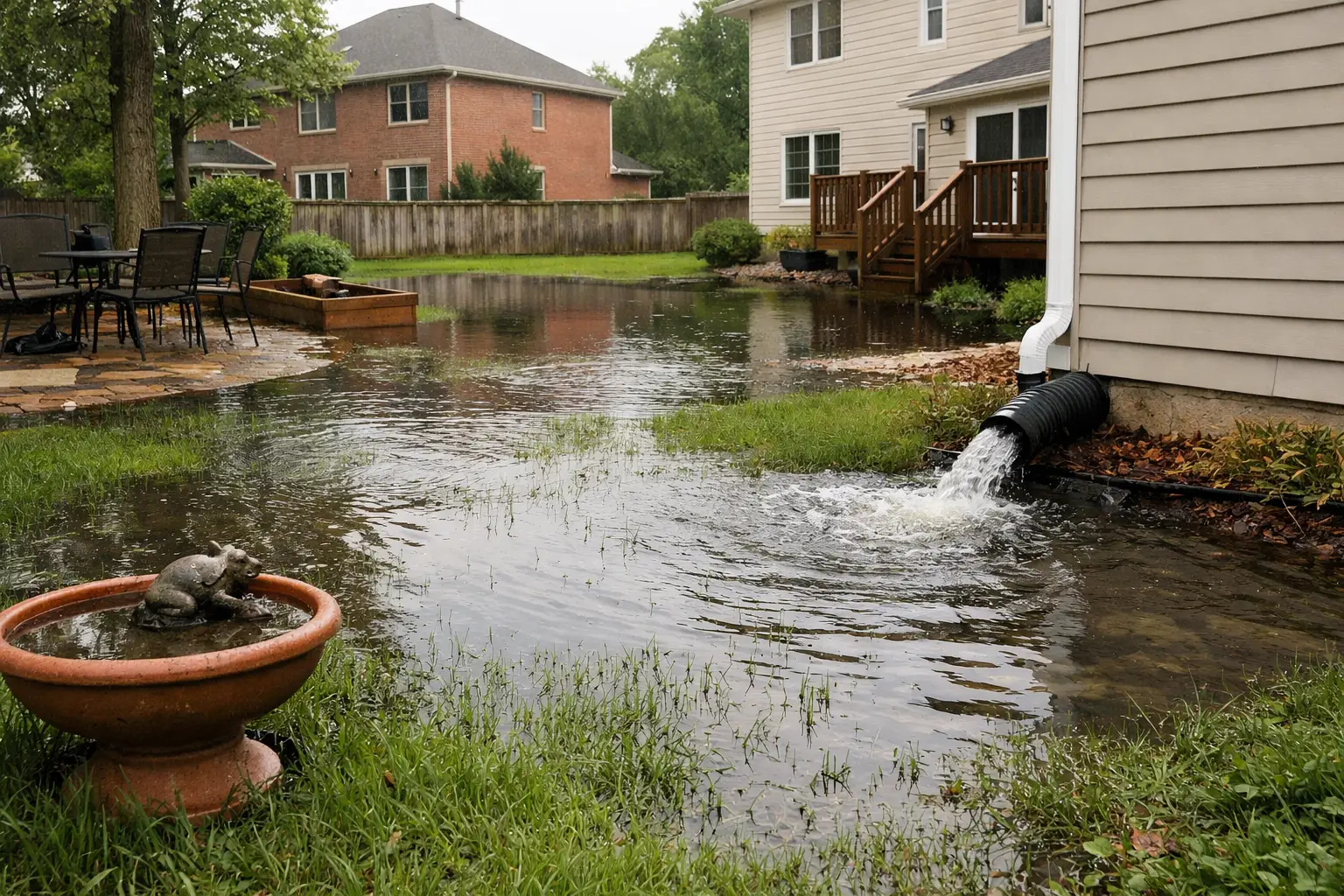
Your roof sheds a lot of water during a storm. If downspouts dump that water next to the house, into a low bed, or onto a compacted side yard, the area can flood fast.
Clogged gutters create the same kind of problem. Water spills over the edge instead of moving through the downspout system. That can wash out mulch, erode soil, soak foundation beds, and make homeowners think the yard is the only issue when the roof runoff started it.
If roof runoff is part of the problem, gutter guards may help reduce clogs, while buried downspouts or a drainage system can move the water farther from the home.
Hardscape runoff
Patios, driveways, walkways, sheds, and compacted gravel do not absorb rain the way lawn or planting beds can. If those surfaces pitch toward the yard or house, they can send extra water into one low spot.
This is why a yard sometimes starts flooding after a new patio or walkway goes in. The project may look good, but the water plan was not finished.
Blocked swales
A swale is a shallow drainage path that guides water through a property. Many homeowners do not notice them because they can look like a subtle dip in the lawn.
The trouble starts when a swale gets filled, flattened, fenced across, landscaped over, or blocked with debris. Water that used to keep moving now backs up into the yard.
Neighboring runoff
On tight suburban lots, your yard may catch water from more than one direction. If your property sits lower than the lots around it, water can move toward your side yard, rear fence line, driveway edge, or detached garage.
That does not automatically mean a neighbor did something wrong. It does mean the fix has to handle the real water volume. You also do not want to solve your problem by sending water onto someone else’s property. A good plan moves water to an appropriate discharge point.
What To Watch After A Storm
The best time to diagnose yard flooding is right after rain, not three dry days later. Walk the property when it is safe and look for the clues water leaves behind.
If you can take photos or a short video while the water is moving, do it. That helps a drainage contractor see the source instead of guessing from a dry lawn.
Cause-To-Fix Guide
There is no single fix for every flooded yard. A French drain can be the right answer in one backyard and the wrong answer in another. The goal is to match the fix to the source of the water.
| What you notice | Likely cause | Possible fix |
|---|---|---|
| Water sits near the foundation | Bad grading, short downspouts, or gutter overflow | Regrading, buried downspouts, gutter improvements, or foundation drainage |
| One low spot fills after every storm | Bowl-shaped grade or water collecting from nearby surfaces | Regrading, catch basin, dry well, or underground drainage |
| Side yard turns muddy | Compaction, roof runoff, or a blocked swale | Downspout rerouting, swale repair, soil improvement, or drain line |
| Water crosses the lawn in a path | Surface runoff from another part of the property | Swale, dry creek bed, grading adjustment, or catch basin |
| Patio or walk stays slick | Hardscape runoff or wrong pitch | Channel drain, catch basin, re-pitching, or connected drainage |
| The whole lawn stays soft | Clay soil, compaction, poor turf health, or shallow drainage issue | Aeration, soil improvement, lawn repair, or broader drainage work |
For a deeper look at one common solution, read the guide to French drain installation cost in the Chicago suburbs. It explains why slope, depth, soil, and discharge path affect the project.
Want us to read the yard with you?
If your yard keeps flooding in the same place, Revive Your Lawn can walk the property, look at grading, downspouts, soil, hardscapes, and low spots, then explain your options in plain English.
What You Can Try Yourself And When To Call A Pro
Some yard flooding problems are simple enough to investigate on your own. Clean gutters. Make sure downspouts are not dumping water right against the house. Remove leaves, mulch, or soil that is blocking a visible drainage path. Avoid driving heavy equipment over wet lawn areas. Pay attention to whether the problem is isolated or spread across the whole yard.
What I would not do is start digging trenches without a plan. Drainage work looks simple until slope, utilities, discharge points, clay soil, and hardscapes get involved.
Why The Right Drainage Plan Usually Combines A Few Fixes
Many Chicagoland yards do not have one single drainage issue. They have two or three small issues working together.
A downspout may be dumping into a compacted side yard. The side yard may slope toward a low backyard corner. A patio may add more runoff into that same corner. The fix might include buried downspouts, a grading adjustment, and a catch basin or drain line. Another property might need swale repair and lawn restoration instead.
That is why Revive Your Lawn looks at the yard as a whole. The goal is not just to hide the puddle. The goal is to move water where it belongs, protect the home, and leave you with a yard you can actually use after it rains.
If you are comparing options, start with Revive Your Lawn’s yard drainage solutions. That page explains French drains, catch basins, buried downspouts, sump pump drain lines, dry wells, grading, and other ways to manage water around Chicagoland homes.
Yard Flooding FAQ
Why does my yard flood after heavy rain?
Your yard may flood after heavy rain because the property is too flat, the soil drains slowly, downspouts are dumping water in the wrong place, or water from patios, driveways, swales, or neighboring lots is collecting in one low area.
Is a French drain always the best fix?
No. A French drain is useful when it matches the water source, soil conditions, slope, and discharge path. Some yards need regrading, buried downspouts, catch basins, swales, dry wells, soil improvement, or a mix of solutions instead.
Can gutter guards help with yard flooding?
They can help when clogged gutters are causing roof water to spill over into beds, walkways, or foundation areas. Gutter guards do not replace a drainage system, but they can be part of a larger water-management plan.
How long is too long for water to sit in the yard?
A puddle right after a hard storm is not unusual. If the same area stays wet for more than a day or two, keeps killing grass, attracts mosquitoes, or gets close to the house, it is worth looking at the drainage.
Should I just add soil to a low spot?
Adding soil can help if the low spot is minor and the water already has a good place to go. If runoff keeps flowing to that area, filling it may only push the water somewhere else or make the problem come back after the next storm.
Ready To Figure Out What Is Causing The Water?
If your yard floods after every decent rain, trust what the yard is telling you. Water always leaves clues. The right next step is to follow those clues before you spend money on the wrong fix.
Revive Your Lawn can inspect the problem area, explain what is happening, and build a drainage plan that fits your property. Schedule a free drainage consultation and we will help you sort out where the water is coming from, where it should go, and what it will take to keep your yard usable.