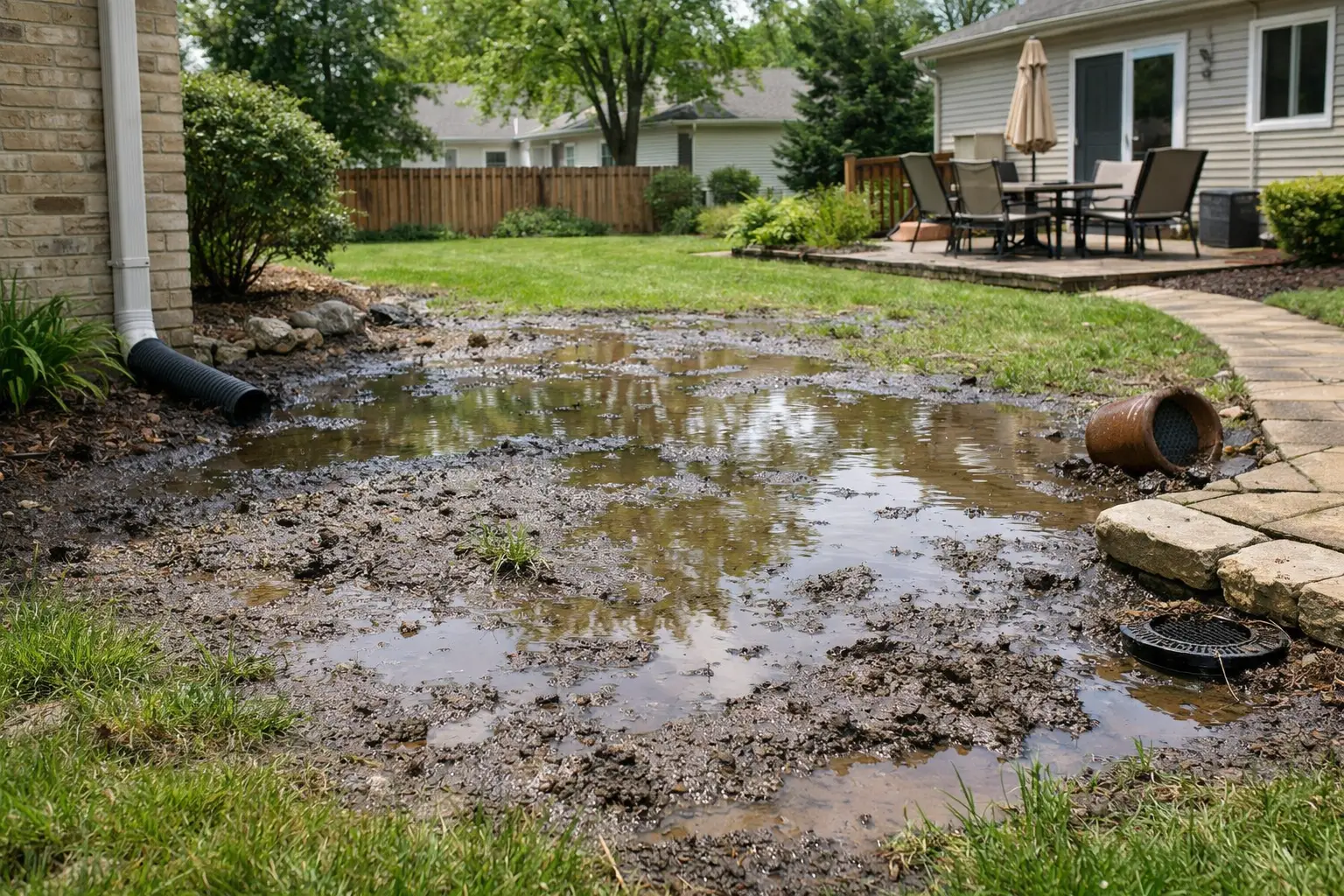
If you have been looking out the back window and thinking, why is my yard muddy when everyone else on the block seems to have usable grass, you are not alone. In the Chicago suburbs, this is one of the most common yard complaints we hear, especially in spring and after heavy storms. A muddy yard is not just annoying. It can kill grass, stain shoes, create slippery spots, and in some cases point to a bigger drainage problem around the home.
The good news is that mud usually has a reason behind it. Once you figure out where the water is coming from and why it is not draining, the fix becomes a lot more clear.
Why is my yard muddy in the first place?
Most muddy yards come down to one basic issue: too much water is sitting in one area for too long. That sounds simple, but the cause is not always simple. In Illinois, this matters because our yards deal with snowmelt, spring rain, clay-heavy soil, summer downpours, and freeze-thaw cycles that can change how water moves across your property.
A yard can be muddy because the soil drains slowly, because the lawn sits lower than nearby areas, because downspouts dump water into the same spot over and over, or because foot traffic has worn the grass down until bare soil is exposed. Sometimes it is one problem. A lot of times, it is two or three smaller problems working together.
This is where many homeowners run into trouble. They throw down seed or add a little topsoil, but the same water issue is still there. If the drainage problem stays, the mud usually comes right back.
The most common causes of a muddy yard
Clay soil holds water longer
A lot of Chicagoland yards have heavy clay soil. Clay is not bad in every situation, but it drains slowly. Instead of soaking in and moving down through the soil, water tends to sit near the surface. That is why some yards stay soggy for days after a storm while others dry out much faster.
If your lawn feels sticky, dense, and slick when wet, clay could be a big part of the problem. In many western suburb neighborhoods, especially in newer developments or areas with disturbed construction soil, this is very common.
Low spots collect runoff
Water always moves to the lowest point. If part of your yard dips, settles, or was graded poorly from the start, that area can turn into a mud pit every time it rains. Sometimes the low spot is obvious. Other times it is subtle, and you only notice it because the same area stays wet longer than the rest of the lawn.
This often shows up near patios, fence lines, side yards, and the back corners of the lot. You may not have standing water for days, but if the ground stays soft and messy, poor grading may be the reason.
Downspouts are dumping too much water
One downspout can move a surprising amount of water into your yard. If that water empties right next to the house or into a narrow area with nowhere to go, the lawn gets overwhelmed fast. You do not want water sitting near your foundation, but you also do not want it washing out one section of the yard.
This is especially common on homes where gutter downspouts end too close to planting beds, lawn edges, or side yards. The area may look fine in light rain but turn muddy after a hard storm.
Compacted soil keeps water at the surface
When soil gets packed down, water has a hard time soaking in. This happens from kids playing in the same area, dogs running a repeated path, equipment traffic, or years of regular use. Once the ground is compacted, grass struggles too. Then you get thinner turf, more exposed dirt, and even more mud.
You see this a lot around gates, play sets, shed entrances, and where people cut across the lawn instead of using a walkway.
Grass is too thin to protect the soil
Healthy grass does more than look nice. It helps hold soil in place and slows surface water. If your lawn is thin, patchy, or worn out, the soil underneath is exposed. Then every rainstorm turns that area into a mess.
Shady spots, dog areas, and places with poor drainage often lose grass first. Once the lawn thins out, the mud cycle gets worse because grass has a hard time re-establishing in constantly wet ground.
Why is my yard muddy even when it has not rained much?
If your first thought is, why is my yard muddy when we have barely had any rain, look beyond the weather. A muddy lawn is not always caused by recent storms.
Sometimes the source is irrigation that runs too often or leaks that go unnoticed. Other times, water from neighboring properties drains into your yard. In subdivisions, lot grading can send water from one backyard into another, especially if fences, patios, or landscaping changed the original flow.
Snowmelt is another big one in Illinois homes. After a winter freeze, the top layer of soil can thaw before deeper layers do. Water has nowhere to go, so the surface turns soft and muddy even if it has not rained in days.
What the mud is trying to tell you
A muddy yard is often a symptom, not the main problem. That is why a quick cosmetic fix does not always last.
If mud is close to the house, it may be a warning sign that roof runoff is not being carried far enough away. If the same strip along the side yard stays wet, the grading may be off. If the lawn is muddy only where people walk, compaction and wear may be the issue. A good landscape should look nice, but it also needs to work.
The location of the mud matters. So does how long it lasts. A yard that is soft for a day after a storm is one thing. A yard that stays muddy for a week is usually telling you water is getting trapped.
What homeowners can do next
The right fix depends on the cause. That is the part that matters most.
If downspouts are the issue, the answer may be extending or rerouting where water exits. If the yard has a low area, regrading may help water move where it should. If the soil is compacted, aeration can improve how the ground takes in water. If the lawn is bare and worn out, you may need to rebuild that section with better soil prep and new sod or seed after the drainage issue is addressed.
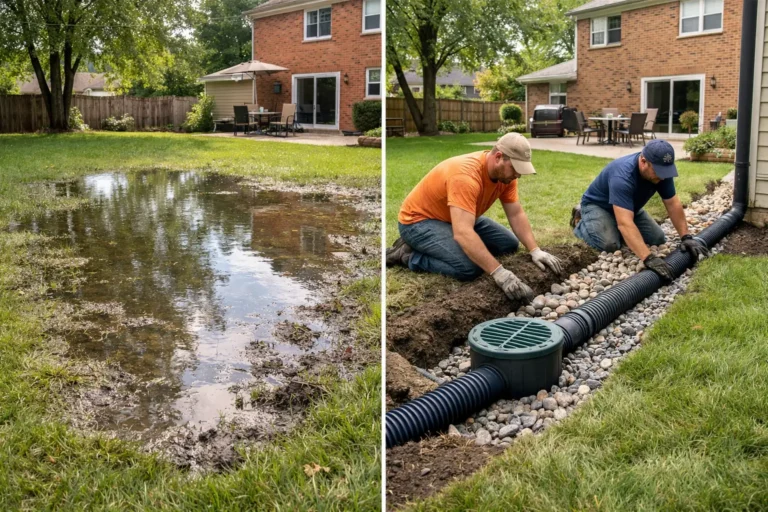
In some yards, a drainage system is the better long-term answer. That could mean a French drain, a catch basin, or another solution designed around how water moves on that specific property. It depends on the slope, soil, roof runoff, hardscaping, and how close the wet area is to the home.
This is also where many DIY fixes fall short. Adding more soil on top of a wet spot can sometimes make things worse if it changes how water flows. Planting grass seed into soggy ground usually leads to disappointment. And if water is backing up from multiple sources, one simple fix may not be enough.
When muddy yards become a bigger problem
Sometimes a muddy lawn is mostly a nuisance. Other times it starts affecting how you use the property.
Maybe the kids track mud into the house every day. Maybe the dog comes in covered in dirt. Maybe the side yard is so wet that mowing becomes difficult or a walkway turns slippery. In worse cases, poor drainage can start affecting mulch beds, patio edges, fence posts, or areas near the foundation.
That is when it makes sense to stop treating it as just a lawn issue. It becomes a property protection issue too.
For many Chicagoland homeowners, the best results come from looking at the whole exterior picture. Gutters, downspouts, drainage, grading, lawn health, and hardscaping all work together. If one part is off, the yard can stay muddy no matter how much effort you put into the grass alone.
A practical way to look at your yard
After the next rainfall, walk the property and pay attention to where water gathers, where it flows, and which spots stay soft the longest. Look at your downspout exits. Notice whether the muddy area is bare dirt, weak grass, or a low pocket. Check if the problem is near a patio, along a fence, beside the home, or in a path that gets constant foot traffic.
That quick walk can tell you a lot. And if the cause is still not obvious, it usually means the problem is below the surface or tied to the way the yard was graded.
A muddy yard is frustrating, but it is usually fixable with the right plan. The main thing is not to guess too fast. When you solve the water issue first, the lawn has a much better chance to recover and stay that way.