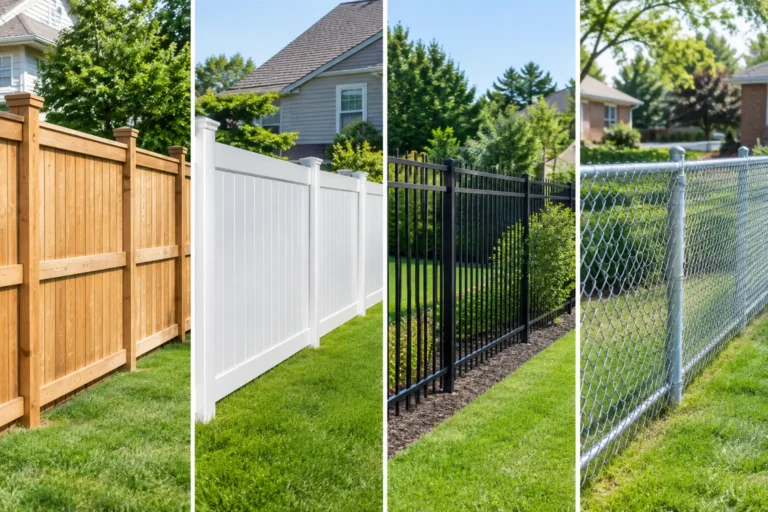
A privacy fence sounds simple until you start looking at options. Then it turns into a lot of questions fast. Which fence styles for privacy actually block the view well, hold up in Illinois weather, and still look good from the street?
That is where many homeowners in the Chicago suburbs get stuck. You want more backyard privacy, but you also do not want to pick a fence that feels too heavy, needs constant upkeep, or clashes with the rest of your property. A good fence should give you separation and peace of mind, but it also needs to fit the house, the lot, and the way you use your yard.
What makes a good privacy fence?
The first thing to know is that privacy is not just about height. Most homeowners picture a tall solid panel, and that can work well, but the material, spacing, durability, and overall layout matter just as much.
For example, a six-foot fence may give plenty of backyard privacy on a flat lot. But if your neighbor’s patio sits higher than yours, or your yard backs up to a common area, you may need to think more carefully about panel style and placement. In Illinois, this matters because wind, moisture, snow, and freeze-thaw cycles all put stress on fencing. A fence that looks good in a showroom still has to survive a real winter.
You also want to think about how private you want the space to feel. Some homeowners want full screening with no gaps at all. Others want a fence that softens views but still feels open enough to keep the yard from looking boxed in.
Most popular fence styles for privacy
There is no single best answer for every yard. The right choice depends on maintenance goals, budget range, neighborhood style, and how long you plan to stay in the home.
Wood privacy fences
Wood is still one of the most common privacy fence choices, and for good reason. It has a warm, classic look that fits a lot of Illinois homes, from older neighborhoods to newer subdivisions. If you want a natural appearance and some flexibility in style, wood gives you a lot to work with.
A standard board-on-board or solid panel wood fence creates strong privacy and a traditional look. Board-on-board styles are especially useful if you want better coverage from different angles, since overlapping boards reduce visible gaps.
The trade-off is maintenance. Wood fences usually need staining, sealing, or periodic repairs to stay in good shape. In the Chicago suburbs, moisture and winter weather can lead to warping, rot, or loose boards over time if the fence is not installed and maintained properly.
Vinyl privacy fences
Vinyl is a popular choice for homeowners who want a cleaner, lower-maintenance option. A solid vinyl privacy fence gives a neat, finished look and does not need painting or staining the way wood does.
This style works well for busy families who want privacy without adding one more maintenance project to the list. It also holds color well and usually stays looking sharp with occasional cleaning.
The main thing to watch with vinyl is quality. Not all vinyl fencing is built the same. Lower-grade materials can become brittle or fade faster, especially with weather swings. A vinyl fence can also feel more formal or less natural than wood, so curb appeal depends on matching the style to the house.
Composite privacy fences
Composite fencing sits somewhere between wood and vinyl. It is made to give you the appearance of wood with less upkeep, and it can be a strong option for homeowners who want a more upscale look.
Composite tends to be durable and resistant to many of the common issues that affect wood. It usually performs well against moisture and insects, and it does not need the same routine refinishing.
The biggest trade-off is cost. Composite fencing often comes in at a higher price point than wood or standard vinyl. For some homeowners, that makes sense if they want long-term durability and a more premium finish. For others, it may be more fence than they need.
Horizontal privacy fences
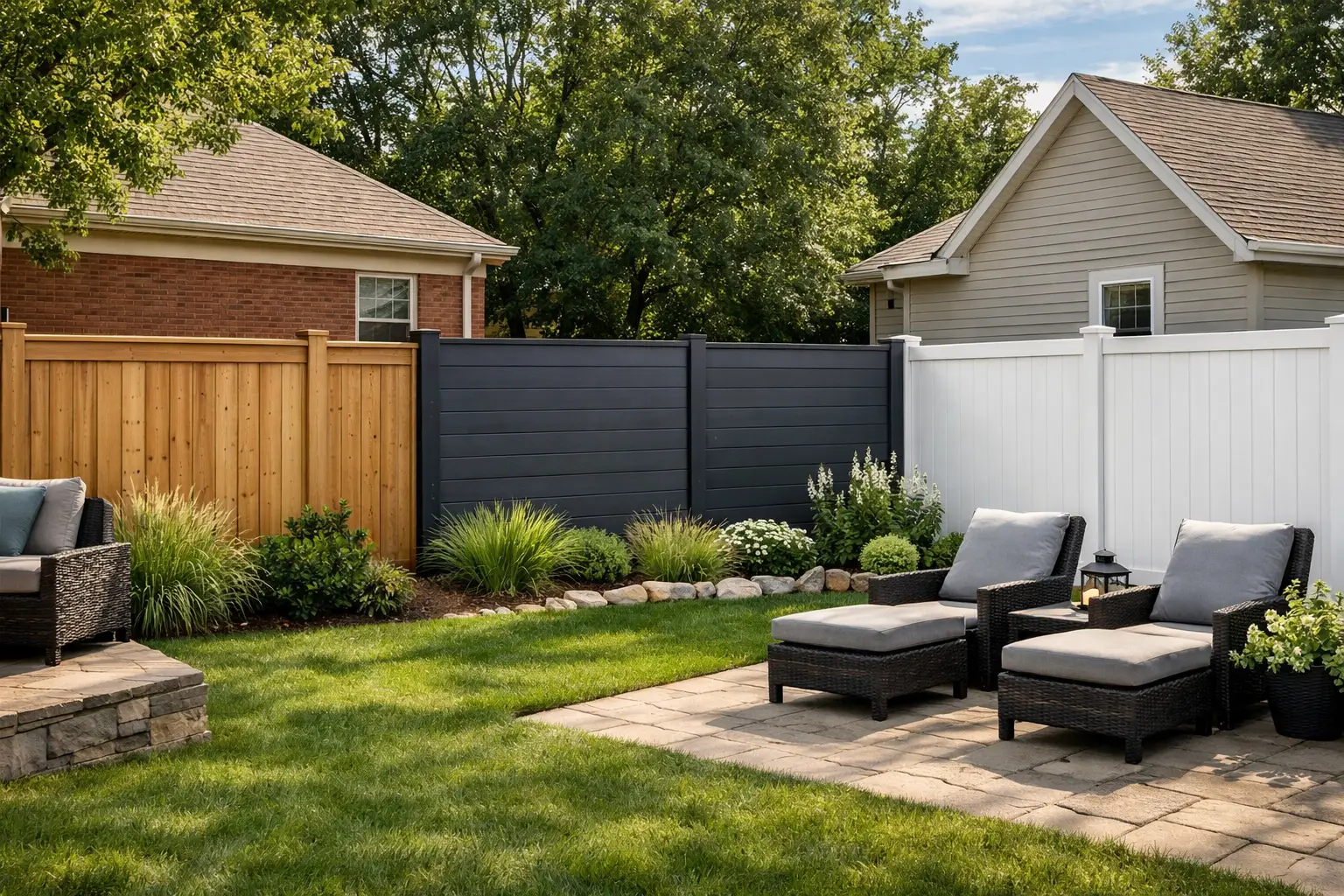
Horizontal fencing has become more popular in recent years, especially for updated or modern-looking homes. Instead of vertical pickets, the boards run side to side, creating a cleaner, more contemporary design.
This style can look great around patios, pool areas, and outdoor living spaces. It often feels intentional and custom, which is why homeowners looking to boost curb appeal tend to like it.
But horizontal fences need careful installation. The lines have to stay straight, the spacing has to be consistent, and the posts need to be solid. If not, the finished product can look off pretty quickly. This is one of those styles where details matter.
Choosing fence styles for privacy in Illinois
In Chicagoland, weather should be part of the conversation from the start. Heavy snow, wet springs, summer storms, and freezing temperatures all affect how a fence performs over time.
Wood can look great here, but it needs protection from moisture. Vinyl handles weather well in many cases, but lower-end products may crack or shift. Composite can offer strong durability, but that does not mean every site is the same. Soil conditions, drainage, and exposure all play a role.
This is also where many homeowners run into trouble with fence placement. If you have drainage issues in the yard, a fence should not make them worse. You do not want water sitting near your foundation, pooling around posts, or turning the fence line into a muddy strip every spring. On some properties, especially in flatter suburban yards, solving drainage and fencing together makes more sense than treating them as separate projects.
Style matters from the street too
Privacy is usually about the backyard, but the fence still affects the whole property. A fence that feels too bulky can make a yard look smaller. One that is too plain may not add much visually, even if it does the job.
That is why it helps to look at the fence as part of the full exterior picture. The color of the home, the landscaping around the perimeter, nearby patios or pergolas, and even lighting all influence whether the fence looks like it belongs.
For example, a white vinyl privacy fence may look right on one property and too bright on another. A stained cedar fence can feel warm and high-end, but only if the surrounding yard matches that style. A good fence should look nice, but it also needs to work.
Don’t forget the layout of your yard
The best privacy fence is not always the one with the tallest panels. Sometimes it is the one that is placed thoughtfully around the areas you actually use.
If your goal is privacy around a patio, deck, or hot tub area, full-yard fencing may not be the only answer. In some cases, partial screening, a decorative privacy panel, or a fence paired with landscaping gives you a better result without closing off the entire yard.
Corner lots, sloped yards, and homes with close rear neighbors often need a more tailored approach. What works on a standard rectangular lot in Naperville may not work the same way on a tighter property in Downers Grove or an older lot with mature trees. This is where planning matters more than copying a photo you saw online.
What homeowners usually care about most
Most people are balancing the same few priorities. They want privacy, but they also want the fence to look clean, last well, and not become a headache a year later.
If low maintenance is the main goal, vinyl or composite often makes sense. If natural appearance matters most, wood is still hard to beat. If design is a bigger priority, horizontal layouts or custom details may be worth considering. And if the yard already has drainage problems or grading issues, those should be addressed before the fence goes in, not after.
For many Chicagoland homeowners, the best answer is the one that fits both the house and the lifestyle. A fence is not just a border. It changes how the yard feels, how much time you spend maintaining it, and how comfortable the space is for family, guests, and everyday use.
If you are narrowing down fence styles for privacy, start by thinking about how you want the yard to function, not just how you want it to look in a photo. The right fence should give you more comfort, less hassle, and a backyard that feels like it is truly yours.