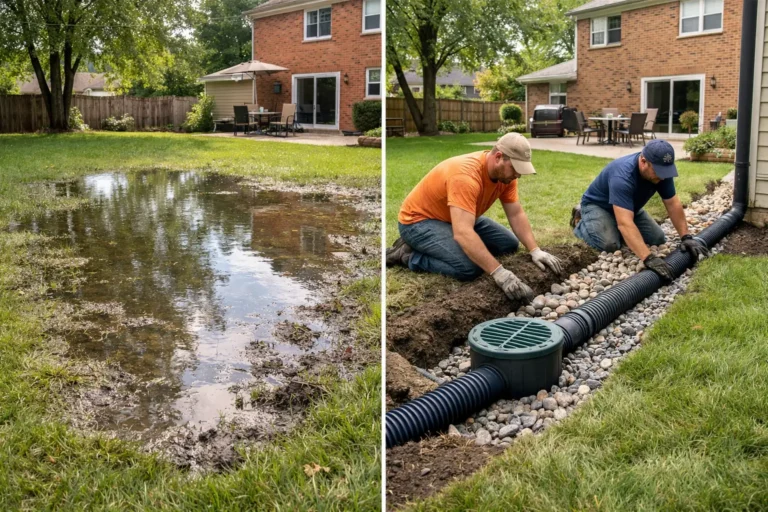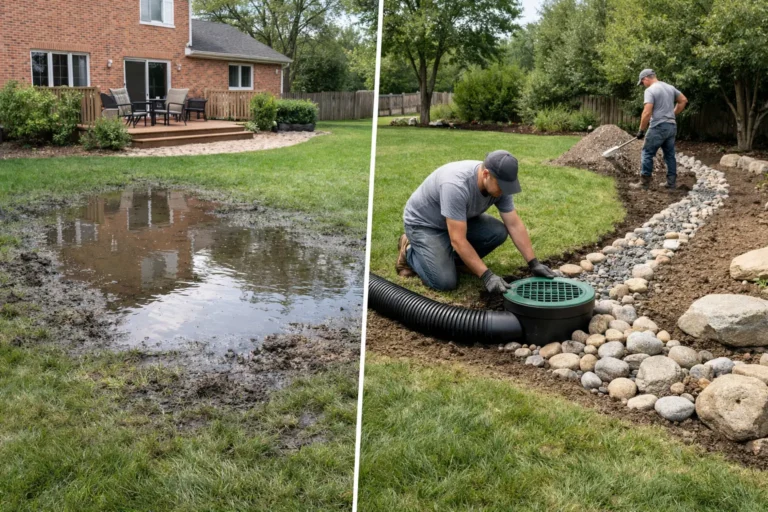
A wet strip of grass that stays muddy days after a storm is more than an annoyance. In many Chicago suburbs, it is a sign that water has nowhere useful to go. Good drainage swale design gives that water a planned path across the yard, helping protect your lawn, landscaping, walkways, and most importantly, your foundation.
A swale is not a ditch carved through the middle of the property. When it is designed well, it is a shallow, gently shaped channel that blends into the landscape. You may not notice it until a heavy Illinois rain shows you exactly why it is there.
What Is a Drainage Swale?
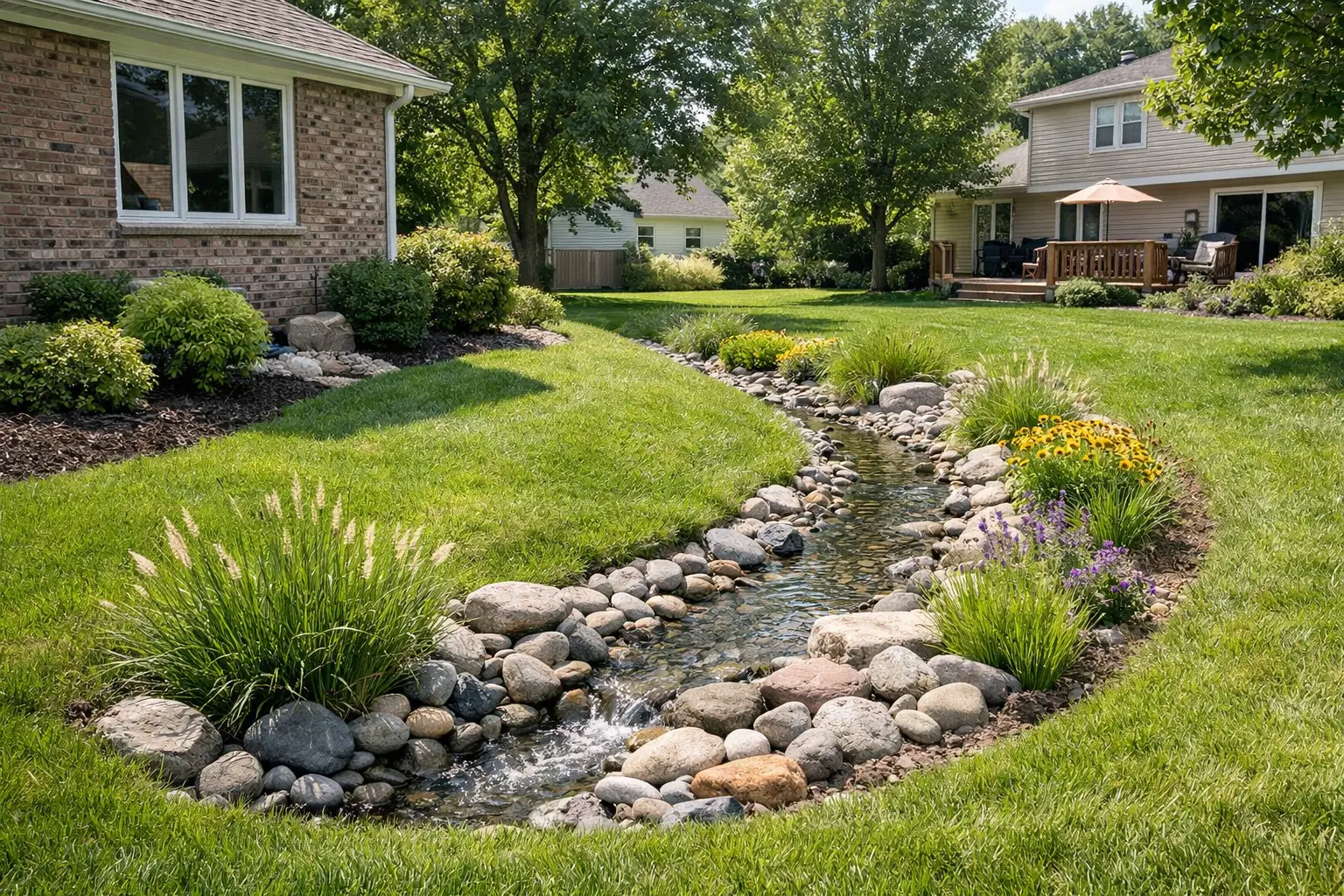
A drainage swale is a broad, low area in the yard that collects surface water and guides it toward a safe outlet. It uses gravity instead of pipes, pumps, or complicated equipment. The goal is simple: keep water moving away from the house and prevent it from collecting in places where it can damage turf, mulch beds, patios, or foundations.
Most swales look more like a soft valley than an open trench. The sides should be gradual enough to mow safely and walk across comfortably. Depending on the yard, the swale may be finished with grass, river rock, native plants, or a combination of materials that fits the surrounding landscape.
In Illinois, this matters because our yards deal with spring thaw, hard summer downpours, packed clay soil, and freeze-thaw cycles. A yard that handled a normal rain last year may struggle when a quick storm drops several inches of water in an afternoon.
Start With Where the Water Comes From
The best drainage swale design starts with observation, not a shovel. Before planning a route, look at the whole property after a rain. Water may be coming from roof downspouts, a neighboring yard, a sloped driveway, a patio, or a low spot that has slowly settled over time.
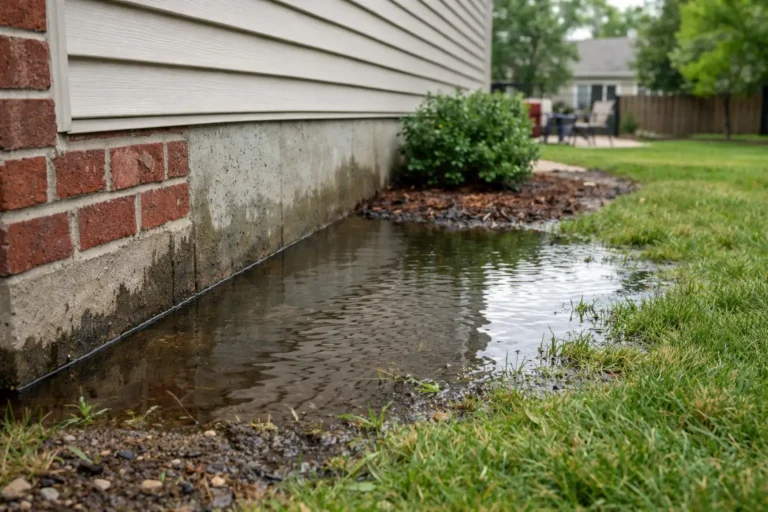
Here is what to look for: standing water near the foundation, worn mulch, grass that turns thin or yellow, muddy tracks near gates, water pooling beside a patio, and downspouts that dump directly into a planting bed. These clues help show where water is entering the problem area and where it needs to go instead.
A swale cannot solve every drainage issue by itself. If the main problem is roof runoff, downspout extensions or buried drain lines may need to be part of the plan. If water is pressing against a basement wall, the grading near the foundation may need attention first. A good solution often combines a swale with proper grading, gutter drainage, and landscape work.
Slope Is the Part That Makes a Swale Work
Water will only move if there is a consistent downhill path. That sounds obvious, but this is where many homeowners run into trouble. A swale can look nicely shaped and still hold water if it has a high spot in the middle or ends at another low spot with no outlet.
The grade does not need to be steep. In fact, a gentle slope is usually better for a residential yard because it reduces erosion and looks more natural. But it does need to be continuous from the collection area to the discharge point.
The discharge point matters just as much as the swale itself. Water should not be directed toward a neighbor’s foundation, across a public sidewalk where it can freeze, or into a spot that simply floods another section of your yard. Local rules, lot layout, existing easements, and nearby homes all affect what makes sense. This is one reason drainage work in older Naperville-area homes or tightly spaced Downers Grove neighborhoods needs a property-specific plan.
Keep Water Away From the House
The area immediately around the foundation should shed water away from the home. A swale is usually placed farther out in the yard, where it can intercept runoff before it reaches the house or gather water moving across the lawn.
You do not want water sitting near your foundation, even if it seems to disappear within a day. Repeated soaking can contribute to wet basement concerns, soil movement, and damage to nearby landscaping. The goal is not to make the yard perfectly dry at every moment. It is to move excess runoff away in a controlled way.
Choosing Grass, Rock, or Planting for a Swale
The finish of a swale should match the amount and speed of water it handles. A shallow grass swale is often a good fit for broad lawn areas with moderate runoff. It stays subtle, is easy to mow, and can blend into the rest of the yard.
For spots that see faster water during storms, rock can help protect the soil from washing out. River rock or larger drainage stone may be used in the bottom of the swale, especially near an outlet or where downspout water enters. Rock is practical, but too much of it can make a yard feel harsh or create a maintenance issue when leaves collect between stones.
Plantings can also work well in a swale, but the plants need to handle changing conditions. The bottom may be wet after rain and dry during other parts of the season. In the Chicago suburbs, selecting hardy plants that can tolerate both conditions is more useful than choosing something only for color. A good landscape should look nice, but it also needs to work.
Common Drainage Swale Design Mistakes
A swale should improve the yard, not create a new problem. The most common issue is making it too narrow and deep. That creates a ditch that is hard to mow, easy to trip in, and more likely to erode.
Another mistake is sending water to a dead end. If runoff reaches the bottom of the swale but cannot leave, the result is still a muddy low spot. Poorly compacted soil, misplaced edging, and thick layers of mulch can also block the path of water over time.
Be careful about trying to force every drainage problem into one feature. A swale may be the right answer for surface runoff across an open lawn, while a buried drain line may make more sense beside a patio or under a narrow side yard. Sometimes the right solution includes both. It depends on the grade, soil, roof drainage, and how the property is used.
Plan for Real Life, Not Just Rainfall
A drainage feature needs to fit how your family uses the yard. If the swale crosses a play area, dog run, or the route from the driveway to the back gate, its shape and finish need extra thought. A subtle grass swale may be easier to live with than a rock channel in a high-traffic area.
Maintenance also deserves consideration. Grass swales need normal mowing and occasional checks for low spots. Rock swales may need leaves and debris cleared after fall storms. Planting-based swales need seasonal cleanup, especially during the first year while plants establish. None of that is difficult, but ignoring a drainage path can let it clog or settle until the original issue returns.
For many Chicagoland homeowners, drainage improvements are also a good time to look at the rest of the outdoor space. Regrading a yard may create an opportunity to refresh beds, repair turf, add a cleaner walkway edge, or improve downspout drainage. Coordinating the work helps the property look finished instead of patched together over several seasons.
When It Is Time to Bring in a Drainage Professional
If water is reaching the foundation, flooding a patio, washing out landscaping, or regularly leaving parts of the lawn unusable, it is worth having the grade evaluated. The same is true when a yard appears flat but water consistently collects in one place. Small elevation changes can be hard to see from ground level, yet they make a major difference after a storm.
A professional can map the flow of water, identify the best outlet, and build a swale that works with the home and landscape rather than against them. At Revive Your Lawn, we look at the full picture, including roof runoff, existing grade, lawn health, hardscape areas, and the way you actually use your yard.
The right swale should not make your property look like a drainage project. It should leave you with a cleaner, more usable yard that handles Illinois weather with a lot less drama.