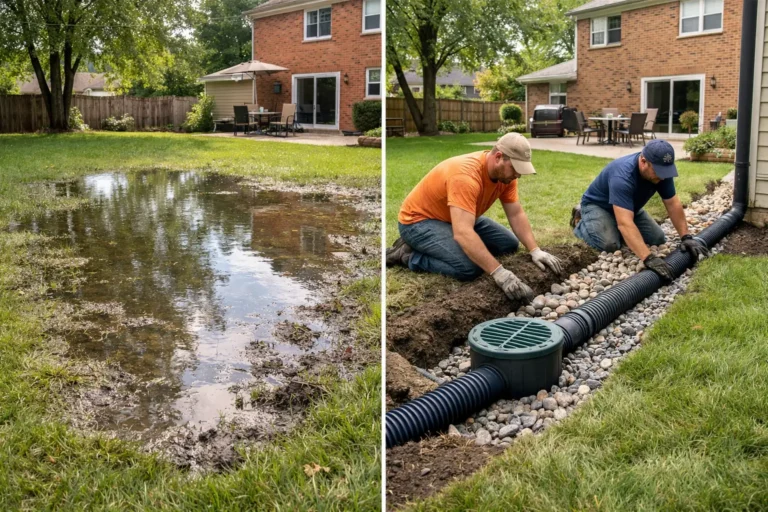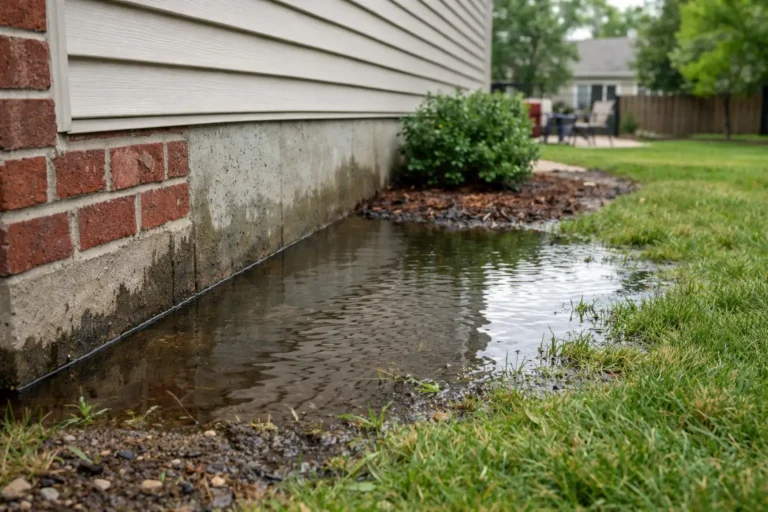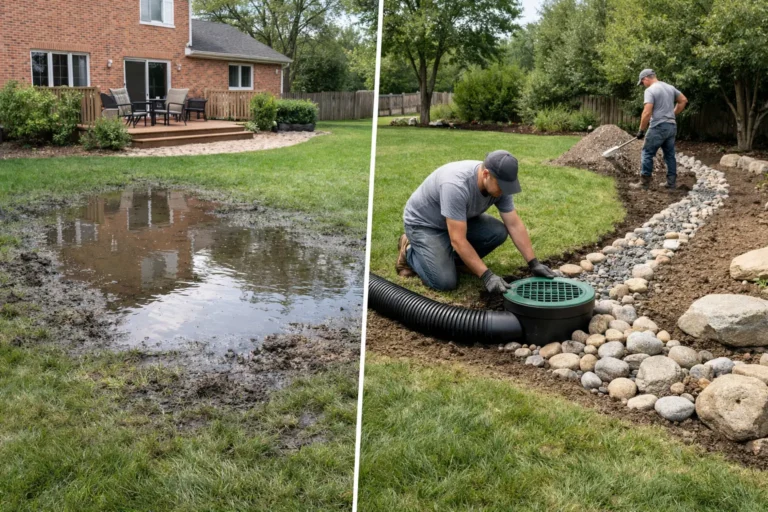
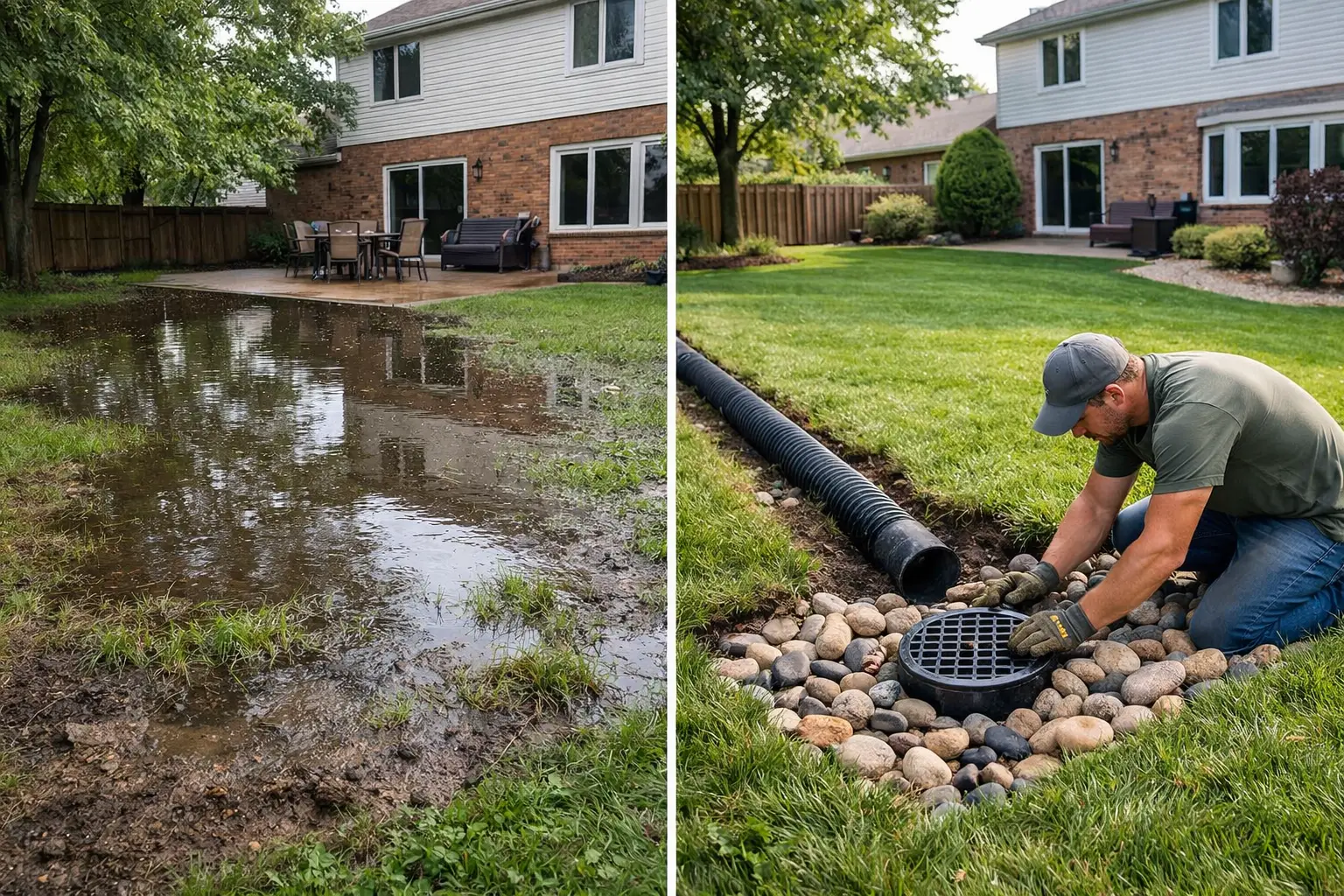
A yard can look fine in August and still have a drainage problem waiting for the next hard Illinois rain. If you see puddles near the house, muddy lawn areas that never dry out, mulch washing away, or water pooling by a patio, it is time to take a closer look. This Illinois yard drainage guide explains what causes those issues, what to watch for, and which solutions may make sense for your property.
In the Chicago suburbs, drainage is not just about keeping shoes clean. Repeated water around a foundation, driveway, walkway, or low-lying lawn can lead to bigger repair needs over time. The right answer is rarely one-size-fits-all. A good drainage plan starts by figuring out where the water is coming from and where it can safely go.
Why Illinois yards have drainage problems
Our weather puts a lot on a yard. Spring thaw can leave the ground saturated before the first heavy rains arrive. Summer storms can drop a large amount of water in a short time. Then fall leaves clog gutters and downspouts just when the ground is getting wet again.
Many Chicagoland homes also sit on heavy clay soil. Clay does not let water move through it quickly. Water tends to sit on top, follow the easiest path, and collect in low spots. That is why a lawn can stay soft and muddy for days even when nearby yards appear dry.
Newer landscaping can create problems too if the grading is off. A patio, garden bed, retaining edge, or fresh sod project should not direct water toward the home. A good landscape should look nice, but it also needs to work. The finished grade, or slope of the yard, matters just as much as the plants and pavers.
Illinois yard drainage guide: what to look for
You do not need to diagnose the entire yard from your kitchen window. Start by walking the property during or shortly after a steady rain. That is often when the source of the problem becomes clear.
Here are the warning signs we see most often at Naperville-area homes and throughout the western suburbs:
- Water sits against the foundation or near basement window wells.
- Downspouts empty beside the house, then create a trench through mulch or lawn.
- A section of grass stays thin, yellow, muddy, or unusually mossy.
- Water collects at the bottom of a slope, near a fence line, or along a patio.
- Walkways and driveways ice up in winter because water has nowhere else to go.
- Mulch, soil, or gravel repeatedly washes out after storms.
One wet area after a major storm is not always a reason to panic. But standing water that remains for more than a day or two, especially near the house, is worth addressing. This is where many homeowners run into trouble: they focus on the puddle but not the path the water took to get there.
Check the roof runoff first
A surprising number of yard drainage issues begin at the roofline. Your roof gathers a large amount of water during a storm, and the gutters send that water to a few downspout locations. If those downspouts discharge too close to the foundation, the soil gets overloaded fast.
First, make sure gutters are clear and pitched correctly so water reaches the downspouts. Gutter guards can help reduce leaf buildup, although they still need occasional inspection. Then look at where each downspout releases water. A short extension may improve a minor issue. For recurring water problems, an underground downspout connection can carry roof runoff farther into the yard or to an approved drainage outlet.
Common drainage solutions and when they fit
The best solution depends on the source of the water, the shape of the lot, soil conditions, and available discharge areas. In Illinois, drainage work also needs to account for freezing temperatures, snow, and local municipal requirements. A quick fix that sends water toward a neighbor’s property can create a new problem and may not be allowed.
Grading and swales
Grading means reshaping the soil so surface water moves away from the house. A swale is a shallow, gently sloped channel in the yard that guides water toward a safer low point. These are often a good fit when the overall slope is working against the property or when runoff spreads across a wide area.
Grading can be a straightforward solution, but it needs to be done carefully. Moving soil near a foundation, patio, or mature tree without a plan can cause other issues. The goal is not a steep, obvious ditch. It is a natural-looking slope that helps water leave the area without making the yard harder to use or mow.
French drains
A French drain is a trench containing perforated pipe and drainage stone. It collects water below the surface and directs it away from a wet area. It can be useful for soggy lawn sections, water collecting along a foundation, or runoff coming down a slope.
French drains are not magic pipes that solve every puddle. They need the right depth, slope, filter fabric, stone, and exit point. If the pipe has nowhere appropriate to discharge, the system will not perform as intended. This is why a site visit matters before recommending one.
Catch basins and solid drain pipe
When water flows across the surface and gathers in one clear low spot, a catch basin may be the better choice. A catch basin is a grated box set into the ground that collects surface water. Solid pipe then carries that water to a suitable discharge location.
This setup is often helpful near patios, driveway edges, and other hard surfaces where water moves quickly. It can also work well with underground downspout extensions. The trade-off is maintenance: basin grates and collection areas should be checked for leaves, mulch, and debris so they do not clog.
Dry wells and rain gardens
Some yards do not have an easy place to send water. In those cases, a dry well or a properly designed rain garden may help manage runoff on-site. A dry well is an underground area filled with stone or a storage chamber that lets water slowly soak into surrounding soil. A rain garden is a planted low area designed to hold and filter stormwater temporarily.
These options depend heavily on the soil and water table. Heavy clay can limit how quickly water drains, so they are not right for every Chicago-area property. When designed well, though, they can pair drainage function with a cleaner, more attractive landscape.
Do not ignore water near the foundation
Water sitting near your foundation is the issue we take most seriously. You do not want water sitting near your foundation because it can increase pressure against basement walls, find small cracks, and contribute to damp conditions below grade.
Start with the simple items: clean gutters, working downspouts, and soil that slopes away from the home. If water still collects there, the problem may involve grading, buried drainage, window well drainage, or a combination of factors. A professional assessment can help separate a surface-water issue from a concern that may need additional foundation or plumbing evaluation.
Plan drainage with the rest of the yard in mind
Drainage should not feel like an ugly add-on. A thoughtful plan can protect the property while improving the way the yard looks and functions. For example, drainage can be installed before a new patio, paver walkway, landscape bed, or sod project so finished areas are not disturbed later.
This also helps avoid a common mistake: covering a drainage problem with mulch, decorative stone, or new grass. Those materials may improve the appearance for a while, but they will not change where the water goes. Address the water first, then finish the landscape.
For busy Downers Grove homeowners and families across Chicagoland, the practical goal is simple: a yard that dries out reasonably, keeps water away from the house, and stays usable after normal Illinois weather. Revive Your Lawn looks at the full exterior picture, from roof runoff and grading to drainage systems and the landscaping that finishes the job.
If your yard has a spot that keeps turning into mud, do not wait for the next storm to tell you the same story. Take a walk after a rain, note where the water starts and stops, and get clear advice before a small drainage headache becomes a larger property concern.