A front yard can look tired even when the lawn is green. Usually, the problem is not the house. It is that there is nothing giving the eye a clear path from the curb to the front door. The best plants for curb appeal do that job well. They add shape, color, and structure without turning your weekends into a full-time gardening project.
For Chicagoland homeowners, plant selection also has to be practical. Our summers can get hot and dry, our winters are hard on branches and roots, and spring rain can leave some yards soggy for days. A good landscape should look nice, but it also needs to work in real Illinois conditions.
Start With a Front-Yard Plan, Not a Cart Full of Plants
Here is where many homeowners run into trouble: they pick individual plants they like, then try to find a place for them. That often creates a scattered look and a yard that needs more trimming, watering, and replacing than expected.
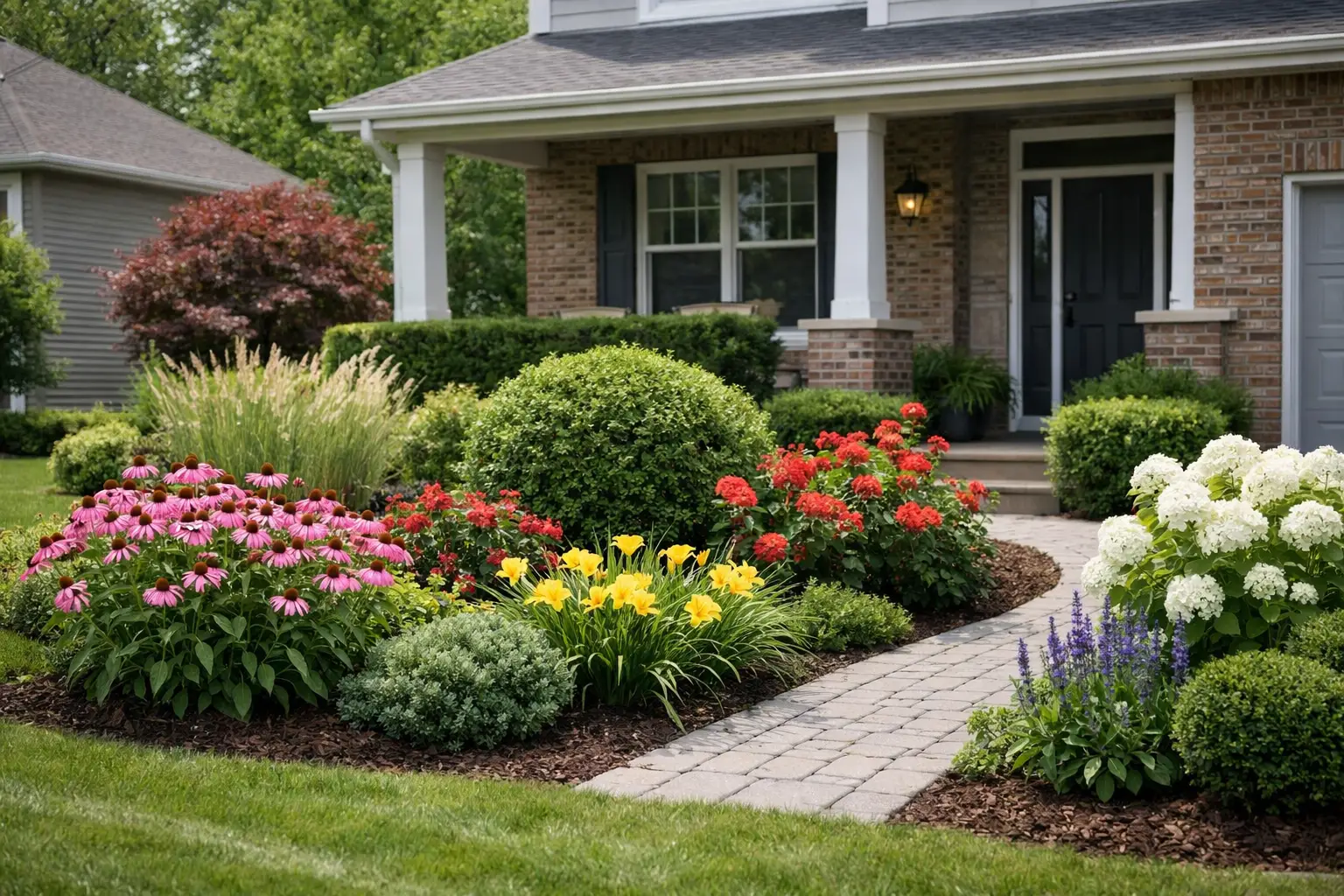
A better approach is to look at the whole front of the property. Evergreen shrubs create a dependable base. Flowering shrubs and perennials bring seasonal color. One small ornamental tree or a few taller plants can add height near a corner, bed edge, or entry. The result should frame your home, not hide it.
Before installing anything, pay attention to sunlight, mature plant size, and water flow. A plant tag may look small at the nursery, but many shrubs can spread several feet over time. You also do not want water sitting near your foundation because a dense planting bed or raised edging blocks the natural path away from the house.
The Best Plants for Curb Appeal in Chicagoland
The right mix depends on your home, lot size, and how much maintenance you want to take on. Still, these are reliable choices we often recommend for Illinois homes because they handle our climate and give homeowners a strong visual return.
1. Boxwood for Clean, Formal Shape
Boxwoods give entry beds and front walkways a neat, finished look all year. They work especially well along foundations, around porch columns, and in more traditional landscape designs. Their dark green color also makes flowers and lighter foliage stand out.
The trade-off is upkeep. Boxwoods need enough spacing for air movement, and they benefit from light pruning to keep their shape. In exposed western suburbs yards, they can also suffer winter burn from cold wind and reflected sun. A protected location makes a big difference.
2. Yews for Shade and Year-Round Green
Yews are a solid option where the front of the house gets part shade. They have a softer texture than boxwoods and can be trimmed into a formal hedge or left more natural. They are particularly useful under mature trees where many flowering plants struggle.
Keep them away from spots that stay wet after storms. Yews do not like soggy roots. If a downspout empties into that bed or the lawn slopes toward the house, correcting drainage should come before planting.
3. Arborvitae for Privacy and Vertical Interest
Arborvitae are well known as privacy plants, but a few can also improve curb appeal. Their upright shape can soften a tall blank wall, screen utility equipment, or add height at the corner of a home without taking up a wide planting bed.
They need room to grow and regular watering while they establish. Deer can also be a concern in some Chicagoland neighborhoods. If deer regularly visit your yard, arborvitae may need protection or may not be the right choice for the most visible front bed.
4. Panicle Hydrangeas for Big Summer Color
For homeowners who want a noticeable bloom, panicle hydrangeas are hard to beat. Their large white flowers appear in summer and often change to pink as the season moves along. Many varieties hold their dried blooms into fall, which adds interest after other plants have faded.
Unlike some hydrangeas, panicle types are generally dependable in Illinois winters. They still need consistent water during dry stretches, especially in the first couple of seasons. Place them where they have room to become a feature instead of crowding them between the house and sidewalk.
5. Spirea for Easy, Bright Color
Spirea is a practical workhorse shrub. It comes in compact sizes, offers pink or white flowers, and often has foliage in shades of green, gold, or orange. It is a good fit for sunny foundation beds, mailbox plantings, and smaller front yards.
A little cleanup in early spring keeps it looking fresh. If you want the bed to stay polished, avoid planting too many different spirea colors together. Repeating one variety usually looks cleaner from the street.
6. Ninebark for Contrast and Toughness
Ninebark has deeper burgundy foliage that gives a front bed contrast, especially next to green evergreens or light-colored homes. It is a native-friendly shrub that handles Illinois weather well once established, and its small spring flowers are a bonus.
Ninebark can grow larger and more loosely than homeowners expect. It works best in a wider bed or toward the back of a layered planting, not squeezed right against a front walk.
7. Serviceberry for a Small, Four-Season Tree
If your front yard needs a focal point, serviceberry is worth considering. It has early spring flowers, berries that attract birds, attractive summer foliage, and warm fall color. Its size is more manageable than many shade trees, making it a smart choice for Naperville-area homes with modest front lawns.
As with any tree, placement matters. Keep enough distance from the foundation, driveway, and overhead lines. A well-placed tree adds character. A tree planted too close can create future pruning and root concerns.
8. Ornamental Grasses for Movement
Ornamental grasses bring a different texture to front beds. They move in the wind, stay interesting into winter, and pair well with shrubs and perennials. Feather reed grass and switchgrass are common choices for Illinois landscapes.
Use grasses with some restraint near a front entry. One grouping can look sharp. Too many different grasses can make a small bed feel messy, especially after a snowy winter. Cutting them back in early spring is part of their normal care.
9. Coneflowers, Black-Eyed Susans, and Catmint
Perennials are where a front yard gets its personality. Coneflowers and black-eyed Susans offer strong summer color and hold up well in sunny Illinois beds. Catmint adds soft blue-purple flowers and a lower, flowing shape that looks good near a walkway or bed edge.
These are not zero-maintenance plants, but they are forgiving. Deadheading can extend blooms, and cutting back tired growth keeps the bed cleaner. Grouping several of the same plant together has more curbside impact than planting one of everything.
10. Sedum for Sunny, Dry Spots
Sedum is a good choice for hot spots near driveways, sidewalks, and south-facing walls. Its thick leaves hold moisture well, and late-season flowers bring color when many summer plants are slowing down. Taller sedum varieties also look good with ornamental grasses.
Do not put sedum in a low area that stays wet. Tough plants still need the right conditions, and drainage issues can make even a simple planting fail.
Use Layers to Make the Landscape Look Intentional
The strongest front beds usually have three levels. Taller plants or small trees sit toward the back or corners. Medium shrubs make up the main body of the bed. Lower perennials, grasses, or ground-level plants soften the front edge.
You do not need every plant listed above. In fact, using fewer varieties and repeating them often looks more expensive and is easier to maintain. For example, an evergreen base with panicle hydrangeas, a few catmint groupings, and one serviceberry can give a home a clean, welcoming look without visual clutter.
Mulch helps tie the bed together, holds moisture, and reduces weeds, but keep it a few inches away from shrub trunks and the foundation. Thick piles of mulch against plants can trap moisture where it does not belong.
Curb Appeal Is More Than Plants
Plants do a lot, but they cannot fix a cracked walk, muddy bed, dark entry, or downspout that dumps water into the landscape. This is why we look at the full exterior picture during a walkthrough.
A clean paver walkway can give planting beds a clear border. Low-voltage landscape lighting can highlight a tree, make steps safer, and keep the front of the home welcoming after sunset. Proper grading or drainage can protect the plants and help keep water away from the foundation. For Downers Grove homeowners and throughout the Chicago suburbs, those details matter just as much as flower color.
Maintenance is part of the plan, too. Choose plants that fit the time you actually have. A simpler design with seasonal trimming, cleanup, and fresh mulch will usually look better than an overstuffed bed that becomes hard to manage by July.
If you are not sure where to start, stand across the street and look at your house for a minute. Notice the bare areas, the spots where water collects, and whether the front door feels easy to see. That simple view often points to the plant and landscape changes that will make your property feel more cared for every day.