A yard can look fine on a dry Saturday and turn into a muddy mess after one Illinois thunderstorm. That is the frustrating reality for many homeowners in the Chicago suburbs. The right drainage solutions for clay soil can move water where it needs to go, protect your foundation, and help you enjoy your lawn instead of tiptoeing around puddles.
Clay soil is common around Chicagoland homes, especially in newer subdivisions where grading, construction traffic, and heavy soils can all work against proper drainage. The goal is not to make every inch of your yard bone dry. A healthy lawn needs moisture. The goal is to stop water from sitting too long near your home, patio, walkways, or low areas of the yard.
Why Clay Soil Creates Drainage Problems
Clay is made up of very small particles packed tightly together. Unlike sandy soil, which lets water pass through fairly quickly, clay holds water near the surface. After a hard rain, the ground can become saturated before the water has a chance to soak in.
In Illinois, this matters because our weather can change quickly. Spring snowmelt, heavy summer storms, and fall rain can all put a lot of water into a yard in a short time. Once clay soil is full, water follows the easiest path. That may be toward your foundation, across a patio, down a side yard, or into the lowest spot in the lawn.
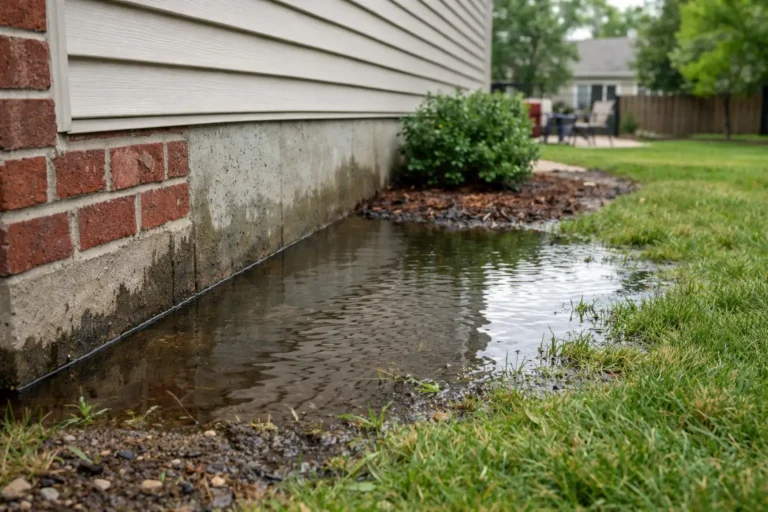
Here is what to look for: puddles that remain more than a day or two after rain, spongy grass, muddy tracks near gates, mulch washing out of beds, water stains on foundation walls, or downspouts that dump water beside the house. These are not just cosmetic issues. Water sitting in the wrong place can damage turf, create slippery walkways, and add stress around your foundation.
Start With the Source of the Water
This is where many homeowners run into trouble. They see a wet spot and try to fix only that spot. But the wet area is often where water ends up, not where the problem starts.
A good drainage plan looks at the full path of the water. We start by considering roof runoff, downspout locations, the slope of the lawn, neighboring grades, patios, driveways, and any low areas that collect water. On a Naperville-area home, for example, a wet backyard may actually be caused by a downspout on the side of the home, a settled swale, or a patio that slopes the wrong way.
Before installing anything, it helps to watch the property during or shortly after rain. Notice where water begins, where it travels, and where it stops. That information helps determine whether the answer is a simple correction or a more involved drainage system.
Drainage Solutions for Clay Soil That Work
There is no one-size-fits-all fix for clay soil. A good solution depends on how much water you are dealing with, where it is coming from, and where it can safely be directed. The best systems usually combine more than one approach.
Regrading and Swales
Sometimes the ground simply needs to be reshaped. Regrading means adjusting the soil so water flows away from the home and toward a safe drainage area. A swale is a broad, shallow channel in the lawn that guides surface water across the property without looking like a ditch.
This can be a smart choice when the yard has settled over time or when water naturally runs back toward the house. Regrading can also be worked into a landscape renovation, sod installation, or patio project so the finished yard looks intentional rather than patched together.
The trade-off is that grading needs to be done carefully. Moving soil without a full plan can send water toward a neighbor or create a new low spot somewhere else. In many Chicago suburbs, lot lines are close together, so drainage needs to respect the whole property.
Downspout Extensions and Buried Drains
Roof runoff is one of the biggest sources of water around Illinois homes. A short downspout extension that ends near the foundation can release hundreds of gallons of water exactly where you do not want it.
Extending downspouts farther from the house may help in some situations. For a cleaner and more permanent look, a buried solid drain line can carry roof water underground to a proper discharge point. This keeps water away from foundation beds, reduces washouts, and eliminates the hassle of moving plastic extensions before mowing.
The discharge location matters just as much as the pipe. Water needs a safe outlet and enough slope to keep moving. A line that ends in another low area will not solve the problem for long.
French Drains for Saturated Areas
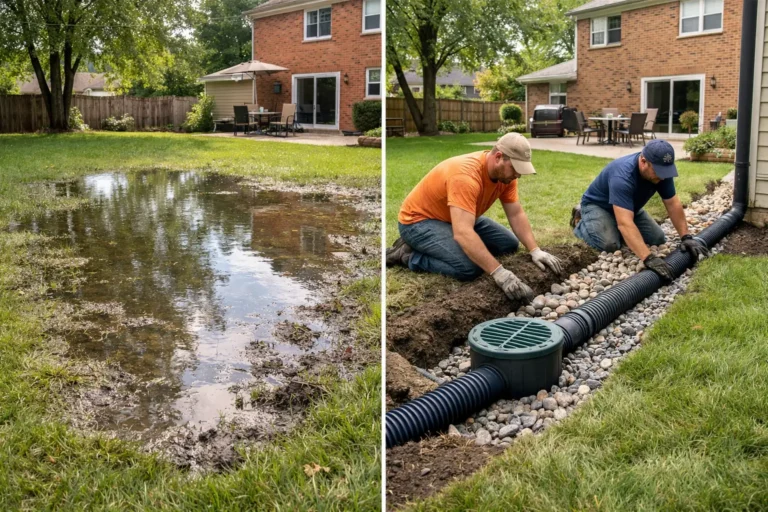
A French drain is designed to collect water that is sitting in the soil. It typically uses a perforated pipe surrounded by clean gravel and wrapped in filter fabric. Water enters through the gravel, flows into the pipe, and is carried to an outlet.
French drains can work well along a wet side yard, at the edge of a patio, or in a lawn area that stays soft long after a storm. They are especially helpful when clay soil is holding water below the surface.
They are not the answer for every puddle. If water is pouring off a roof or rushing down a slope, a French drain alone may be overwhelmed. In that case, it may need to work alongside downspout drains, grading, or a surface drain.
Catch Basins and Surface Drains
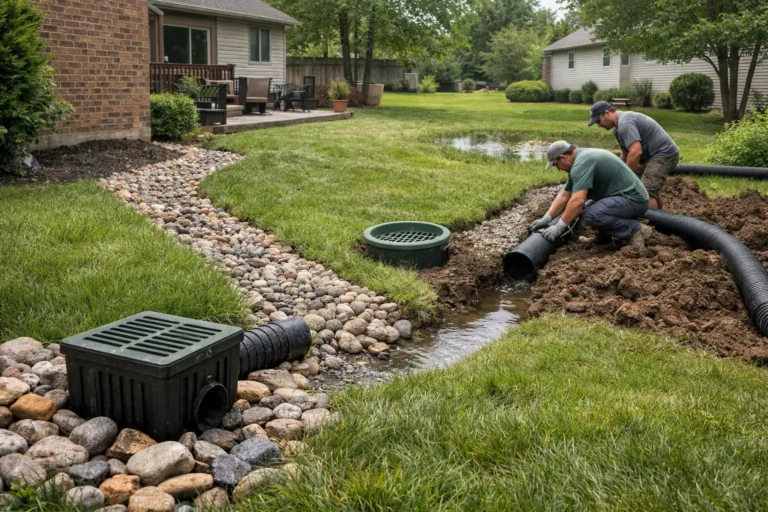
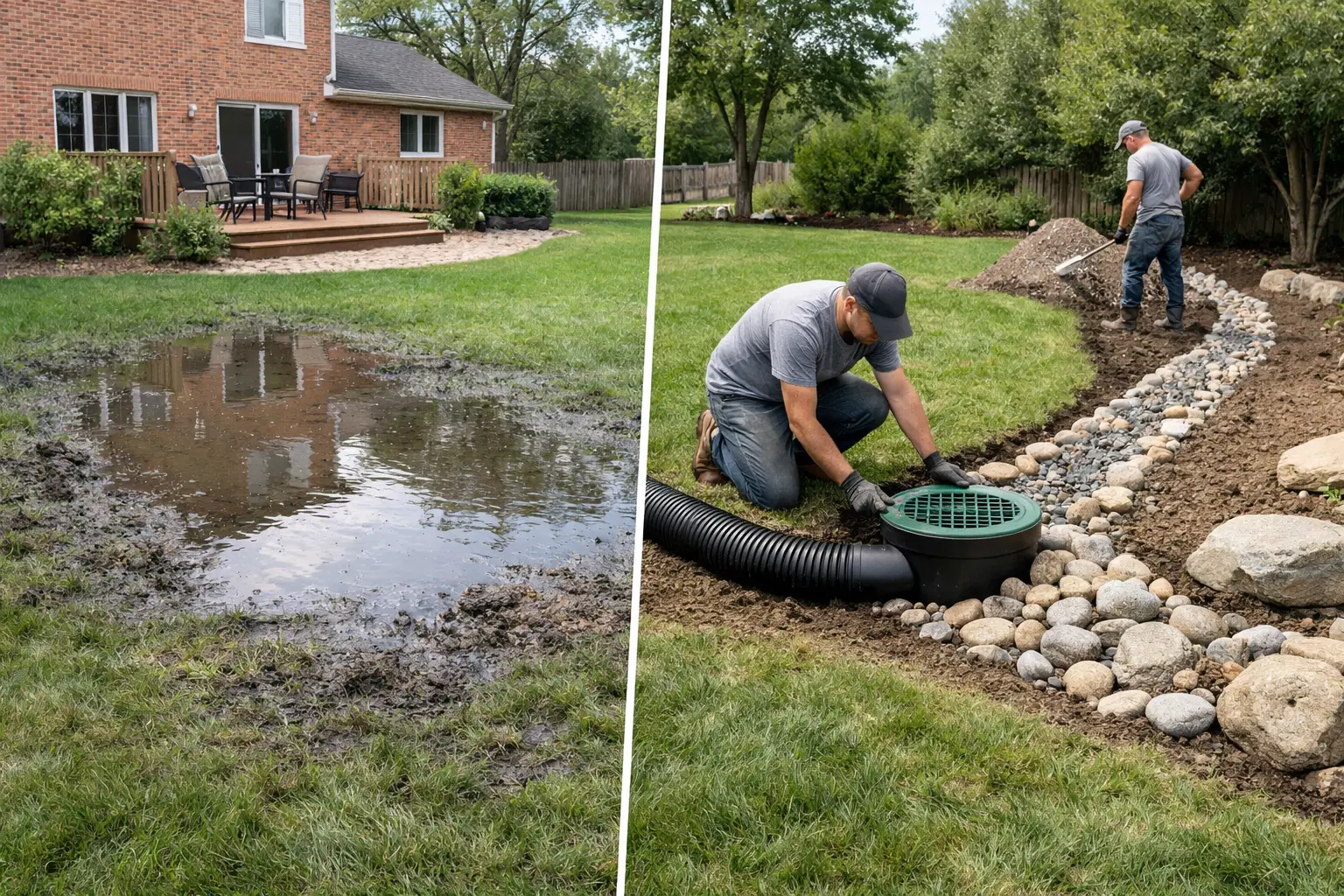
When water collects on top of the ground, a catch basin may be the better tool. This is a ground-level box with a grate that captures surface runoff and connects to a solid drain pipe.
Catch basins are often useful near patios, driveway edges, walkways, and low spots where water visibly pools. They can prevent standing water from reaching a door, flowing across pavers, or turning a commonly used area into mud.
A surface drain needs regular attention. Leaves, mulch, and debris can block the grate, especially in fall. Keeping it clear is simple, but it is part of owning a drainage system that works properly.
Dry Wells and Drainage Basins
A dry well or drainage basin is an underground area designed to temporarily hold water and let it slowly absorb into surrounding soil. These can be useful where there is no practical place to discharge water above ground.
With heavy clay soil, though, this option needs careful planning. If the surrounding soil drains very slowly, a dry well may fill faster than it empties. It can still be part of the solution, but it should be sized for the property and paired with the right runoff controls.
Do Not Forget the Landscape Around the System
A good landscape should look nice, but it also needs to work. Once drainage is corrected, the surrounding lawn, beds, edging, and hardscape should support the water plan instead of fighting it.
For example, compacted lawn areas may benefit from core aeration to open small channels in the soil. Fresh sod may be needed where a drainage project disturbs damaged turf. Mulch beds may need proper edging and plant placement so soil and mulch stay put during rain. A paver walkway or patio should be pitched correctly so water moves away from the house and does not settle along the edges.
This is one reason it helps to work with a contractor who understands both drainage and landscaping. The pipes are important, but the finished yard should also be clean, usable, and easy to maintain.
When to Call for a Drainage Evaluation
If you have tried moving downspouts, adding soil, or reseeding a muddy area without lasting results, it is time to step back and look at the bigger picture. You do not want water sitting near your foundation, and you should not have to avoid parts of your own yard after every storm.
A professional walkthrough can identify the water source, check the slope, and explain practical options without guessing. For Downers Grove homeowners and others across the western suburbs, the right plan often turns a frustrating wet yard into an outdoor space that is safer, cleaner, and much easier to enjoy through Illinois’ changing seasons.