A patio walkway has a tough job in a Chicago-area yard. It needs to look good next to the house, handle muddy spring weather, stay safe through freeze-thaw cycles, and stand up to snow shovels and ice melt. That is why choosing the best patio walkway materials is about more than picking a color you like. The right material should fit your home, your drainage needs, and how your family uses the space.
For most Chicagoland homeowners, pavers are the strongest all-around choice. But natural stone, brick, concrete, and gravel can each make sense in the right setting. Here is what to look for before you commit to a walkway.
What Illinois Weather Does to a Walkway
In Illinois, the ground moves. Rain soaks into the soil, temperatures swing above and below freezing, and winter snow can sit on a walkway for months. When water gets below a hard surface and freezes, it expands. That movement can crack a solid slab or push sections of a poorly installed walkway out of place.
This is where many homeowners run into trouble. They focus on the surface material but not the base underneath it. A good walkway needs proper excavation, compacted crushed stone, a leveling layer, and a plan for moving water away from the house. You do not want water sitting near your foundation, and you do not want it trapped under your new walkway either.
The walkway should also have a slight slope so rain and melting snow drain away from the home. That small detail makes a big difference in how the project performs over time.
Best Patio Walkway Materials for Chicagoland Yards
Concrete pavers: the best all-around option
Concrete pavers are often our first recommendation for patio walkways in the western suburbs. They come in a wide range of sizes, colors, and patterns, so they can work with a traditional brick home, a newer build, or something in between. They also give homeowners a clean, finished look without making the yard feel overly formal.
The real advantage is how pavers handle movement. Individual units have joints between them, which allows the system to flex a little as Illinois soil freezes and thaws. If one area settles over time, that section can usually be lifted, corrected, and reset instead of replacing the entire walkway.
Pavers still need a properly built base. A paver walkway installed over loose soil or a thin layer of sand will shift, sink, and hold water. When installed correctly, though, it is one of the most durable and practical options for busy Naperville-area homes.
Natural stone: a high-end, timeless look
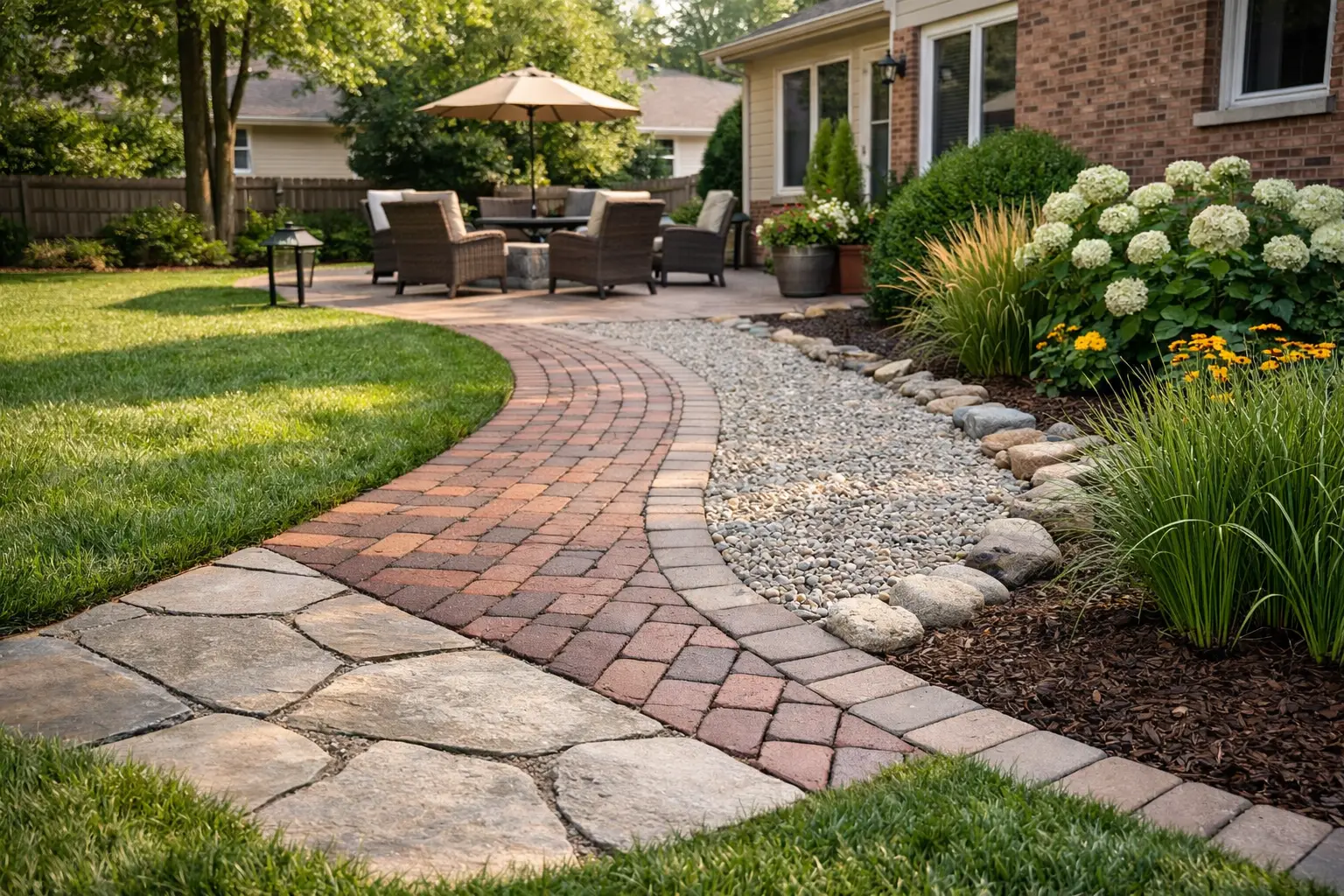
Natural stone creates a walkway that feels established and custom. Bluestone, flagstone, and certain limestone options can look especially sharp around patios, garden beds, and mature landscaping. Each piece has natural color and texture, so the finished path does not look stamped or repeated.
Stone does come with trade-offs. Material selection and installation can be more involved because the pieces vary in thickness and shape. Some stone surfaces can also become slick when wet, so texture matters. For a main path from the driveway to the front door, choose stone with a flatter, more consistent walking surface instead of highly uneven pieces.
Natural stone is a great fit when the patio and landscape design call for a more upscale, organic feel. It is less ideal when a homeowner wants a perfectly uniform look or the simplest future repair process.
Brick: classic character with regular upkeep
Brick walkways have a warm, traditional look that works beautifully around older homes in Hinsdale, La Grange, and other established Chicago suburbs. They pair naturally with brick exteriors and can make a front entry feel more welcoming.
Like pavers, brick is installed in individual pieces, which helps it handle seasonal movement better than a single concrete slab. The color can fade gracefully over time, but brick can also chip or flake after years of moisture and freezing weather. It needs a solid base, good edge restraint, and occasional joint sand maintenance to keep it looking neat.
One thing to consider is snow removal. A brick walkway with uneven edges or loose pieces can catch a shovel blade. A properly installed, smooth brick surface makes winter maintenance much easier.
Poured concrete: clean and simple, but less forgiving
Poured concrete is a familiar choice because it creates a smooth, simple walkway. It works well for a straight path, a modern landscape design, or an accessible route where a level surface is important. It can also be colored, broom-finished for traction, or finished to coordinate with an existing patio.
The downside is that concrete is one large surface. If the soil settles or frost movement occurs, it may crack. Control joints help guide where cracks happen, but they do not eliminate the possibility. Repairs can also remain visible, especially on decorative or colored concrete.
Concrete can still be a good option when the base preparation, drainage, and thickness are right. It is just less forgiving than pavers if the ground shifts. Avoid overly smooth finishes around entries and patios, since wet leaves, rain, and winter moisture can create a slippery surface.
Gravel: useful for informal paths, not every main walkway
Gravel offers a relaxed, casual look and works nicely for garden paths, side-yard routes, and paths leading to a shed or fire pit area. It drains well, costs less to install than many hard surfaces, and can fit naturally into a cottage-style or more informal landscape.
For a main patio walkway, gravel has limitations. Stones can migrate into the lawn and planting beds, and they need occasional raking and replenishing. It is also harder to shovel after a snowstorm and less comfortable for strollers, rolling carts, or anyone with mobility concerns.
A gravel path can work well as part of a larger landscape plan, especially where drainage is a concern. It is usually not the best choice for the primary route guests use to reach your patio or front door.
Match the Material to How You Use the Space
The best choice depends on where the walkway goes and what it needs to do. A narrow side-yard path used mainly for taking out the trash has different needs than a front entry path that visitors see every day. A patio connector should feel comfortable underfoot and wide enough for people to walk side by side when possible.
For most residential paths, a width of about 3 to 4 feet feels comfortable. A main walkway may benefit from additional width, especially near steps, gates, and patio doors. Curved paths can soften a backyard landscape, while straight lines often suit formal front yards and tighter side spaces.
Think about maintenance, too. If you plan to shovel the path every winter, choose a surface with tight joints and smooth transitions. If the walkway crosses a damp area of the yard, address the drainage first. Putting a beautiful new path over a drainage problem does not solve the problem – it often makes it more noticeable.
Do Not Overlook the Base and Drainage Plan
The visible material gets all the attention, but the base does most of the hard work. A quality installation starts by removing soil to the right depth and building a compacted aggregate base. The depth varies by site conditions, soil type, and the type of walkway, but it should be designed for local weather rather than treated as an afterthought.
Edges also matter. Pavers, brick, and gravel need proper restraint to keep the walkway from spreading apart. The finished grade should blend into the surrounding lawn and beds without creating a low spot that collects water.
At Revive Your Lawn, we look at the full exterior picture before recommending a material. Sometimes that means adjusting the walkway layout. Other times, it means including a drainage solution, changing the slope, or tying the new path into a patio and landscape bed design that better fits the yard.
A Practical Choice for Most Homes
If you want a durable, attractive patio walkway that can handle Chicagoland weather, concrete pavers are usually the safest starting point. They offer design flexibility, dependable winter performance, and more repair options if the ground shifts later. Natural stone is worth considering for a custom look, while brick brings classic character and concrete suits clean, simple layouts.
Before choosing a color or pattern, walk the route after a heavy rain and picture yourself using it in February. The right walkway should guide people where they need to go, keep water moving in the right direction, and make your outdoor space easier to enjoy year after year.