
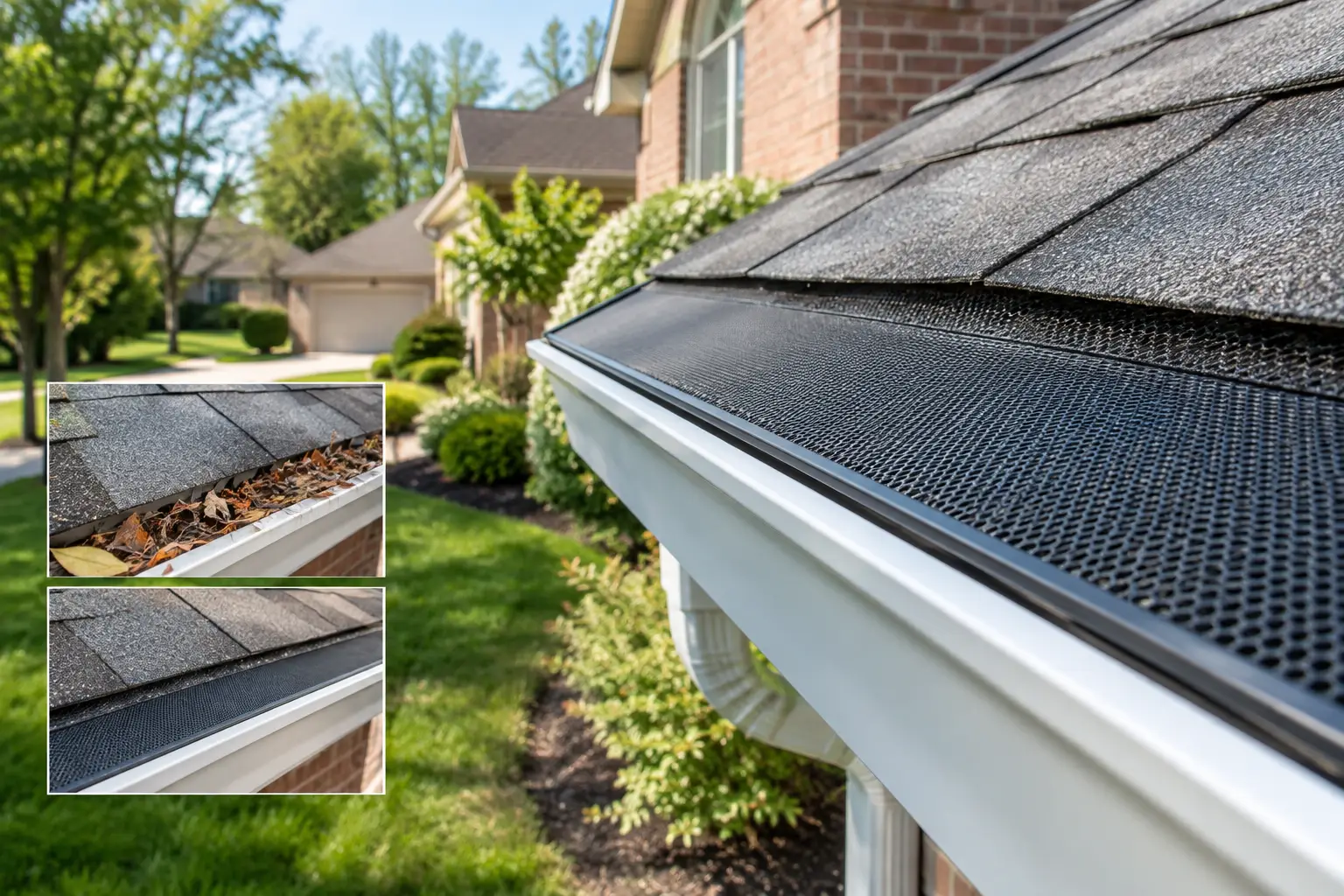
A mature maple tree can drop enough leaves to fill a gutter in one windy weekend. That is why homeowners often ask, do gutter guards reduce maintenance? The straight answer is yes, when the right guard is installed correctly for your roof, trees, and drainage setup. But gutter guards do not make a home completely maintenance-free.
For Chicagoland homeowners, that distinction matters. We deal with heavy spring rain, summer storms, falling leaves, ice, snow, and freeze-thaw cycles that can test every part of a gutter system. A good gutter guard cuts down on the dirty, risky work of cleaning packed-out gutters. It also helps water move where it belongs: away from your roofline, siding, foundation, and landscaping.
Do Gutter Guards Reduce Maintenance? Yes, With Limits
Gutter guards are covers, screens, or fine mesh panels that sit over your gutters. Their job is simple: let rainwater enter while keeping out leaves, twigs, seed pods, roofing grit, and other debris.
Without guards, debris settles in the gutter trough. It holds moisture, breaks down into a muddy layer, and blocks water from reaching the downspout. Once that happens, water may spill over the front of the gutter or run behind it. Neither is something you want around an Illinois home.
With well-fitted guards, most large debris stays on top and blows away or dries out between storms. That means you may go from several thorough gutter cleanings each year to an occasional inspection and light clearing. For busy families in the Chicago suburbs, that is a meaningful reduction in weekend work.
The key phrase is reduction. No guard can stop every tiny bit of material forever. Fine shingle grit, small seeds, and windblown dirt can still collect over time. Guards also need to be checked after major storms and during the fall leaf season, especially if tall trees hang over the roof.
What Maintenance Do Gutter Guards Help Prevent?
The biggest benefit is fewer gutter clogs. When leaves and twigs cannot build up inside the gutter, water has a clearer path to the downspouts. That can reduce several common headaches around Naperville-area homes and other established neighborhoods with mature trees.
First, it lowers the chance of overflowing gutters. Overflow may look minor during a rainstorm, but repeated water spillover can soak mulch beds, wash out soil, stain siding, and create muddy spots near walkways.
Second, guards help protect the gutter system itself. Wet debris is heavy. When it sits in a gutter for months, it adds unnecessary weight to the system and can contribute to sagging sections or loose fasteners.
Third, cleaner gutters make it less inviting for pests. Standing water and decomposing leaves can attract insects, while packed debris can become a nesting spot for birds or rodents. A gutter guard is not pest control, but keeping the trough cleaner removes one easy place for problems to start.
Most importantly, guards support better drainage at the roofline. You do not want water sitting near your foundation or constantly pouring into one area of the yard. Gutter protection works best as part of the full exterior picture, alongside properly placed downspouts, extensions, and, when needed, yard drainage solutions.
They also make cleaning safer
Climbing a ladder with a bucket, gloves, and wet leaves is not most homeowners’ idea of a good Saturday. Gutter guards reduce how often you need to reach into the gutter trough, which can mean fewer trips up the ladder.
That does not mean nobody should ever inspect the system again. It means inspections are usually faster and less messy. You can often spot leaves sitting on top of a guard, a loose section, or a downspout issue from the ground before a small problem turns into a bigger repair.
What Gutter Guards Will Not Do
This is where many homeowners run into trouble. A gutter guard can improve gutter performance, but it cannot fix a gutter system that is already pitched wrong, undersized, loose, or damaged.
If water is rushing over the gutter during a hard Illinois downpour, the problem may be more than leaves. The gutter could be too small for that roof section, the downspout could be clogged underground, or the gutter may not be sloped toward the outlet correctly. Adding a guard alone will not solve those issues.
Guards also do not eliminate the need to clear debris from roof valleys. If leaves build up where two roof planes meet, water can push that material onto the guards and slow drainage. Homes with pine trees may need more frequent checks because needles can lie flat and collect on top of certain guard styles.
Winter brings another important consideration. Gutter guards are not a cure for ice dams. Ice dams form when snow melts unevenly on a warm roof and refreezes near the cold edge. Attic insulation, ventilation, roof conditions, and outdoor temperatures all play a role. A guard may keep gutters cleaner, but it will not solve an ice-dam problem by itself.
Choosing a Guard That Fits an Illinois Home
There is no one gutter guard that is perfect for every house. The best option depends on the roof, gutter condition, tree cover, and the type of debris around your property.
Fine mesh guards are often a strong choice for homes surrounded by small leaves, helicopter seeds, and roof grit. They filter out very small debris while allowing water through. However, the surface can still need brushing or rinsing if pollen, seeds, or fine material accumulates.
Larger screen-style guards can handle heavy rain well and are easier to see through during an inspection. They may be a reasonable fit where the main concern is broad leaves and twigs. But openings that are too large can let smaller material into the gutter.
Solid covers use a shaped edge to guide water into the gutter while debris falls away. These can work well in the right application, but installation details matter a great deal. If the cover is not matched to the roofline and gutter system, water can overshoot in a hard storm.
Here is what to look for regardless of guard type: durable material, secure attachment, a clean fit around roof edges, and access for future inspections. Avoid treating a gutter guard as a one-size-fits-all product. Your roof and surrounding trees should guide the recommendation.
Installation Matters as Much as the Guard
A quality guard installed on failing gutters is not a long-term solution. Before adding protection, it makes sense to look at the full system. Are the gutters securely fastened? Do they slope properly? Are the seams leaking? Are downspouts carrying water far enough away from the home?
In the western suburbs, we often see homes where downspouts discharge right beside the foundation. Even when the gutters are clear, that water can create wet mulch beds, soggy turf, or seepage concerns near the house. A good installation should support the way water moves across the whole property.
Professional installation also helps avoid roof and gutter damage. Guards need to fit securely without bending the gutter edge or interfering with the roof system. Clean, careful workmanship matters because gutter protection should improve the appearance of the home, not leave it looking patched together.
A Simple Maintenance Plan After Installation
Even with guards, plan on checking your gutter system at least twice a year: once after spring storms and once after the main fall leaf drop. Homes under heavy tree cover may need a few additional quick checks.
From the ground, watch for water spilling over during rain, streaks on siding, sagging gutters, or puddles near the foundation. Look for debris collecting at roof valleys or on top of the guards. If a downspout outlet is buried or connected to drainage piping, make sure water is still flowing freely at the discharge point.
A quick seasonal inspection is a small habit that protects a much larger investment. If you notice repeated overflow, standing water, or a gutter section pulling away from the house, it is worth having someone assess the whole drainage path instead of just clearing the visible debris.
For homeowners who want less ladder work and a cleaner roofline, gutter guards can be a practical upgrade. Revive Your Lawn can help Chicagoland property owners look at the guards, gutters, downspouts, and drainage around the home together, so the solution fits the problem. A few minutes spent checking where rainwater goes during the next storm can tell you a lot about what your home needs.


