
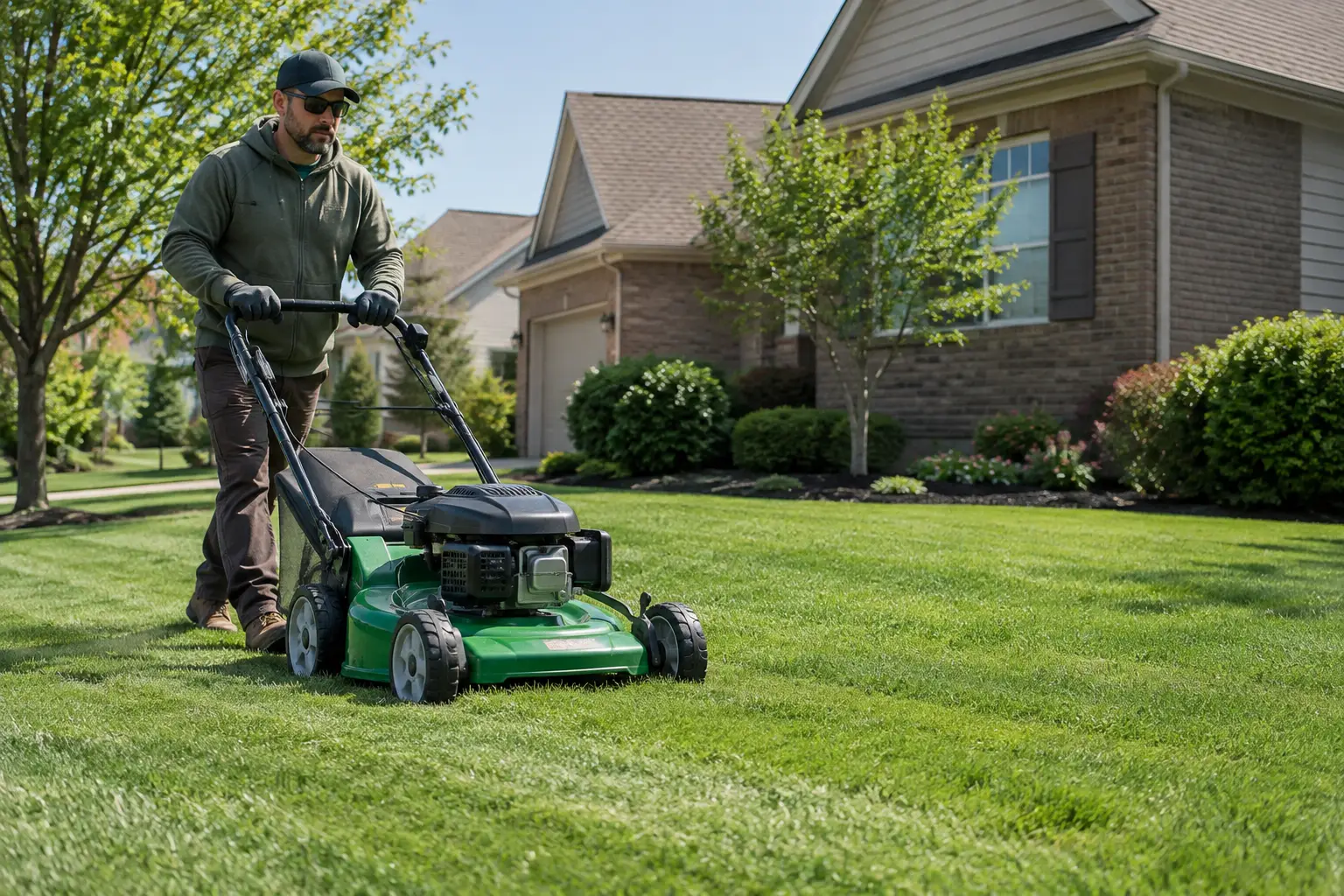
A freshly cut lawn can make a Naperville-area home look cared for before anyone reaches the front door. But lawn mowing is not just about making the grass look neat for the weekend. In the Chicago suburbs, the way a lawn is cut affects how well it handles summer heat, spring rain, foot traffic, weeds, and the stress that comes with our unpredictable Illinois weather.
Many homeowners run into the same problem: they mow whenever the yard starts looking shaggy, cut it short to make the job last longer, and then wonder why the lawn turns thin or brown. A better mowing routine is one of the simplest ways to support a healthier-looking yard without adding more work to your already busy week.
Why Lawn Mowing Matters More Than It Looks
Grass needs its blades to collect sunlight and build strong roots. When it is cut too short, the lawn loses some of its ability to feed itself. The soil dries out faster, weeds get more room to move in, and the yard can struggle when July heat arrives.
A lawn that is kept at a sensible height shades the soil underneath it. That helps hold moisture and can make the grass look fuller. It also creates a cleaner backdrop for the rest of your property, from mulched beds and trimmed shrubs to paver walkways and outdoor lighting.
For Chicagoland homeowners, appearance and function go together. A clean cut helps curb appeal, but it also makes it easier to spot bare spots, standing water, pest damage, or areas that are getting compacted by kids, pets, or regular foot traffic.
The Right Mowing Height for Illinois Lawns
Most suburban lawns in our area are made up of cool-season grasses, such as Kentucky bluegrass, perennial ryegrass, and fescue. These grasses generally do better when they are not cut too low.
For most home lawns, a cutting height around 3 to 4 inches is a good working range during the main growing season. In late spring, when grass is growing quickly, you may be closer to 3 inches. As summer heat settles in, leaving it a little taller can help protect the roots and reduce stress.
This is where many homeowners run into trouble. Cutting the grass very short may give you a few extra days before the next mow, but it often creates more work later. Short grass can thin out, let weeds take hold, and need more water to stay green. A lawn does not need to look like a golf course to look sharp. It needs to be healthy enough to fill in and hold its color.
The other rule that matters is the one-third rule. Try not to remove more than one-third of the grass blade in a single mowing. If the lawn has gotten ahead of you after a rainy week or a vacation, it is usually better to bring it down gradually over two cuts than to scalp it all at once.
How Often Should You Mow in the Chicago Suburbs?
There is no single calendar that works for every yard. Weather, shade, soil, grass type, fertilizer, and drainage all affect growth. Still, weekly mowing is a reliable rhythm for many Illinois homes during the active growing months.
Spring can be the busiest time. Cool temperatures and rain can make the grass grow faster than expected, especially in May and early June. Some lawns may need attention every five to seven days during that stretch. By the hotter part of summer, growth often slows down, and mowing may move to every seven to 10 days.
Do not mow simply because it is Saturday. Look at the grass. If it has grown enough that you would remove more than one-third of the blade, it is time. If it has barely grown during a dry spell, there is no benefit to cutting it just to follow a routine.
Wet grass deserves special attention in Chicagoland. Mowing right after rain can leave clumps across the yard, create uneven cuts, and compact soft soil with mower wheels. It is usually best to wait until the lawn has dried. If your property holds water for days after a storm, that is not really a mowing issue. It may be a grading or drainage issue that needs a closer look.
Clean Cuts Start With the Right Equipment
You do not need fancy equipment to get a good result, but mower blades should be sharp. Dull blades tear the grass instead of cutting it cleanly. Those torn tips can turn brown and give the whole lawn a faded, rough look a day or two after mowing.
A properly sized mower also matters. On a small Downers Grove yard with gates, beds, and tight corners, a large riding mower may be awkward and hard on the turf. On a larger property, using equipment that is too small can turn basic maintenance into an all-day job. The best approach depends on the property, not just the size of the lawn.
Changing your mowing direction from week to week is another small habit that helps. Repeatedly mowing in the same pattern can press grass down and create visible ruts over time. Alternating directions encourages a more upright, even appearance.
Should You Bag Grass Clippings?
In many cases, grass clippings can stay on the lawn. When they are short and spread evenly, they break down quickly and return nutrients to the soil. They do not cause thatch by themselves, despite what many people have heard.
Bagging makes sense when the lawn is overgrown, the grass is wet, or heavy clumps would be left behind. Thick piles of clippings can block sunlight and smother patches of grass underneath. If that happens, rake or blow the clumps apart rather than letting them sit.
Keep clippings off sidewalks, driveways, and streets. Besides looking messy, grass washed into storm drains can add unwanted nutrients to local waterways. A quick cleanup at the end of each visit keeps the property looking finished and helps protect the neighborhood.
Mowing Around Edges, Beds, and Hardscape
The details around a lawn often make the biggest visual difference. A freshly mowed yard can still look unfinished if grass is creeping over sidewalks, wrapping around fence posts, or spilling into landscape beds.
Edging along walkways and driveways gives the property a clean line, but it should be done carefully. Cutting too deeply into turf edges can leave trenches that collect water and create brown strips. Around trees, avoid repeated string-trimmer contact with the trunk. That damage can weaken young trees over time.
If bed edges are disappearing or mulch keeps washing into the lawn, mowing is only part of the picture. The bed may need to be reshaped, refreshed, or protected with a better edge. A good landscape should look nice, but it also needs to work through rain, snow, and regular maintenance.
When Mowing Will Not Fix the Real Problem
Regular mowing can improve the look of a lawn, but it cannot solve every issue. If one area is always muddy, grass may be struggling because water has nowhere to go. If the lawn feels hard and thin, compacted soil may be keeping air, water, and nutrients from reaching the roots. If a shady side yard stays bare, the grass may not be getting enough sunlight to thrive.
This is why a mow-and-go approach is not always enough for Illinois homes. Aeration can help relieve compacted soil. Dethatching may be useful when a heavy layer of old stems and debris is keeping water from moving into the ground. Drainage work may be the right answer when water is sitting near the foundation or pooling in the yard after every storm.
The right fix depends on what is happening below the surface. You do not want to keep spending time and money reseeding a low spot if the real issue is water. Looking at the full property often saves frustration later.
A Dependable Plan for a Better-Looking Yard
For busy families and property owners, consistent lawn care is often less about avoiding the mower and more about getting weekends back. A dependable crew should show up on schedule, cut at an appropriate height, trim carefully, clean hard surfaces, and pay attention when something in the yard does not look right.
At Revive Your Lawn, we look beyond the cut when we maintain a property. A bare patch, a soggy corner, or a washed-out bed can be a sign that the lawn needs more than another pass with the mower. Addressing those details early helps keep a yard cleaner, safer, and easier to enjoy season after season.
If your grass is looking tired, start with the basics: mow at the right height, avoid cutting too much at once, and pay attention to how the yard responds after rain. Those simple observations can tell you a lot about what your property needs next.


