A gutter that overflows during a hard Illinois rain is not just annoying. Water can wash out mulch, soak the area near your foundation, stain siding, and create icy spots by the driveway once temperatures drop. This leaf filter alternatives review looks at the main gutter guard styles Chicagoland homeowners should consider, with a focus on what works in real weather instead of what sounds best in an ad.
A good gutter guard can cut down on cleaning and help water move where it belongs. But no guard is completely maintenance-free, and the best option depends on your roof, tree cover, gutter condition, and how water drains around the house.
Why gutter guard choice matters in the Chicago suburbs
In Illinois, gutters deal with more than a few dry leaves in fall. We see spring seed pods, helicopter seeds, oak tassels, summer downpours, wet leaf piles, snow, ice, and windblown shingle grit. A guard that performs well under light debris may struggle when wet leaves pack against it or when fast rain runs off a steep roof.
This is where many homeowners run into trouble. They choose a guard based on a quick photo or a low upfront price, without looking at the roofline and drainage around the home. If the gutters are pitched poorly, pulling away from the fascia, or undersized for the roof, adding a guard alone will not solve the problem.
Before choosing any system, make sure the gutters are clean, secure, and draining properly to the downspouts. You do not want water sitting near your foundation because the gutter setup was never working correctly in the first place.
Leaf filter alternatives review: the main guard types
There is no single winner for every Naperville-area home or Downers Grove property. Here is a straight look at the common choices and their trade-offs.
Micro-mesh gutter guards
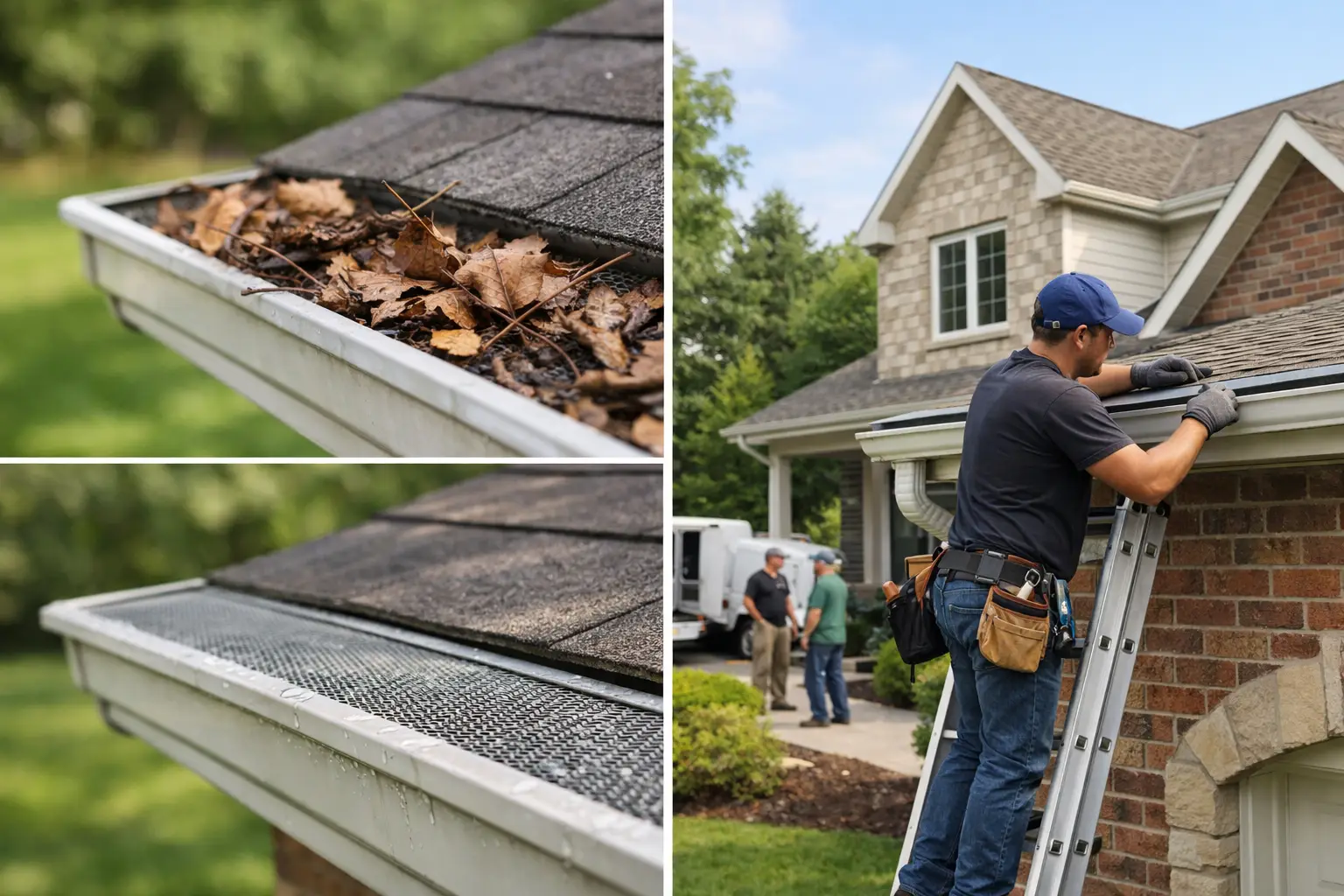
Micro-mesh guards use a fine metal screen that lets water through while blocking small debris. This style is often a strong fit for homes surrounded by mature trees, especially where small seeds, pine needles, or roof grit are part of the problem.
The biggest benefit is filtration. A quality micro-mesh system can keep much more debris out of the gutter than a wide-hole screen. The trade-off is that debris still lands on top of the mesh. Dry leaves may blow away, but wet leaves, pollen buildup, and shingle grit can require occasional brushing or rinsing. On a roof with a heavy water flow, installation angle and guard design matter a lot. Water needs to enter the gutter rather than shoot over the edge.
Perforated aluminum screens
Perforated aluminum guards have larger openings than micro-mesh. They are usually a practical middle-ground option for homeowners with broadleaf trees and moderate debris. They can handle a good amount of rain and are easier to inspect than some enclosed systems.
Their limitation is simple: larger openings let smaller debris through. Maple seeds, pine needles, and grit can still make their way into the gutter. For a home with mostly larger leaves and a clear roofline, that may be an acceptable trade-off. For a heavily wooded lot in the western suburbs, it may mean more cleaning than expected.
Reverse-curve or surface-tension guards
These guards use a shaped cover that directs water around a curved edge and into the gutter while leaves are supposed to fall away. They can be effective with larger leaves and may leave the gutter looking clean from above.
The concern is performance during intense rain. Illinois thunderstorms can put a lot of water on a roof in a short time. If the system is not sized, pitched, and installed correctly, water can overshoot the gutter edge. Small debris may also collect in the opening or along the front lip. This style deserves a close look on steep roofs and areas where overflow has already been a problem.
Foam inserts
Foam inserts sit inside the gutter and allow water to pass through the material while debris stays on top. They are easy to understand and can seem like a quick answer for a homeowner trying to reduce gutter cleaning.
Over time, though, organic material can break down on and around the foam. Seeds and grit can settle into it, and wet debris may be difficult to remove. In a climate with freeze-thaw cycles, the long-term condition of the insert matters. Foam may make sense as a short-term or low-tree-cover option, but it is usually not the first choice for a homeowner looking for a lasting, low-upkeep solution.
Brush-style guards
Brush guards sit inside the gutter like a long bristle brush. They can keep larger leaves from filling the trough, but they also catch debris within the bristles. That means the material is not always shedding away from the gutter. It is simply being held higher up.
For that reason, brush systems often still need hands-on cleaning. They may be useful in certain situations, but they are not ideal for homeowners hoping to spend less time on a ladder.
What to look for beyond the guard itself
The guard material is only one part of the decision. A quality installation should account for the full water path: roof, guard, gutter, downspout, splash area, and grading near the home.
Start with the roof. Asphalt shingles shed grit, especially as they age, and some guard styles handle that better than others. A roof with valleys or a steep pitch can send a heavy stream of water into one section of gutter. That area may need a different approach than the rest of the house.
Then look at the trees. A property with one ornamental tree has different needs than a wooded lot in Hinsdale or a mature neighborhood in Elmhurst. Pine needles, small seed pods, and long oak tassels are more demanding than large, dry maple leaves.
Finally, look below the gutter. If downspouts dump water beside the foundation, gutter guards will not fix the real issue. Extensions, underground drain lines, or grading improvements may be needed to move water away safely. A good exterior plan should look nice, but it also needs to work.
When gutter guards are not the whole answer
Sometimes homeowners call about clogged gutters, but the bigger problem is water management. Overflow may be caused by a crushed downspout, a buried outlet that is blocked, poor slope around the foundation, or a gutter that is too small for the roof area.
Ice is another example. Gutter guards can reduce debris buildup, but they do not prevent ice dams caused by heat escaping through the roof or attic. If ice repeatedly forms along the eaves, it is worth looking at insulation, ventilation, roof conditions, and drainage rather than expecting a guard to solve it.
A walkthrough should identify these issues before installation. Clean crews and good materials matter, but so does asking the right questions before work begins.
Questions to ask before choosing a gutter guard
Ask how the system handles heavy rain, small debris, and winter conditions common to Illinois homes. Ask whether the installer will clean and inspect the existing gutters first. It is also reasonable to ask how the guards attach to the roofline and whether the method affects future roof work.
You should also ask what ongoing care is realistic. The honest answer is usually occasional inspection, especially after storms and during fall. A guard should reduce the amount of debris entering the gutter and make maintenance easier. It should not create the expectation that no one will ever need to look at the system again.
For Chicagoland homeowners, the right choice is usually a well-installed guard that matches the trees, roof, and drainage needs of the property. If you are unsure what your home needs, a local exterior professional can inspect the whole setup and help you avoid spending money on a partial fix. At Revive Your Lawn, that means looking beyond the gutter line to help protect the yard, foundation, and curb appeal you have worked hard to maintain.