A patio can be the place where everyone gathers on a summer evening, but in the Chicago suburbs, it also has to stand up to snow, ice, rain, and big temperature swings. That is why choosing between patio paver options is about more than picking a color you like. The right material, base, slope, and layout all work together to create a space that looks good and holds up season after season.
For Naperville-area homes, Downers Grove homeowners, and families across Chicagoland, the best choice usually comes down to how you plan to use the patio, the style of the home, and what is happening with water around the yard. A good patio should look nice, but it also needs to work.
Start With How You Will Use the Patio
Before looking at samples, think about what the space needs to do. A small sitting area outside a back door has different needs than a large patio built for a grill, dining table, fire pit, and weekend guests. The shape of the yard matters too. A narrow side yard may call for a simple paver path and landing, while an open backyard may be a good fit for a larger entertaining space.
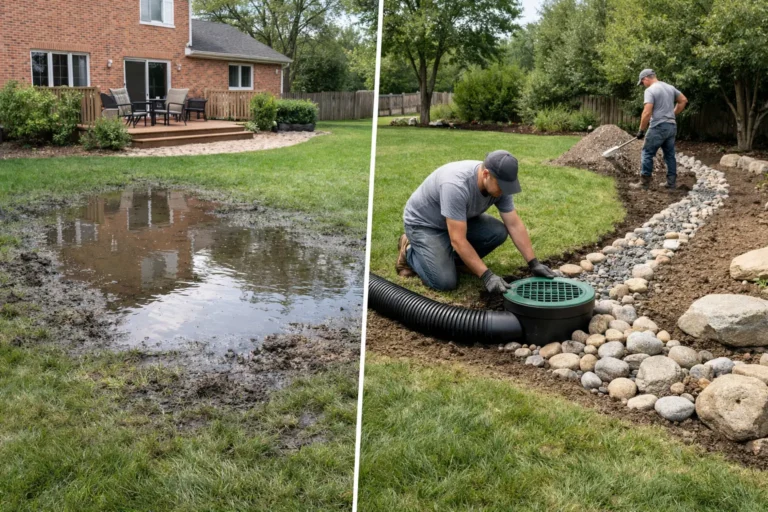
Here is what to look for. Think about sun exposure, privacy, access from the house, and where water goes after a hard rain. If the area stays soft or puddles, installing a patio without addressing that issue first can lead to settling and uneven pavers later. You do not want water sitting near your foundation, and you do not want it trapped beneath a new patio either.
A walkthrough of the property can help identify whether grading, drainage work, a retaining wall, or a simple adjustment to the patio layout should be part of the plan.
The Most Common Patio Paver Options
Concrete pavers
Concrete pavers are one of the most popular choices for Illinois homes because they offer a lot of design flexibility. They come in many colors, sizes, textures, and patterns. Homeowners can choose a clean, modern large-format paver, a traditional tumbled look, or a mixed-size pattern that gives the patio more movement.
Concrete pavers are also practical. Individual pieces can often be lifted and reset if a small area settles or if future utility work is needed. That is a real advantage over a poured concrete slab, where one crack can become much harder to blend into the rest of the surface.
The trade-off is that quality varies. Lower-grade pavers may fade, chip, or wear faster, especially after repeated freeze-thaw cycles. A properly built base and durable paver product matter far more than trying to save a little money on the front end.
Brick pavers
Brick gives a patio a classic, established look that fits many older homes in Hinsdale, La Grange, Western Springs, and other western suburbs. Its warm color and smaller size work especially well with traditional architecture, garden paths, and front walkways.
True clay brick is known for holding its color well. It can develop a little character over time rather than looking worn out. Brick patterns such as herringbone can also add strength in areas that see a lot of foot traffic.
On the other hand, brick is not always the best choice for every backyard. The smaller units mean more joints, and the look can feel busy on a very large patio. Some homeowners also prefer the wider, cleaner lines available with modern concrete pavers. It depends on the home and the overall landscape design.
Natural stone pavers
Natural stone has a look that manufactured materials cannot fully copy. Bluestone, flagstone, limestone, and other stone products can create a more upscale, organic patio with natural color variation. This option often works beautifully alongside mature landscaping, stone walls, and custom outdoor features.
Stone needs thoughtful selection in Chicagoland. Some types are better suited for our winters than others, and the finish matters. A surface that is too smooth may become slippery when wet or icy. Natural cleft stone has more texture, while some cut stone products provide a more refined and consistent appearance.
Natural stone can cost more because of the material itself and the labor involved in fitting, cutting, and installing it correctly. It is a strong choice when the goal is a one-of-a-kind look, but it is not automatically the right answer for every project. A high-quality concrete paver can be a better match for a family that wants a larger patio, easier repair options, and a more controlled budget.
Porcelain pavers
Porcelain pavers are showing up more often in contemporary outdoor designs. They are dense, color-consistent, and available in finishes that resemble stone, wood, or concrete. They can be a good fit for a modern home or a patio that carries an indoor style outside.
Their surface is generally easy to clean and resistant to staining. But porcelain installation is less forgiving than many homeowners realize. The pavers need proper support, careful cuts, and the right installation method. In an Illinois climate, the base and drainage plan are still the foundation of a long-lasting project.
Permeable pavers
Permeable pavers are designed to allow water to move through the joints and into a stone base below. They can be helpful in areas where runoff is a concern, especially near driveways, low spots, or properties with limited places for water to go.
This is not a one-size-fits-all drainage fix. Soil conditions, existing grades, roof runoff, and nearby foundations all need to be considered. Still, for the right property, permeable pavers can be part of a smart plan that reduces surface water and helps keep a yard more usable after rain.
Why the Base Matters as Much as the Pavers
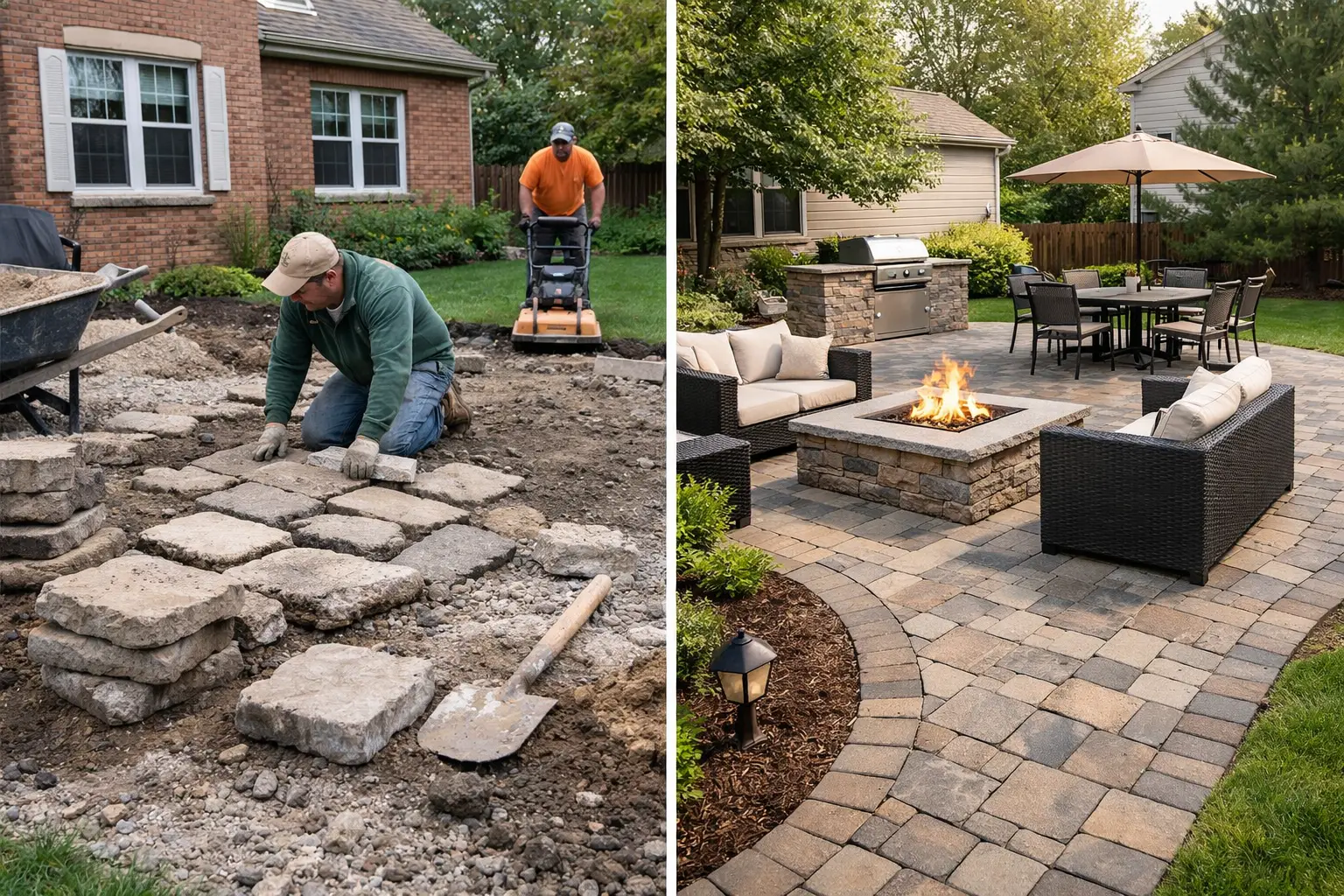
This is where many homeowners run into trouble. A beautiful paver patio can fail early if it is installed over a weak or shallow base. Our freeze-thaw weather puts pressure on every outdoor surface. When the ground moves, poorly prepared patios can settle, heave, separate, or hold water.
A dependable installation starts with excavation, compacted base stone, proper edge restraint, and a level bedding layer. The patio also needs a planned slope so water moves away from the house. “Level” does not always mean perfectly flat. A patio should feel level underfoot while still directing rainwater where it belongs.
The correct base depth depends on the site, soil, intended use, and drainage conditions. A patio near a foundation or in a yard with known water issues deserves extra attention before the first paver is placed. Fixing the water path first is often less expensive and far less frustrating than tearing out a patio later.
Choose a Style That Belongs With the Home
The best patio does not look dropped into the backyard. It should connect naturally with the home, landscaping, and other hardscape features. A brick colonial may look right with warm-toned pavers and a traditional pattern. A newer home may call for larger gray or charcoal pavers with crisp borders and simple lines.
Color deserves some thought as well. Very light pavers can show grill grease, dirt, and leaf stains more easily. Very dark surfaces may feel hotter in direct summer sun. Blended colors are often forgiving and tend to complement Illinois homes through changing seasons.
Borders can make a patio feel finished without making it overly formal. A contrasting border around the edge, a soldier course around a fire pit, or a coordinated walkway leading from the patio can tie the entire backyard together. Adding landscape lighting, seating walls, or a pergola may also be worth considering during the design stage, even if those items are added later.
Plan for Winter, Maintenance, and Daily Life
No patio is completely maintenance-free, but pavers are manageable when installed correctly. Sweep leaves and debris regularly, rinse off food spills, and address weeds or joint sand loss before they become bigger problems. Polymeric sand, when used properly, helps lock joint material in place and can reduce weed growth.
For snow removal, use a plastic shovel edge or keep metal blades slightly raised to avoid catching paver edges. Be careful with de-icing products. Some harsh products can affect certain pavers, natural stone, nearby plants, or concrete surfaces. A contractor can recommend an approach based on the material you choose.
Sealing is another decision that depends on the product and your goals. Some homeowners like the deeper color and stain resistance a sealer can provide. Others prefer the natural look and are comfortable with basic cleaning. Not every paver needs sealing, and applying the wrong sealer can create a cloudy or slippery surface.
A Patio Should Solve Problems, Not Create New Ones
The best patio paver options are the ones that fit your home, your yard, and the way your family spends time outside. Material matters, but the full plan matters more. A great-looking patio that directs water toward the house or settles after two winters is not a good investment.
At Revive Your Lawn, we look at the whole exterior picture – grade, drainage, traffic flow, landscaping, and the finished look you want. If you are considering a patio in the Chicago suburbs, start by walking the yard with someone who can help you see both the design opportunity and the practical details. That is how you end up with an outdoor space you will be glad to use every time the weather cooperates.