If you are wondering when to dethatch Illinois lawn areas, the short answer is this: for most Chicagoland lawns, early fall is usually the best window, with spring as a second option in some cases. That timing gives cool-season grass a better chance to recover, fill in, and stay strong before weather stress shows up.
That said, dethatching is one of those lawn services where timing matters just as much as the work itself. Do it too early, too late, or when the lawn does not really need it, and you can create more stress than improvement. This is where many homeowners run into trouble.
What dethatching actually does
Thatch is the layer of dead grass stems, roots, and other organic material that builds up between the green grass blades and the soil. A little bit of thatch is normal. In fact, a thin layer can help protect the soil and hold some moisture.
The problem starts when that layer gets too thick. When that happens, water, fertilizer, and air have a harder time reaching the root zone. Grass can start to look weak even when you are watering and feeding it. You may also notice the lawn feels spongy when you walk on it.
For many Illinois homes, especially in the Chicago suburbs, heavy thatch shows up in lawns that have been overwatered, overfertilized, or mowed poorly for a while. Lawns with a lot of Kentucky bluegrass can also be more prone to it.
When to dethatch Illinois lawn conditions
In Illinois, most home lawns are made up of cool-season grasses like Kentucky bluegrass, fescue, and perennial ryegrass. These grasses grow most actively in the cooler parts of the year, which is why timing your dethatching around that growth period matters.
Early fall is usually best
For most Illinois lawns, the sweet spot is late August through early October. In the western suburbs and across Chicagoland, that is when summer heat starts backing off, soil is still warm, and cool-season grass is ready to grow again.
That combination helps the lawn recover faster after dethatching. If some bare spots open up, you also have a good opportunity to overseed. Seed tends to establish better in fall than in spring because weed pressure is lower and the weather is more favorable.
If a homeowner in Naperville, Downers Grove, or nearby areas asks us for the safest general answer, fall is usually it.
Spring can work, but it is more limited
Spring dethatching can be okay if your lawn has a real thatch problem and you missed the fall window. The best time is usually after the lawn has greened up and started actively growing, but before summer heat arrives.
The challenge is that spring in Illinois can be messy. We get wet stretches, surprise cold snaps, and then a quick jump into heat. On top of that, spring is when crabgrass and other weeds are trying to move in. If you dethatch aggressively in spring and leave thin areas behind, weeds can take advantage of that opening.
So yes, spring can work. It is just not always the first choice.
Summer is usually the wrong time
This is a big one. Summer dethatching is hard on cool-season lawns in Illinois. By then, grass is already dealing with heat, dry spells, and foot traffic. Tearing into the lawn during that stress period can leave it thin, patchy, and struggling.
Unless there is a very unusual reason, summer is not when you want to do this.
How to tell if your lawn actually needs dethatching
Not every tired-looking lawn needs to be dethatched. Sometimes the real issue is compacted soil, poor drainage, mowing too short, or weak roots from summer stress. A good landscape should look nice, but it also needs to work. If the soil is staying too wet or the yard has drainage issues, dethatching alone will not solve the bigger problem.
Here is what to look for. If the lawn feels springy underfoot, water seems to sit on top before soaking in, or the grass looks thin even though you are watering and fertilizing, thatch could be part of the issue. You can also pull back a small section of grass and measure the layer between the soil and the green growth.
If that layer is more than about half an inch thick, dethatching may help. If it is thinner than that, the lawn may be better off with core aeration instead.
Dethatching vs. aeration in Illinois lawns
A lot of homeowners mix these up, and that is understandable. They are different services, and each solves a different problem.
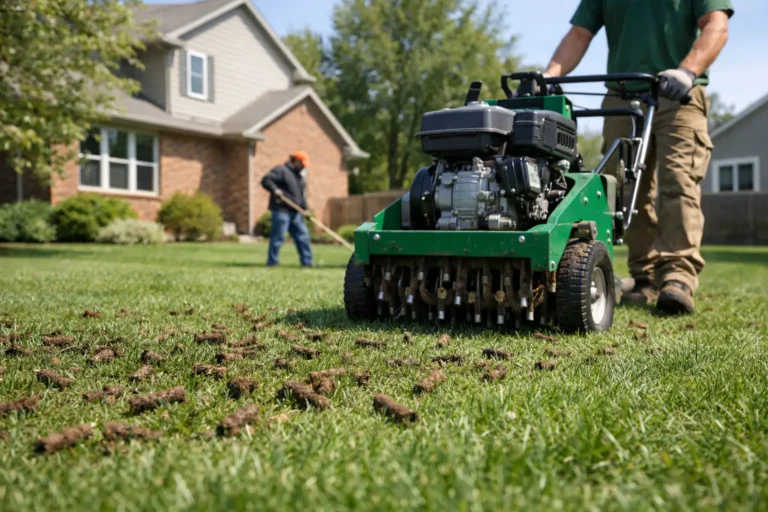
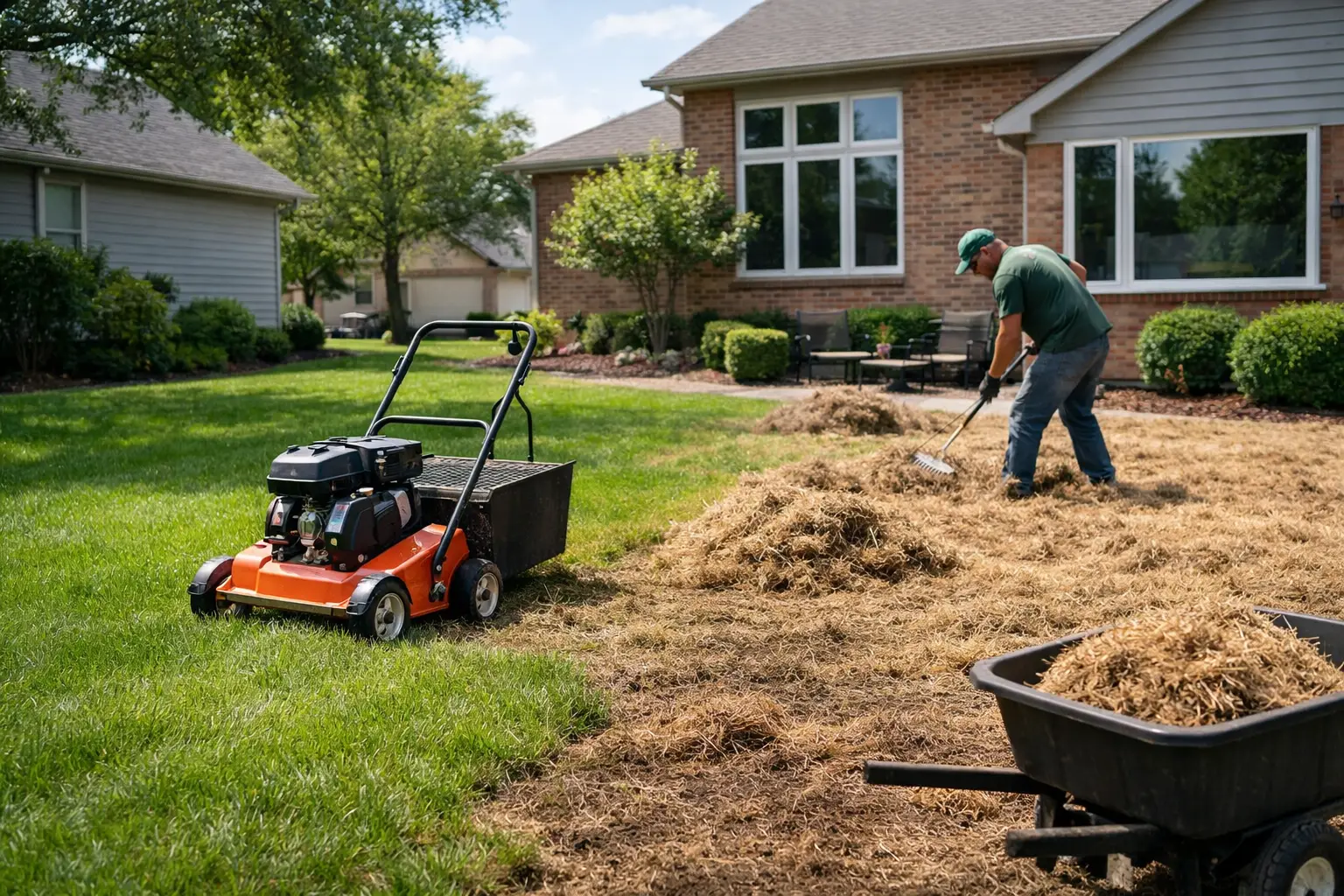
Dethatching removes the built-up layer above the soil. Aeration pulls small plugs from the soil to relieve compaction and help water, air, and nutrients move deeper into the root zone.
In many Chicago suburban lawns, compaction is actually the bigger issue. Kids playing in the yard, dog traffic, clay-heavy soil, and regular mowing patterns all add up over time. If your lawn is hard, dense, and drains poorly, aeration may be more useful than dethatching.
Some lawns benefit from both, but not always at the same time and not always with the same intensity. This is why a one-size-fits-all lawn plan usually misses the mark.
What happens after dethatching
Dethatching is helpful when it is truly needed, but it does rough the lawn up for a little while. Right after service, the yard can look thinner and more beat up than it did before. That is normal.
The goal is not instant beauty that same day. The goal is to remove the barrier that has been holding the grass back so healthier growth can take over.
In Illinois, dethatching often makes the most sense as part of a larger lawn recovery plan. That may include aeration, overseeding, and proper watering afterward. If you dethatch and then do nothing else, the lawn may recover slowly or unevenly.
This matters even more in neighborhoods with mature trees, patchy sun, or heavy clay soil. A shaded Hinsdale yard and a sunny Plainfield backyard may both have thatch, but they will not recover at the same pace or need the same follow-up.
Common mistakes homeowners make
The biggest mistake is dethatching on a schedule instead of based on the lawn’s condition. Some people hear that dethatching is a good lawn service and assume it should happen every year. Usually, that is too often.
Another common mistake is using a power rake too aggressively. If the machine is set too deep, it can tear out healthy grass along with the thatch. Then the lawn has to spend energy recovering from damage that did not need to happen.
Timing is another issue. If you dethatch too early in spring, the lawn may not bounce back well. If you do it too late in fall, new seed and stressed grass may not have enough time to establish before winter.
And finally, some homeowners chase the wrong problem. If the yard has standing water, compacted soil, or poor grading, you want to address those root causes too. You do not want water sitting near your foundation, and you do not want a lawn treatment plan covering up a drainage issue that needs real correction.
The best approach for Chicagoland homeowners
If you live in the Chicago suburbs and you are trying to decide when to dethatch Illinois lawn turf, start with the lawn type and the condition of the yard. Most lawns here are better off being checked in late summer or early fall, then dethatched only if the thatch layer is truly excessive.
That gives you the best chance to pair the work with aeration and overseeding if needed. It also lines up better with how cool-season grass actually grows in our area.
For busy homeowners, that practical timing matters. You want the yard looking fuller and cleaner, not stuck in a cycle where every service creates another problem to chase. A lawn should support the full picture of the property, from curb appeal to drainage to how much weekend work you are dealing with.
If you are not sure whether your lawn needs dethatching, aeration, or something else, it helps to have someone look at the whole yard instead of just the grass blades. At Revive Your Lawn, that is how we approach properties across the western suburbs and greater Chicagoland. The right answer is not always more lawn work. Sometimes it is better timing, better follow-up, or fixing the issue underneath.
A healthy Illinois lawn is less about doing every service and more about doing the right one at the right time.