If your yard is thin, patchy, or mostly weeds, the sod installation versus seed question usually comes up fast. Most homeowners in the Chicago suburbs want the same thing – a lawn that looks good, holds up to kids and dogs, and does not turn into a muddy mess every time it rains. The right answer depends on your timing, your budget, and what your yard is dealing with right now.
This is where many homeowners run into trouble. They assume sod is always better because it looks finished right away, or they assume seed is smarter because it costs less upfront. In Illinois, both can be the right choice. But they work very differently, especially with our weather, clay-heavy soils, spring rains, summer heat, and cold falls.
Sod installation versus seed: what is the real difference?
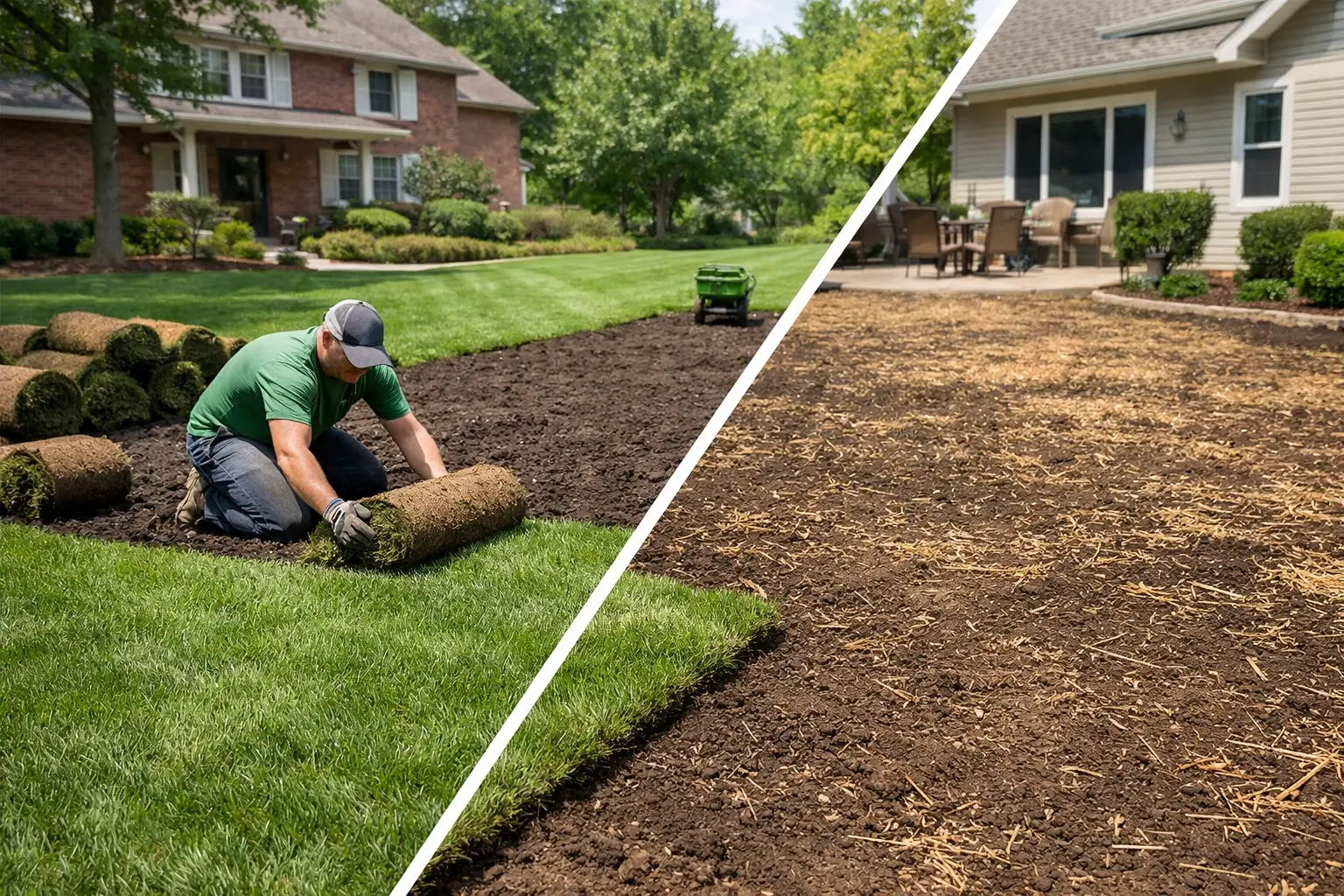
Sod is mature grass that is grown elsewhere, cut into rolls, and installed over prepared soil. It gives you an almost instant lawn. Seed is exactly what it sounds like – new grass started from scratch in your yard. It takes more time to fill in, but it can be a solid option when the site and timing are right.
The biggest difference is speed. Sod gives you quick visual results and faster erosion control. Seed takes patience. You are waiting for germination, rooting, and thickening, and that process can be interrupted by heavy rain, hot weather, birds, foot traffic, or inconsistent watering.
That does not mean seed is weak. A properly seeded lawn can grow into a healthy, durable yard. But it needs more cooperation from the weather and more discipline during the early weeks.
When sod makes more sense
Sod is usually the better choice when you want a finished look quickly or when the yard has real functional issues. If your property has bare dirt, slopes, drainage trouble, or a lot of runoff, seed can wash away before it gets established. Sod helps stabilize the ground much faster.
For many Chicagoland homeowners, that matters more than people think. In the western suburbs, we often see yards with poor grading, low spots, or worn-out areas near patios, walkways, and play spaces. A good landscape should look nice, but it also needs to work. If the yard is already struggling with mud and traffic, sod gives you a stronger starting point.
Sod is also helpful when you have a narrow planting window. Maybe you are hosting a graduation party, putting your home on the market, or finishing a larger landscape project. Seed rarely gives you that same quick turnaround.
Another point in sod’s favor is weed competition. A thick sod lawn starts off ahead because the grass is already established. Seeded areas are more vulnerable early on, and weeds often move in before the new lawn fills out.
When seed is the better fit
Seed often makes sense when the yard is large, the budget is tighter, and the conditions are favorable for growing new grass. If the area is flat, drains reasonably well, and can be protected from heavy use, seed can be a smart long-term option.
Fall is usually the best time for seeding in Illinois. The soil is still warm, the air is cooler, and weeds are not as aggressive as they are in late spring and summer. That gives seed a better shot at getting established before winter.
Seed also gives flexibility if you are blending into an existing lawn or repairing sections instead of starting over. For some homes, a full sod install is more than they need. If the yard has decent grass already and just needs improvement in thinner spots, overseeding may be enough.
The trade-off is care. Seed needs consistent watering, protection from foot traffic, and more patience. If the family is using the yard every day, if dogs are running the same path, or if the sprinkler setup is unreliable, seed can be frustrating.
Illinois weather changes the decision
In Illinois, this matters because our lawn windows are not endless. Spring can be wet and unpredictable. Summer can turn hot fast. Fall is excellent for lawn work, but it is shorter than many homeowners expect.
That means timing is not just a side note. It is a major part of the sod installation versus seed decision.
Sod can be installed across a wider range of conditions as long as the site is prepared properly and watering is handled correctly. Seed is more sensitive. If you miss the ideal window and try seeding during a stretch of heat or heavy storms, you may end up doing parts of the job twice.
Our soil also plays a role. In many Chicago-area neighborhoods, the soil is compacted and heavy. That can make seed establishment tougher if the ground is not loosened and improved first. Sod is not magic either – it still needs proper prep and good soil contact – but it tends to perform better when homeowners want a more predictable result.
Cost matters, but so does the redo risk
Seed usually costs less upfront. That is the main reason many homeowners start there. And in the right situation, that lower cost makes sense.
But here is what to look for. If the yard has drainage issues, poor grading, shade challenges, or a lot of wear, a cheaper install can become more expensive if you have to reseed, repair washouts, or fight weeds for months. Sometimes the lower upfront price does not stay lower for long.
Sod costs more because you are paying for mature turf and installation, but you are also buying time and a more immediate result. For busy families, that has real value. Less waiting, less exposed dirt, and less chance of the yard looking rough through most of the season.
This is also why it helps to look at the whole property, not just the lawn. If water is sitting near your foundation or running across the yard, the lawn choice should not be made by itself. You do not want water sitting near your foundation, and you do not want to put fresh seed into a problem area that really needs drainage work first.
Maintenance after installation
Neither option is maintenance-free. That is worth saying plainly.
Sod needs immediate watering and close attention while the roots knit into the soil below. If it dries out early, the edges can shrink and sections can struggle. The upside is that once it takes hold, you move toward a normal lawn faster.
Seed needs lighter but more frequent watering at first, and the timing matters. Too little water and it dries out. Too much all at once and you can get runoff, bare spots, or disease pressure. You also have to stay off it longer. With kids, pets, or regular backyard use, that can be a challenge.
Mowing schedules differ too. Seeded lawns need time before that first mow, and cutting too early can pull young grass out. Sod can usually be mowed sooner once it is rooted enough, but it still needs a careful start.
What we usually tell homeowners
At a kitchen table or during a yard walkthrough, the advice is usually pretty simple. If you want the fastest, cleanest transformation and the yard has trouble spots, sod is often the better investment. If you have a larger area, some flexibility on timing, and the site is good for growing grass, seed can be the practical move.
For many Naperville-area homes, Downers Grove homeowners, and other properties across the western suburbs, the best answer is not always one or the other. Sometimes it is a mix. Sod in the high-visibility or high-traffic areas, and seed in sections where time is less critical. Sometimes the real first step is grading or drainage correction so the new lawn has a chance to succeed.
That is the part homeowners appreciate once they see the full picture. Lawn projects are not just about green grass. They are about curb appeal, cleaner edges, less mud tracked into the house, and a yard you can actually use.
If you are deciding between sod and seed, do not just ask which one is cheaper or faster. Ask what your yard needs to perform well through an Illinois season. A lawn that starts the right way saves a lot of headaches later.