If you have ever seen thick ridges of ice hanging off the edge of a roof in January, you already know how expensive winter can get in Illinois. A lot of homeowners ask if you can prevent ice dams with gutters, and the honest answer is yes, gutters can help – but only if the whole system is working the way it should.
This is where many homeowners run into trouble. They clean the gutter once, add a quick fix, and assume the problem is solved. Then the next freeze hits, snow melts unevenly, water backs up at the roof edge, and now there is ice, overflow, and sometimes water getting into the house.
Why ice dams happen in Illinois
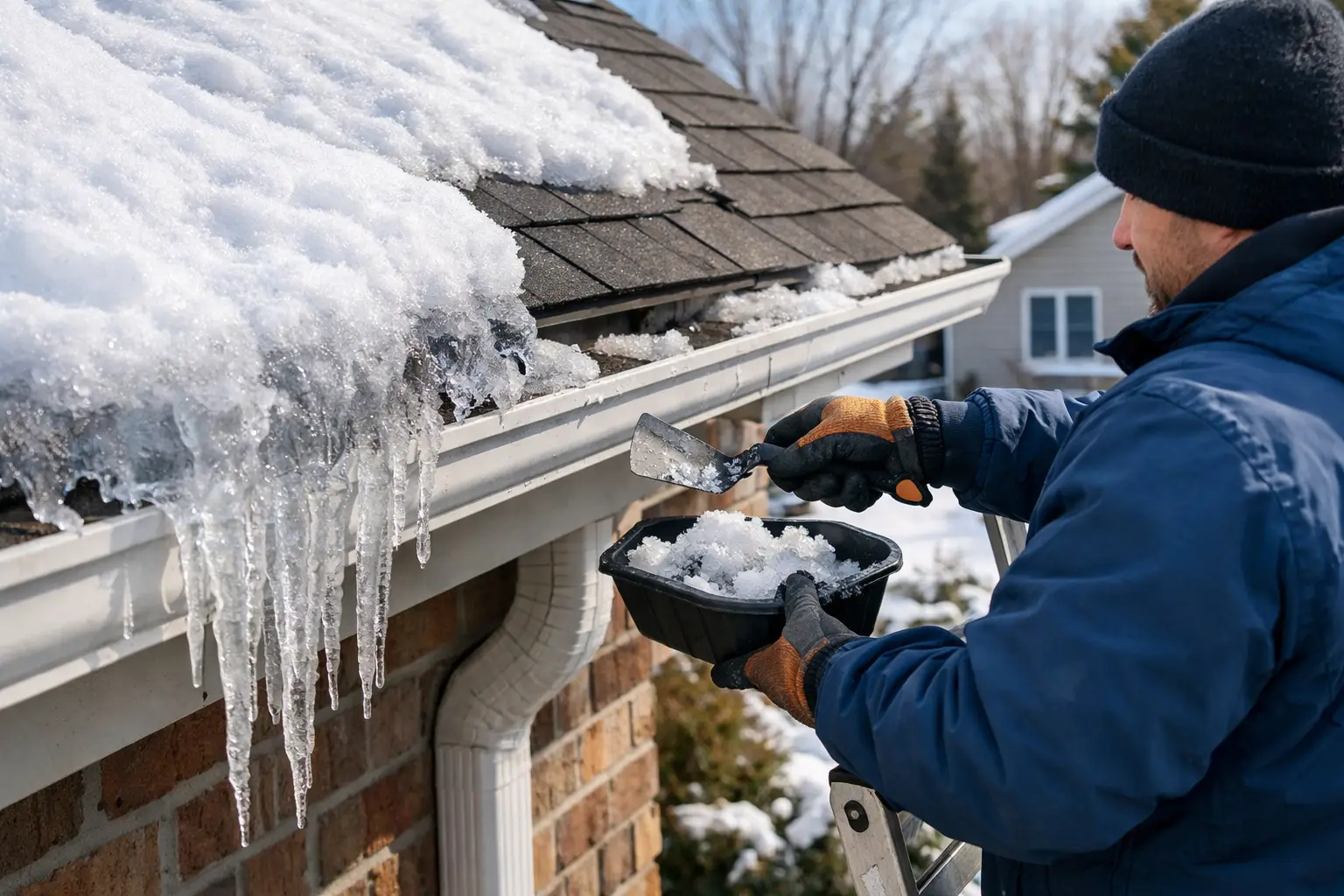
Ice dams form when snow on the upper part of your roof melts, runs downward, and then refreezes near the colder roof edge. That frozen ridge blocks the next round of melting water. Instead of draining off the roof, the water starts pooling behind the ice.
In Illinois, this matters because we get long freeze and thaw cycles. One week it is bitter cold, then we get sun, a little melt, and another hard freeze at night. That pattern is perfect for ice dams, especially on homes in the Chicago suburbs with heavy snow buildup, shaded rooflines, and clogged or poorly draining gutters.
Gutters do not usually cause the heat loss that starts an ice dam. That often comes from attic insulation and ventilation problems. But gutters absolutely affect what happens next. If they are blocked, sagging, too small for the roofline, or packed with frozen debris, they make it easier for water to back up and freeze at the edge.
How to prevent ice dams with gutters
If your goal is to prevent ice dams with gutters, think of your gutters as part of a bigger water-control system. They need to stay open, move water fast, and keep runoff flowing away from the roof edge and foundation.
Start with clean gutters before winter
A gutter full of wet leaves is a problem in October. In January, it turns into a frozen dam. Water cannot move through the trough or downspouts the way it should, so it sits, freezes, and adds weight and blockage right where you do not want it.
For most Chicagoland homeowners, a good fall cleaning is one of the simplest ways to reduce risk. If your property has a lot of mature trees, especially oak or maple, one cleaning may not be enough. Here’s what to look for: packed leaves in the gutters, debris at the downspout opening, and water spilling over the side during rain before winter even starts.
Make sure the gutters pitch correctly
Even a clean gutter can hold water if it is not sloped the right way. Gutters should have a slight pitch toward the downspouts so water drains out instead of sitting in low spots. When water sits in the gutter during cold weather, it freezes faster and creates the base for more ice buildup.
This is common on older Illinois homes where gutters have pulled away a bit over time or where heavy snow and ice have changed the alignment. It does not always look dramatic from the ground. Sometimes it is just enough of a dip to trap water.
Check downspouts and drainage at the bottom
A lot of winter gutter problems are really downspout problems. If the downspout is clogged or if it empties into an area that freezes up quickly, water can back up through the whole system.
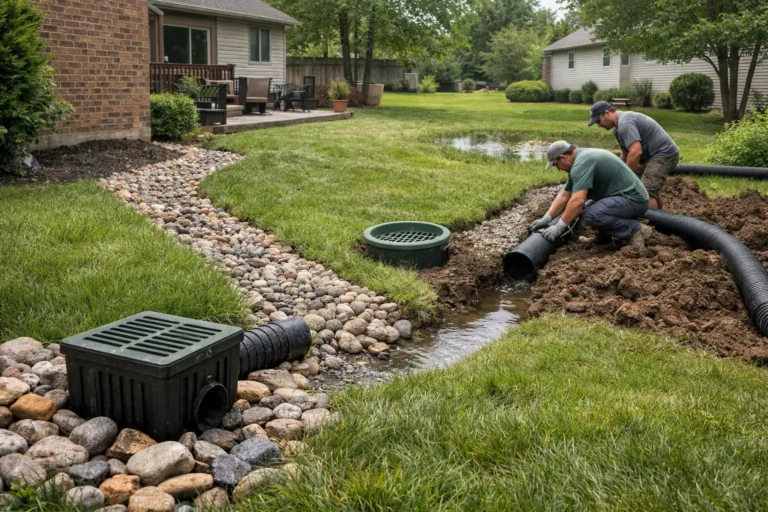
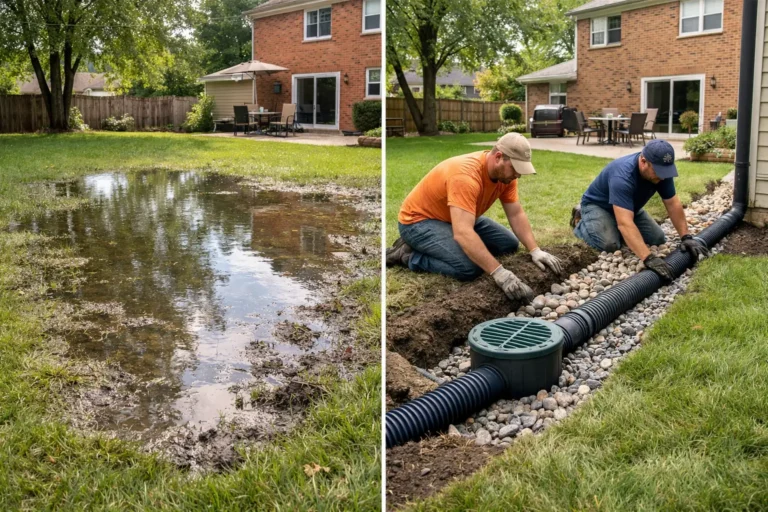
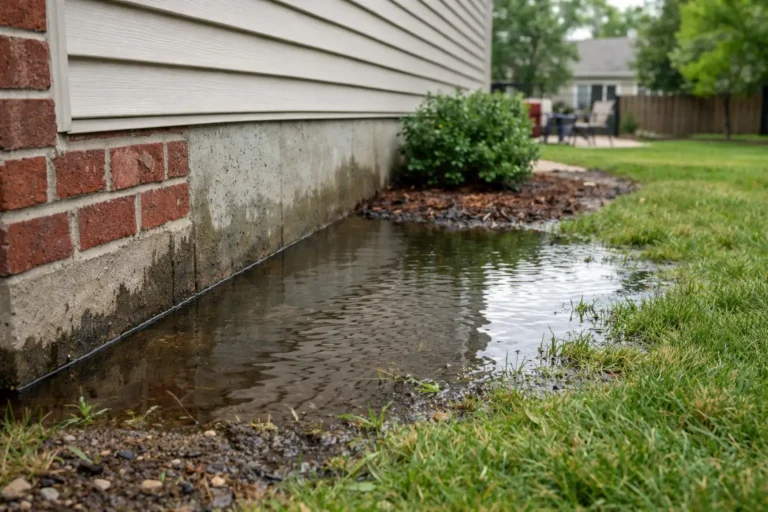
You do not want water sitting near your foundation, and you also do not want it trapped in the gutter line. Downspouts should carry runoff away from the home and out to an area that drains well. In the western suburbs, where we often see a mix of freeze, snowmelt, and wet spring soils, this matters more than people think.
Consider gutter guards if your home collects a lot of debris
Gutter guards are not magic, and they are not the right fit for every house. But on homes with lots of tree cover, they can cut down on the leaf buildup that leads to frozen clogs.
The key is using a guard system that actually matches the roof and tree conditions. A cheap screen that still lets small debris build up underneath will not do much good. A better setup helps water enter while keeping out the kind of debris that turns into a frozen blockage.
Where gutters help and where they do not
This is the part homeowners deserve to hear clearly. Gutters help manage water at the roof edge, but they do not solve every cause of ice dams.
If warm air is escaping into the attic, snow will still melt too fast on the upper roof. If the attic is under-insulated, the roof surface may stay unevenly warm. If ventilation is poor, the cold roof edge and warmer roof field create the exact conditions that lead to refreezing.
So yes, you should improve the gutter system. But if you have repeat ice dam issues, the smartest approach is to look at the whole picture – roof edge drainage, attic conditions, snow patterns, and how water leaves the property.
Signs your gutter system is making ice dams worse
Some warning signs show up before winter, and some only appear after a few storms. If you see icicles lined up only in certain sections, that can point to poor drainage or colder clogged areas. If one corner of the gutter always freezes first, there may be a pitch issue or a blocked downspout.
Water stains near the top of exterior walls, peeling paint, sagging gutters, and ice piled above the gutter line are all worth paying attention to. In Naperville-area homes and older Downers Grove neighborhoods, we often see gutter layouts that were fine years ago but are no longer keeping up with the home’s drainage needs.
Should you use heat cables?
Heat cables can help in certain situations, especially at trouble spots where refreezing keeps happening. But they are not the first thing I would jump to.
They treat the symptom more than the cause. If the gutter is full of debris, if the pitch is wrong, or if the attic is driving uneven snowmelt, heat cables may reduce the icing in one spot while the bigger issue stays in place. They can be useful, but they work best when the rest of the system is already in decent shape.
The best time to fix the problem
The best time is before the first hard freeze, not during a January emergency when water is backing up into the soffit. Fall is ideal for cleaning, repairs, guard installation, and checking where downspouts discharge.
That said, if you are already seeing ice dams in winter, do not ignore them. Heavy ice can damage gutters, loosen fasteners, and create slippery conditions around walkways and entry areas. For busy families, that turns into both a home protection issue and a safety issue.
A practical plan for Illinois homeowners
For most homes in the Chicago suburbs, the right plan is pretty straightforward. Keep gutters clean, make sure they drain properly, check that downspouts move water away from the house, and address repeat trouble spots before winter gets rolling.
If your home has ongoing issues, it may be time to stop treating it like a one-season nuisance. Ice dams often point to a drainage or roof-edge problem that has been building for a while. A good exterior plan should protect the house, reduce maintenance headaches, and keep winter runoff under control.
That is why this topic matters beyond the roofline. When snowmelt is handled correctly, you are also protecting landscaping near the foundation, reducing slick spots on walks and driveways, and avoiding the ugly overflow stains that show up on siding and fascia.
For Chicagoland homeowners, winter always finds the weak spots. The good news is that gutters can do a lot to help when they are clean, pitched correctly, and tied into a drainage setup that actually works. A good exterior system should look nice, but it also needs to work when Illinois weather gets difficult.