If your yard still looks like it belongs to a different decade, you are not imagining it. A lot of Chicagoland homeowners ask how to update outdated landscaping when the shrubs are overgrown, the beds feel flat, and the whole front yard just makes the house look older than it is. The good news is you usually do not need to tear everything out and start from scratch. In many cases, the best update comes from fixing the parts that are not working, simplifying the layout, and making the yard easier to maintain.
An outdated landscape is not always just a style problem. Sometimes it is also a function problem. Old planting layouts can trap water, block windows, crowd walkways, or create a lot more upkeep than busy homeowners want. A good landscape should look nice, but it also needs to work.
How to update outdated landscaping without overdoing it
The first step is figuring out what actually feels dated. In the Chicago suburbs, we often see the same issues show up again and again: giant foundation shrubs, narrow mulch beds with random plant choices, worn concrete edging, patchy lawn areas, and dark walkways with no lighting. Sometimes the yard has good bones, but it has been added onto piece by piece over the years with no real plan.
This is where many homeowners run into trouble. They focus on one thing, like new flowers or fresh mulch, but the bigger issues stay put. If the shape of the beds is awkward, the drainage is poor, or the old shrubs are swallowing the front windows, cosmetic updates only go so far.
A smarter approach is to look at the whole property in layers. Start with layout, then drainage, then hardscape, then plantings, then lighting and finishing touches. That order matters. You do not want to install a fresh planting bed if water is going to keep washing mulch away or pooling near the house.
Start with the parts that make the yard feel old
In a lot of Illinois homes, the fastest visual improvement comes from removing what is oversized, crowded, or no longer fits the house. Old yews, junipers, and bulky evergreen shrubs can make a home feel dark and boxed in. Pruning helps sometimes, but there is a point where cutting them back every year is just delaying the real fix.
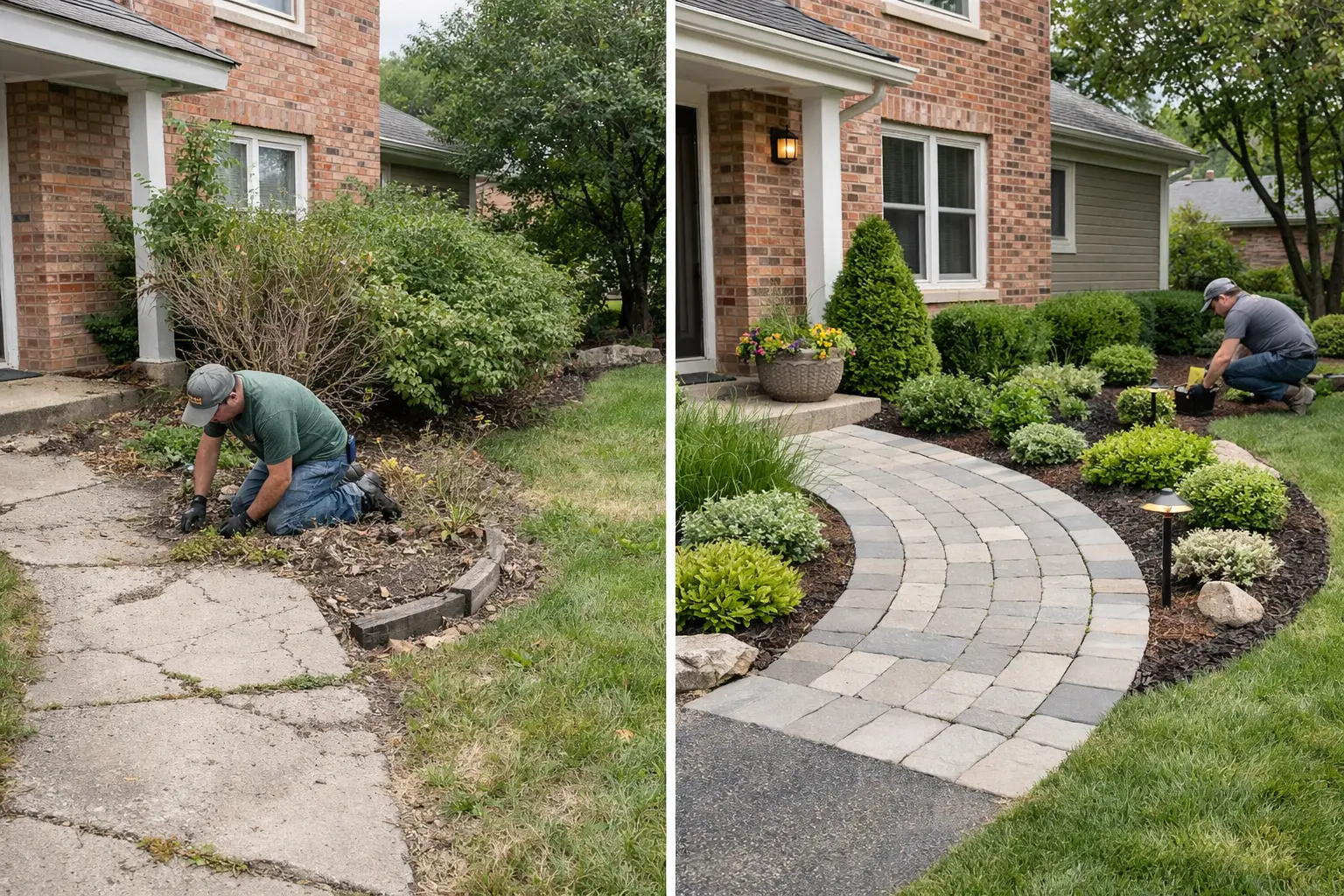
Foundation beds are another common issue. Many older landscapes have a thin strip of mulch with scattered shrubs and maybe a few annuals stuck in for color. It does not frame the house well, and it usually looks tired by midsummer. Widening and reshaping the beds can make a big difference, especially if the curves are cleaned up and the plant selection is simplified.
Then look at the lawn. If parts of the yard are always thin, muddy, or worn out, that affects the whole look of the property. In Illinois, this matters because our freeze-thaw cycles, spring rain, summer heat, and foot traffic can be rough on turf. Sometimes a lawn problem is really a drainage or grading problem in disguise.
Fix function before style
A lot of outdated landscaping is really failed landscaping. It may have looked fine when it was installed, but over time the water patterns changed, trees matured, or low spots started holding water. If you want a lasting upgrade, pay attention to those issues before picking new plants.
You do not want water sitting near your foundation. You also do not want soggy turf, mulch beds that wash out, or puddles by the walkway every time it rains. A drainage solution might be as simple as correcting a low spot, extending runoff away from the house, or reworking a bed edge so water moves where it should. In other yards, it takes a more involved plan.
This is one reason it helps to think beyond plants. Updating landscaping can include drainage work, better grading, refreshed walkways, retaining elements where needed, and low-voltage lighting that improves both appearance and safety. If the property works better, it usually looks better too.
Use the house as the guide
One of the easiest ways to make a yard feel current is to design it to match the home instead of fighting against it. A clean brick colonial, a traditional two-story, and a modern farmhouse should not all get the same planting style.
For many homes in Naperville, Downers Grove, Hinsdale, and nearby western suburbs, simple and structured tends to age well. That does not mean stiff or boring. It means fewer plant varieties, better spacing, stronger bed lines, and a layout that makes the home stand out instead of hiding it.
If the house has strong architecture, the landscaping should support it. Repeating a few dependable plant types often looks better than using ten different shrubs just because they were on sale at some point over the last fifteen years. A more edited landscape usually looks cleaner and is easier to maintain.
Pick plants that fit Illinois, not just the photo
A fresh plant palette can absolutely help, but plant choice should be practical. In the Chicago suburbs, you need material that can handle our winters, summer swings, and the real conditions on your property. Full sun, shade, wet spots, road salt, and deer pressure all matter.
This is where many homeowners waste money. A plant may look great in a photo, but if it outgrows the space in a few years or struggles in your soil, you are back to the same problem. Smaller-scale shrubs, ornamental grasses, hardy perennials, and well-placed evergreens can all play a role, but the mix needs to fit the site.
You also do not need to fill every inch with plants. Sometimes the update is giving the landscape room to breathe. Clean bed definitions, fresh mulch, and healthier spacing often do more than cramming in extra color.
Hardscape can modernize the whole yard
If your yard still has cracked walkways, uneven steps, or a patio that feels disconnected from the rest of the property, new hardscape may be the update that changes everything. Paver walkways and patios can give an older yard a much more finished look while also making the space more usable.
This matters especially in backyards. A lot of homeowners want to enjoy the space more, but the layout does not support that. Maybe the patio is too small, the path to the side gate is awkward, or there is no clear transition from the house to the yard. Those are design problems, not decorating problems.
A new walkway, seating area, or edge detail can bring order to a space that currently feels patched together. It also helps cut down on muddy traffic paths and worn lawn shortcuts.
Do not forget lighting
Landscape lighting is one of the most overlooked ways to update an older property. During the day, it adds polish. At night, it changes how the home feels from the street and makes the property safer to move around.
A dark front walk or shadowy side yard can make even a nice landscape feel unfinished. Thoughtful lighting can highlight the front entry, show off architectural features, and make planting beds look more intentional. It also helps with visibility during our long fall and winter evenings.
The key is restraint. You want the house and landscape to glow, not look like a stadium parking lot. Good lighting should feel natural and useful.
Know when a phased update makes more sense
Not every yard needs a full makeover at once. Sometimes the best answer to how to update outdated landscaping is to break it into smart phases. You might start with the front entry and foundation beds, then tackle drainage, then improve the backyard patio and lighting later.
That can be a practical move for budget reasons, but it also helps homeowners avoid rushed choices. The important thing is having a plan that ties everything together. Otherwise, you end up with a new front bed that does not match the walkway you replace next year.
A phased approach works especially well when the property has multiple issues at once, like aging shrubs, poor drainage, and tired hardscape. You do not have to do everything immediately, but you do want the steps to make sense in the right order.
What a successful update really looks like
The best landscaping updates do not just make the yard newer. They make it cleaner, easier to maintain, and better suited to how you live. Maybe that means less pruning, fewer muddy spots, a more welcoming front entrance, or a backyard that finally feels worth using.
For busy Illinois homeowners, that is usually the real goal. You want curb appeal, but you also want fewer headaches. You want the property to look cared for without spending every weekend fighting overgrown shrubs or trying to fix drainage with a bag of mulch.
If you are looking at your yard and thinking something feels off, trust that instinct. Outdated landscaping usually shows up in small ways before it becomes a bigger project. A few smart changes, done with a real plan, can make the entire property feel newer, cleaner, and a lot more enjoyable to come home to.
Sometimes the right next step is not more stuff in the yard. It is a clearer layout, better function, and a landscape that finally fits the house and the way you want to use it.