A large yard can look great all summer, then turn into a big project the minute leaves start dropping. For Chicagoland homeowners, fall cleanup for large yards is about more than making the property look neat before winter. It is a chance to protect your lawn, find drainage problems, clear unsafe walkways, and avoid a bigger mess when snow melts next spring.
The challenge is that big properties do not respond well to a quick weekend rake. When you have mature trees, long fence lines, planting beds, a patio, drainage areas, and plenty of turf, the work adds up fast. A good cleanup follows a plan, not just a leaf blower.
Start with the areas that affect your property
Many homeowners start with the most visible part of the yard, usually the front lawn. That is reasonable, but it is not always where the most important work is. Start by walking the property and looking for areas where leaves, branches, or debris can cause a problem over the winter.
Pay close attention to downspout outlets, drainage swales, catch basins, window wells, and the edges of patios and walkways. You do not want wet leaves packed into these areas. They can hold water in place, block drainage, and create slippery conditions after a freeze.
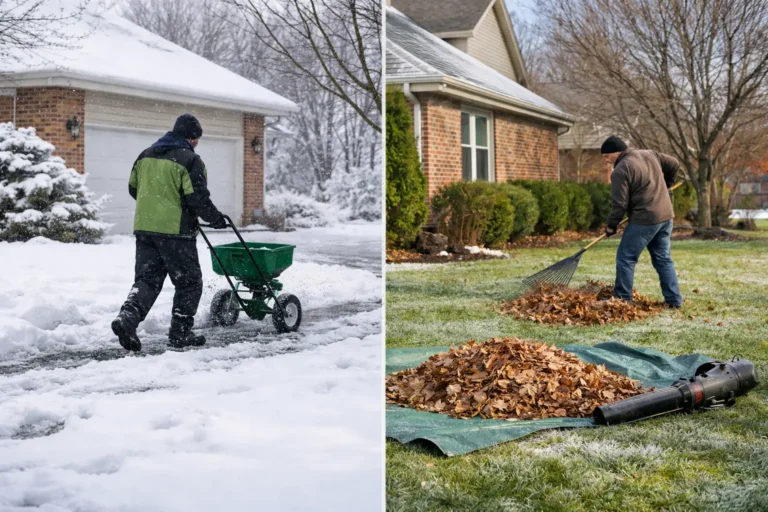
In Illinois, this matters because fall weather can change quickly. A week of rain followed by an overnight freeze can turn a leaf-covered walkway into a hazard. Snow cover can also hide problems for months, so it is better to spot them while the ground is still visible.
A thorough walkthrough should also include the side yard and backyard. This is where many homeowners run into trouble. Leaves collect behind sheds, along fences, beneath decks, and around air-conditioning units. Those piles can stay wet for a long time and leave dead grass, moldy debris, or muddy areas behind in spring.
Make a plan for leaves, not just one cleanup day
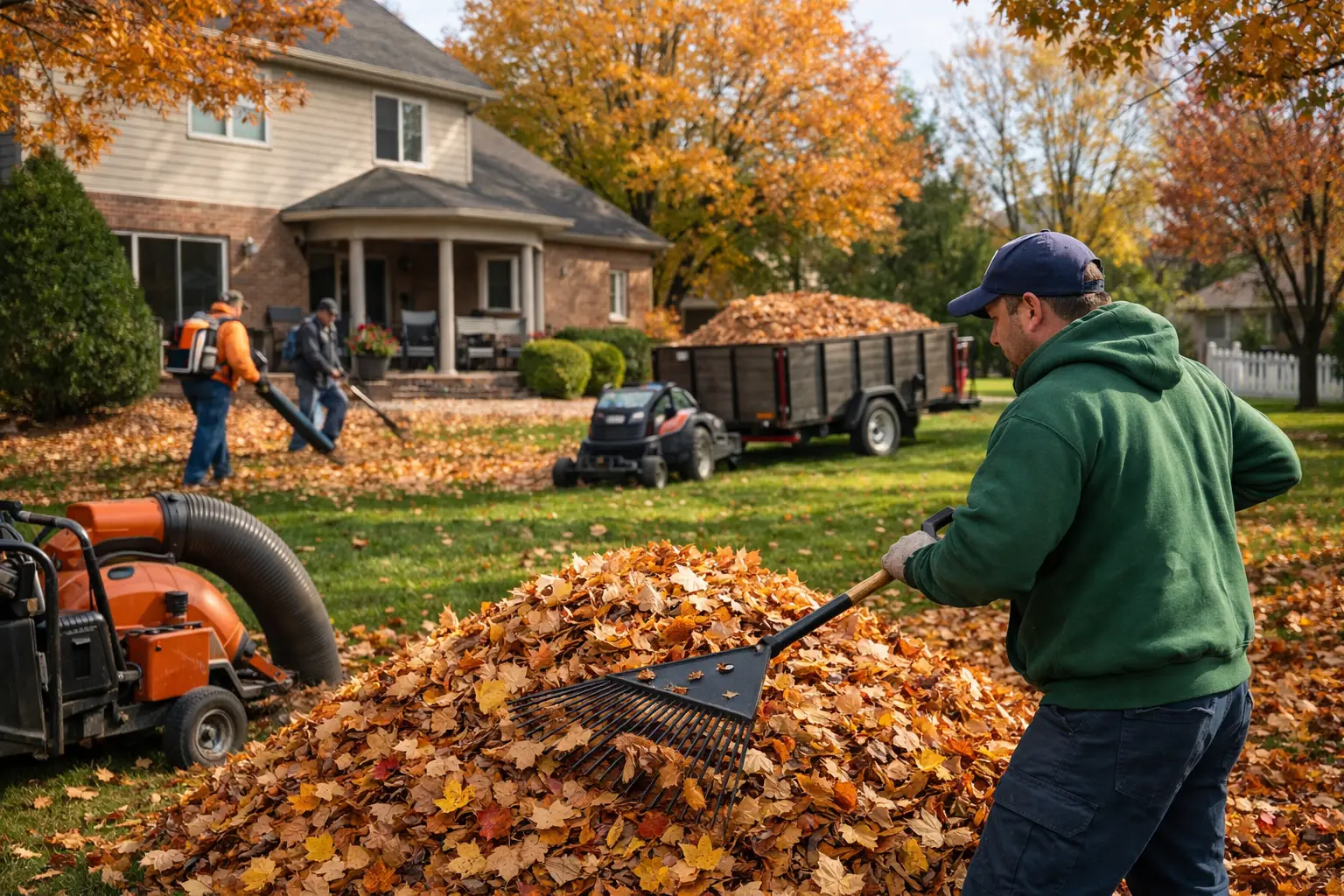
On a large property, waiting for every leaf to fall before doing anything usually creates more work. A better approach is to remove the bulk of the leaves in stages, then do a final cleanup later in the season.
Early in the fall, focus on keeping turf reasonably clear and getting leaves out of drainage areas. As more leaves come down, clear the lawn again and work through planting beds, hardscape edges, and fence lines. The final visit should handle the stubborn corners, fallen branches, and any last leaves that blow in from neighboring properties.
This approach helps your lawn breathe. A thick, wet layer of leaves can block sunlight and trap moisture against the grass. By spring, that may leave thin patches or turf that takes longer to green up. A few scattered leaves are not usually a concern, but a heavy blanket across a large lawn is a different story.
Mulching leaves with a mower can work on smaller amounts, especially when the leaves are dry and finely chopped. On a large yard with lots of mature trees, though, there is a limit. Too much chopped leaf material can still smother the grass or leave clumps behind. It depends on leaf volume, lawn condition, and how often the property is maintained.
Give planting beds the attention they need
Flower beds and shrub borders often hold the heaviest leaf buildup because wind naturally pushes debris into them. Leaving a light layer of leaves around certain established plants can be helpful, but deep, wet piles are not. They may trap moisture against stems, invite pests, and make spring trimming harder.
The goal is not to strip every inch of soil bare. The goal is to clear out heavy, matted debris and give plants room to breathe. Perennials that have finished their season can be cut back when appropriate, while shrubs should be cleaned around carefully without aggressive late-season pruning.
This is also a good time to look at bed edges and mulch. If the edge between your lawn and landscape bed has disappeared, the property can look untidy even after the leaves are gone. Fresh edging and a clean bed line make a big difference in curb appeal, especially at Naperville-area homes with larger front landscapes.
Be careful with late fall trimming. Some plants are better left alone until spring, and cutting them back at the wrong time can stress them before a hard Illinois winter. A knowledgeable crew will know the difference between basic cleanup work and pruning that should wait.
Fall cleanup for large yards should include lawn care
Your lawn has a better chance of coming back strong in spring when it goes into winter clean and properly maintained. That does not mean every yard needs the same treatment. Grass type, soil condition, shade, leaf cover, and summer stress all matter.
For many Chicago suburbs properties, fall is a practical time for aeration and overseeding. Aeration pulls small plugs from the soil so water, air, and nutrients can reach the roots more easily. It is especially useful when a lawn feels hard underfoot, has heavy foot traffic, or struggles with thin areas.
Overseeding can help fill in worn turf, but timing matters. Seed needs enough time and the right conditions to establish before winter. If the season is already too far along, it may be smarter to focus on cleanup and make a plan for spring instead of putting money into seed that may not have a fair chance.
A final mow is also part of the job. Grass that is left too long can mat under snow, while grass cut too short can be stressed by winter conditions. Your lawn should be neat, healthy, and free of heavy debris, not scalped down for the season.
Do not overlook drainage and gutters
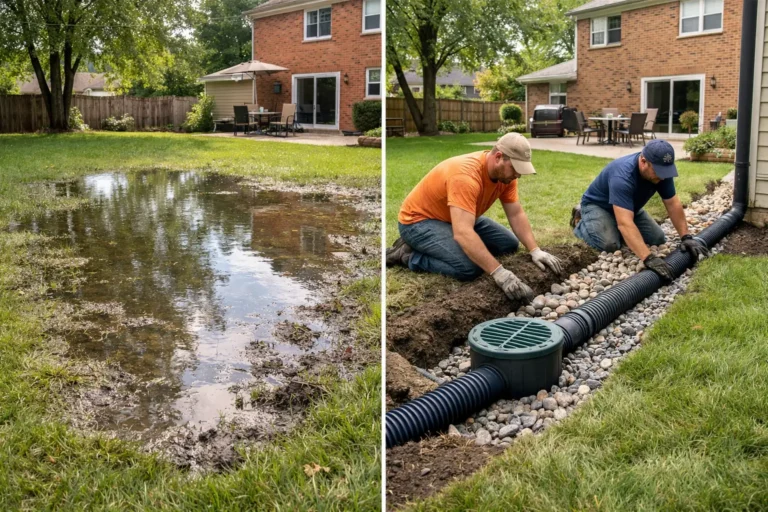
Fall cleanup is one of the best times to notice how water moves through your yard. Leaves can hide low spots, block drainage paths, and pile up near the foundation. If you see standing water after a normal rain, or if one part of the lawn stays muddy long after the rest dries, make a note of it.
You do not want water sitting near your foundation. It can contribute to soggy turf, damaged landscaping, and bigger concerns around the home. Sometimes the fix is as simple as clearing a blocked outlet or extending a downspout. Other times, a property needs a more complete drainage solution. The right answer depends on the slope, soil, roof runoff, and layout of the yard.
Gutters deserve the same attention. When gutters overflow, all that roof water lands where you may not want it – often beside the house or across a walkway. Clearing debris and checking that downspouts are directing water away from the foundation can prevent a lot of winter and spring headaches.
Prepare patios, walkways, and outdoor features
Large yards often include more than grass and trees. Patios, paver walkways, retaining walls, pergolas, landscape lighting, and fences all need a quick fall check.
Clear leaves off patios and walkways before they become wet and slick. Look for pavers that have shifted, loose steps, cracked edging, or low spots where water collects. A small issue is easier to see and plan for before snow arrives.
Landscape lighting should be checked while evenings are getting darker. Replace lights that are out, make sure fixtures are not buried by leaves, and look for wires or fixtures that have been disturbed by summer growth. Good lighting makes a property look welcoming, but it also helps family members and guests see where they are walking.
For commercial properties and larger residential lots, this check is especially useful before snow removal season begins. Clear walkways, visible edges, and working lights help crews work safely once winter weather moves in.
When professional help makes sense
There is nothing wrong with handling a small cleanup yourself. But a large yard can demand several full weekends, and the job often requires more than raking. Heavy leaf removal, bed cleanup, trimming, final mowing, hauling debris, and checking drainage all take time and the right equipment.
Professional help makes particular sense when leaves are deep, the property has many mature trees, or you are already dealing with wet spots and drainage concerns. It also helps busy families avoid the cycle of spending every fall weekend chasing leaves that keep blowing back in.
At Revive Your Lawn, we approach fall cleanups as part of the full exterior picture. We want the property to look clean, but we also watch for the practical issues that can affect your lawn, drainage, hardscape, and winter safety. That is especially valuable for Downers Grove homeowners and other Chicago suburbs properties with larger, established landscapes.
Before the first lasting snow, take one more walk around your yard. Clear the areas water needs to move through, keep walkways visible, and do not let a season of leaves hide a problem that will be waiting for you in spring.