If you have ever watched water pour over the side of your gutters during a hard Illinois rain, you already know this is not just a small maintenance issue. When homeowners ask about gutter guards versus cleaning, what they usually really want to know is this: What is the smartest way to protect my home without creating more work or bigger repair bills later?
That is a fair question, especially in the Chicago suburbs where gutters deal with a little bit of everything. Spring storms, summer downpours, falling leaves, maple seeds, twigs, and then ice and snow in winter all put stress on a gutter system. A setup that works fine in one yard may not make sense in another. Here’s what to look for.
Gutter guards versus cleaning: the real difference
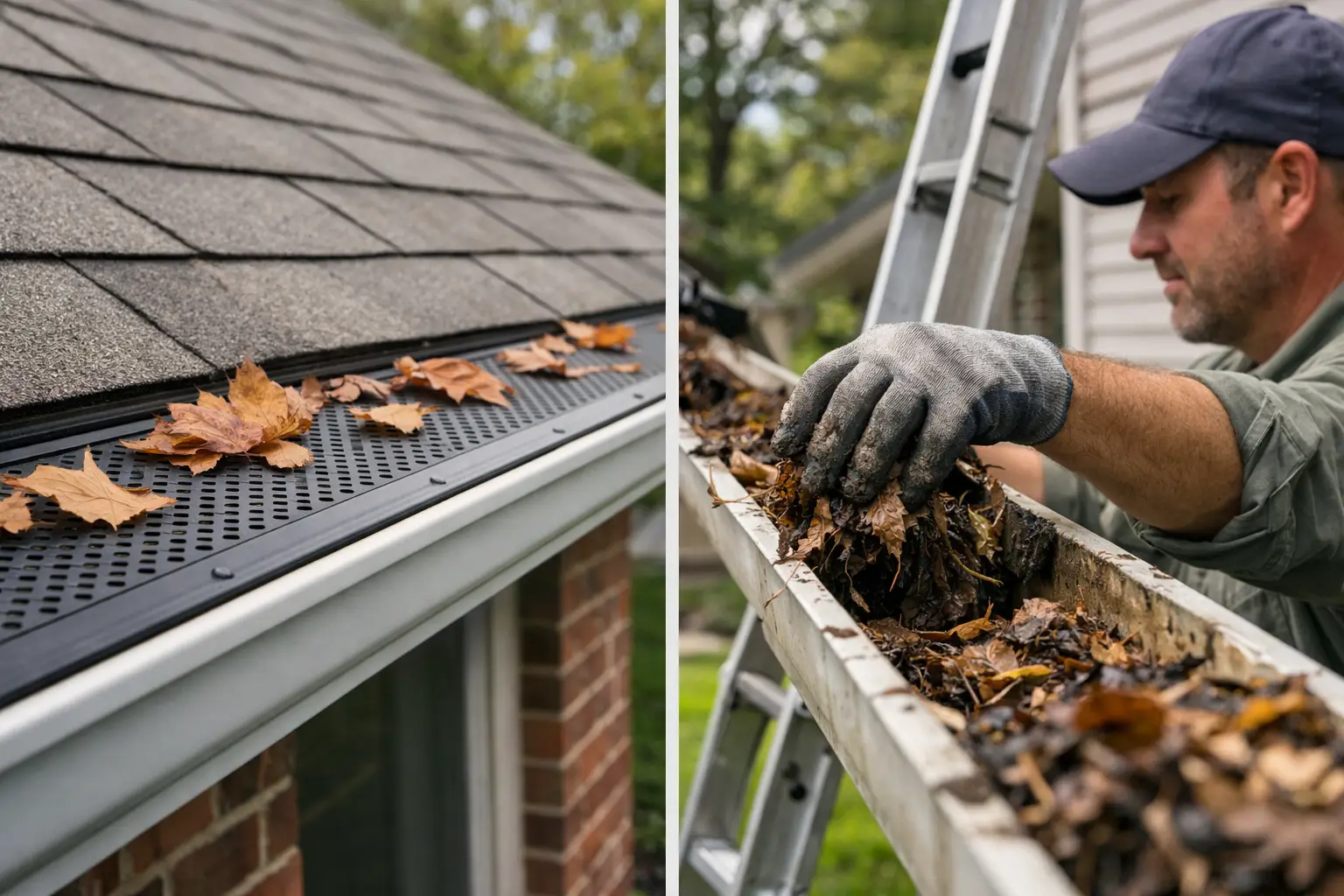
At the basic level, regular gutter cleaning means removing leaves, sludge, and debris so water can move the way it should. Gutter guards are covers or screens designed to keep a lot of that debris out in the first place.
The big mistake is thinking these are opposites. They are not. In many Illinois homes, gutter guards reduce cleaning, but they do not always eliminate it. That is where many homeowners run into trouble. They install guards, assume the job is done forever, and then ignore the system until overflow or sagging shows up.
A better way to think about it is this: cleaning is maintenance, while guards are a tool that can cut down on that maintenance if they are the right fit for the house.
When regular gutter cleaning makes more sense
For some homes, cleaning is the more practical option. If your house has very few overhanging trees, your gutters are easy to access, and buildup is light, a cleaning schedule may be all you need.
This can also make sense if your current gutters are older or already have alignment issues. Putting guards on a system that is loose, pitched the wrong way, or partly damaged does not solve the main problem. You are just covering up a gutter that still does not drain right.
Cleaning also gives you a chance to catch small issues before they get expensive. During a proper cleaning, you can spot separated seams, clogged downspouts, loose fasteners, or water marks near the fascia. Those things matter. You do not want water sitting near your foundation, backing up under shingles, or dripping onto walkways where it can create slippery spots.
The downside is pretty obvious. Cleaning has to happen again and again. In tree-heavy neighborhoods around Naperville, Downers Grove, and other western suburbs, that can mean more than once a year. If the homeowner is climbing a ladder to handle it, there is also a safety concern. For busy families, that alone is often enough reason to look at guards.
When gutter guards are worth it
Gutter guards usually make the most sense when a home gets hit with constant debris. If your roofline sits under mature trees, or if you are tired of repeated cleanings every season, guards can save time and reduce the mess.
They can also help water move more consistently during moderate rain because there is less material sitting inside the trough blocking flow. That matters in Chicagoland, where a sudden storm can dump a lot of water in a short time. Clean, functioning gutters help protect landscaping, siding, soffits, and the area around the foundation.
For homeowners who plan to stay in the house for a while, guards can be a good long-term upgrade. They are especially appealing if gutter maintenance keeps getting pushed down the to-do list. A lot of people are not ignoring the house. They are just juggling work, kids, travel sports, and everything else. If guards reduce one recurring headache, that has real value.
But they are not magic. Some products perform much better than others. And even good guards still need occasional inspection. Fine debris can collect on top, small particles can work their way through, and downspouts still need to be checked.
The trade-offs homeowners should know
This is where a straight answer matters. Gutter guards are not automatically better than cleaning, and cleaning is not always the cheaper decision long term.
If you only need a light cleaning once in a while, guards may not offer enough benefit to justify the upgrade. On the other hand, if your gutters clog constantly and overflow every fall, repeated cleanings can add up fast and still leave you dealing with water trouble between visits.
Roof type matters too. Roof pitch, shingle style, and the way water comes off the roof can affect how well a guard performs. In some cases, heavy rain can overshoot certain guard styles if the product is not matched well to the home. In winter, snow and ice can also change how the system behaves. In Illinois, this matters because freeze-thaw cycles can expose weak spots in both older gutters and poorly installed guards.
There is also the issue of expectations. If someone wants a truly maintenance-free system, that is probably not realistic. A good exterior setup should lower work and lower risk, but every system still needs some attention.
Gutter guards versus cleaning for Illinois homes
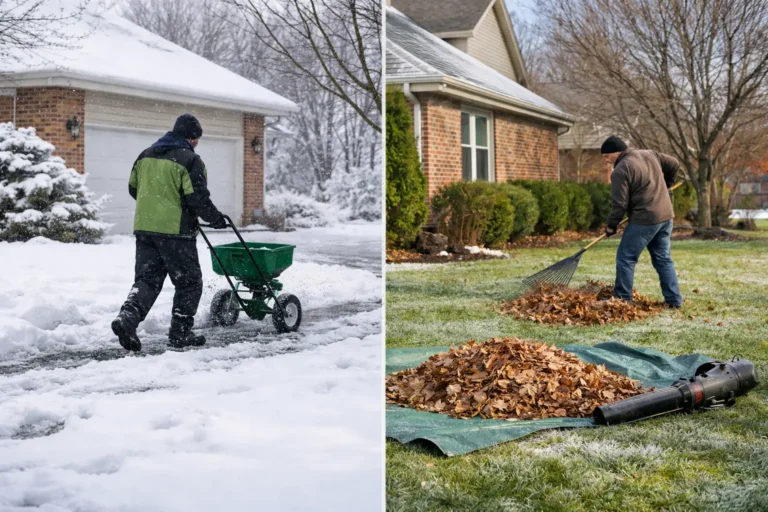
Illinois weather is part of this decision. We are not just dealing with leaves in October. We are dealing with spring seed drop, summer storms, fall leaf load, and winter ice. That seasonal cycle is hard on gutters.
In many Chicago suburbs, mature trees are one of the biggest factors. Older neighborhoods often have beautiful canopies, but they also drop a lot into the gutters. If your property gets hit with helicopters from maples, oak leaves, and small twigs, guards may be worth serious consideration.
At the same time, not every home in Chicagoland has the same exposure. A newer subdivision with fewer large trees may do just fine with scheduled cleaning and a good inspection plan. This is why a one-size-fits-all answer usually misses the mark.
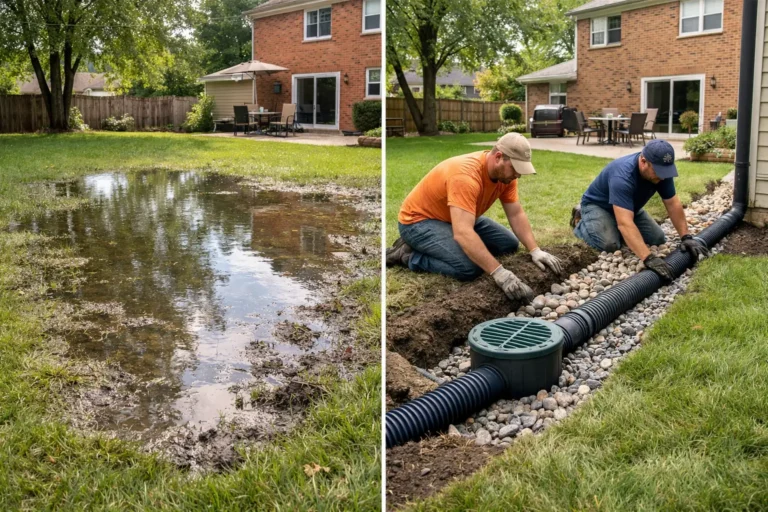
A good contractor should look at the whole picture, not just sell a product. Gutter condition, roofline, drainage around the house, and tree cover all matter. If water is already pooling near the foundation or washing out mulch beds, the conversation should include how the gutter system connects to the larger drainage setup. A good landscape should look nice, but it also needs to work.
How to decide what is right for your house
Start with your actual problem. If your gutters are mostly clean but you are worried about occasional buildup, cleaning may be enough. If they clog over and over, spill near entryways, or create drainage issues around the home, guards may solve a recurring problem.
Then think about how you use your time. Some homeowners do not mind seasonal upkeep. Others know it is not going to happen consistently, and they would rather invest in a system that cuts down on the work. Neither choice is wrong. It depends on the property and the homeowner.
It also helps to ask a few practical questions. Are your current gutters in good shape? Are downspouts draining where they should? Do trees overhang the roof? Have you seen overflow during storms? Is ice buildup a regular problem in winter? The answers will usually point you in the right direction.
If you do choose guards, the installation quality matters just as much as the product itself. Poor fit, loose sections, or skipped repairs underneath can lead to frustration fast. A local company that understands Illinois weather patterns and the way water behaves around Midwest homes will usually give you a more useful recommendation than a generic sales pitch.
For many homeowners, the best answer is not choosing one side in gutter guards versus cleaning. It is using the right system for the house and staying realistic about maintenance. Some homes benefit from quality guards plus occasional checkups. Others are better served by routine cleaning and minor repairs as needed.
What matters most is keeping water moving away from your home the way it should. That protects more than the gutters. It helps protect your roof edge, siding, landscaping, walkways, and foundation too. If you are not sure what your home needs, a simple on-site look can usually tell the story pretty quickly, and that peace of mind is worth a lot when the next heavy rain rolls through.