
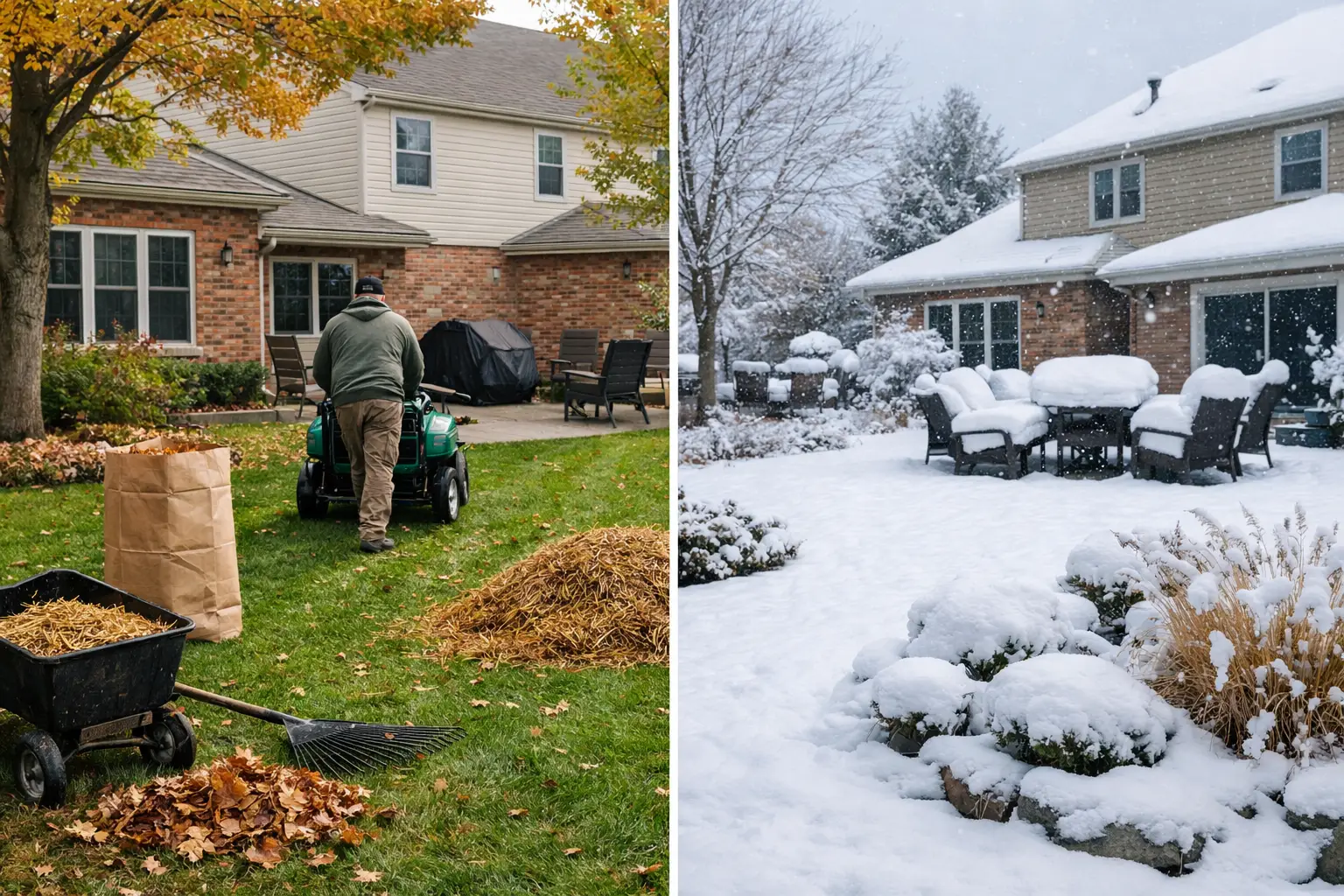
The first heavy snow can make a yard look clean and quiet overnight. Under that snow, though, wet leaves, compacted soil, low spots, and long grass can create a rough start to spring. The best time to prepare lawn for winter snow is before the ground freezes and before piles of plowed snow start landing along your driveway and walkways.
For Chicagoland homeowners, winter lawn care is less about making the grass look perfect and more about protecting the work you have already put into your property. A few well-timed steps in fall can help your lawn come back cleaner, greener, and with fewer muddy or patchy areas when the snow melts.
Start With a Clean Lawn Before Snow Arrives
Leaves are not harmless once they get soaked, matted down, and covered in snow. A thin layer may break down naturally, but a thick blanket can block sunlight and trap moisture against the grass. That is how many homeowners end up with yellow, thin turf or snow mold in spring.
Rake, blow, or mulch leaves regularly through the end of fall. Mulching works well when leaves are dry and scattered lightly enough for the mower to chop them into small pieces. If the lawn is buried under wet oak leaves or heavy piles from mature trees, removal is the better move.
This is also a good time to clear fallen sticks, toys, hoses, lawn decorations, and other items from the grass. Anything left out can get frozen into place, damaged by a snowblower, or create an obstacle when it is time to shovel. For busy families, a professional fall cleanup can take this whole chore off the weekend list and leave the property ready for the season.
Give the Grass Its Final Cut
Your final mow should happen when the grass has mostly stopped growing but is not frozen. In the Chicago suburbs, that is often sometime in late October or November, depending on the weather. There is no perfect calendar date because Illinois fall temperatures can swing fast.
Aim for a final grass height around 2 1/2 to 3 inches. Grass that is too long can fold over under snow, hold moisture, and become more likely to develop fungus. Cutting it extremely short is not the answer either. Very short grass has less energy stored in the roots and can be more exposed to winter stress.
Use a sharp mower blade. A dull blade tears grass instead of making a clean cut, and torn grass tips are more likely to brown. It sounds like a small detail, but clean mowing is part of keeping the lawn healthy going into a long Illinois winter.
Help Roots, Not Just the Top of the Lawn
Fall is one of the best times to support a cool-season lawn because grass roots remain active even after top growth slows down. A proper late-season fertilizer application can help the lawn store energy for winter and green up more evenly when spring arrives.
The key word is proper. Do not guess at the fertilizer type or pile it on because snow is coming. Too much fertilizer can create its own problems, and timing matters. A soil test is the most reliable way to see what your lawn actually needs, especially if it has recurring thin spots, poor color, or uneven growth.
Aeration may also help if the soil is compacted. Compaction is common in Naperville-area homes with active kids, pets, clay-heavy soil, or lawns that get a lot of foot traffic. Aeration pulls small plugs from the soil so water, air, and nutrients can move down toward the roots. It will not fix every lawn issue, but it can make a real difference when hard soil is part of the problem.
If you have bare areas, early fall is normally the best window for overseeding. By the time winter is close, new seed may not have enough time to establish. At that point, it is usually smarter to protect the existing lawn now and plan spring repairs once the ground has thawed.
Prepare Lawn for Winter Snow With Better Drainage
This is where many homeowners run into trouble. Snow itself is not usually the issue. The problem starts during the thaw, when melting snow has nowhere to go except across a lawn, onto a walkway, or toward the foundation.
Walk your property after a hard rain or during a late-fall thaw. Look for standing water, muddy traffic paths, water collecting near downspouts, and areas where the lawn stays soft long after the rest of the yard dries. You do not want water sitting near your foundation, and you do not want it repeatedly soaking the same part of your lawn all winter.
Check that gutters are clear and that downspouts direct water away from the house. If a downspout empties right beside the foundation or onto a walkway, snowmelt can turn that area into an icy mess. Gutter guards can reduce the leaf buildup that causes overflow, but they should be part of an overall drainage plan, not treated as a cure-all.
Some yards need a simple downspout extension. Others need grading changes, a buried drain line, or a catch basin to move water out of a low area. It depends on the slope of the yard, where the water starts, and where it can safely be directed. A good landscape should look nice, but it also needs to work when several inches of wet snow melt in a few days.
Protect Edges, Plants, and Hardscapes From Snow Removal
Before the first snowfall, mark the edges of driveways, paver walkways, retaining walls, and planting beds with visible snow stakes. This is especially helpful where grass meets pavement or where a curved paver edge disappears under snow. It helps prevent plows and snowblowers from chewing up turf or catching a landscape border.
Take a quick look at shrubs near driveways and walkways, too. Branches that hang into a shoveling path can get snapped by heavy snow or hit by equipment. Light pruning before winter can make access easier, although major pruning is best handled based on the specific plant and season.
Be thoughtful about where snow gets piled. Repeatedly stacking snow on the same lawn area can compact the soil and keep that spot cold and wet longer in spring. Avoid piling snow over small shrubs, young trees, landscape lighting fixtures, or drainage inlets. If you use ice melt, choose a lawn- and plant-friendlier product around grass and planting beds, and use only what is needed. Salt damage often shows up later as brown edges and weak turf near the driveway.
Do Not Create Problems With Late-Fall Watering
A lawn that goes into winter severely dry can be stressed, particularly after a dry fall. If rain has been scarce and the ground is still unfrozen, a deep watering may be useful. The goal is to moisten the root zone, not leave puddles behind.
Once regular freezing weather arrives, shut down and drain irrigation systems. Water left in lines can freeze and damage components. If you have an underground sprinkler system, professional winterization is a practical safeguard. It is one of those small seasonal services that can prevent a much bigger repair when spring comes around.
Keep Winter Traffic Off Frozen or Dormant Grass
After snow falls, try to keep foot traffic on cleared walkways instead of cutting across the lawn. Repeated steps can compact frozen grass and leave worn paths that become obvious at spring thaw. The same goes for parking vehicles or storing heavy materials on turf.
If you hire snow removal, clear communication helps. Point out delicate landscape areas, drainage structures, paver edges, and any locations where snow should not be stacked. A dependable crew should treat the lawn and hardscaping as part of the property, not just as space around the driveway.
For homeowners across the western suburbs, the most useful winter preparation is often a combination of cleanup, proper mowing, drainage attention, and a clear snow plan. Revive Your Lawn looks at the whole exterior picture because a clean lawn, safe walkway, working gutter system, and dry foundation area all affect one another.
Take a walk around the yard before the first real snowfall. If you spot water sitting where it should not, leaves packed into low areas, or edges that will be hard to find under snow, dealing with them now will make spring a lot easier to enjoy.


