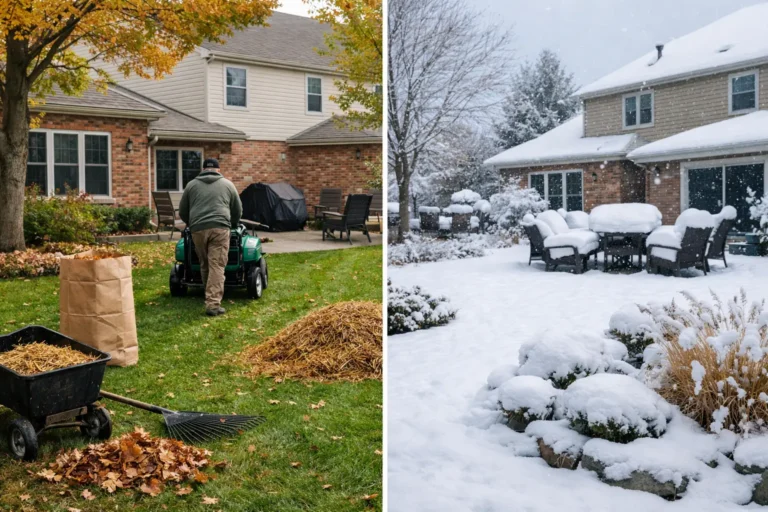
If you are asking, “when should lawn aeration happen?” the short answer for most Chicagoland lawns is fall. In the Chicago suburbs, September through early October is usually the sweet spot. Your grass is coming out of summer stress, the soil is still workable, and cool-season lawn grasses have time to recover before winter.
Aeration is one of those services that can make a lawn look better without changing its whole appearance overnight. It relieves packed soil, helps water move down to the roots, and gives grass room to thicken up. But timing matters. Aerating at the wrong time, or when the ground is too wet or too dry, can leave you with more work and less benefit.
When should lawn aeration happen in Chicagoland?
For most Illinois homes, plan on core aeration in early fall. A practical window is late August through October, depending on the weather and the condition of your yard. September is often ideal for Naperville-area homes, Downers Grove homeowners, and lawns throughout the western suburbs.
Most lawns here are made up of cool-season grasses, such as Kentucky bluegrass, perennial ryegrass, and fescue. These grasses grow most actively during the cooler weather of fall. When plugs are pulled from the soil at that time, the lawn can recover quickly and fill in before winter.
Fall aeration also works especially well when paired with overseeding. The small holes and exposed soil give new seed better contact with the ground. Instead of seed sitting on top of thatch or blowing into a landscape bed, it has a better chance to settle in and grow.
Spring can be a good second choice, usually from April into May, once the lawn is actively growing and the soil has dried out enough to work. It is helpful for lawns that missed fall service or have serious compaction after a long winter. The trade-off is that spring aeration may create open space for crabgrass and other weeds during the growing season. It also comes before summer heat, when a stressed lawn has a harder time bouncing back.
Why Illinois lawns get compacted
Our lawns go through a lot. Heavy clay soil is common in parts of Chicagoland, and it packs down easily. Add spring rain, summer foot traffic, kids playing in the yard, pets following the same path, and regular mowing, and the soil can become tight and hard.
When that happens, water does not soak in as easily. Grass roots stay shallow, fertilizer is less effective, and a lawn can look thin even when it is being watered and maintained properly. Homeowners sometimes respond by adding more seed or more fertilizer, but the real issue may be below the surface.
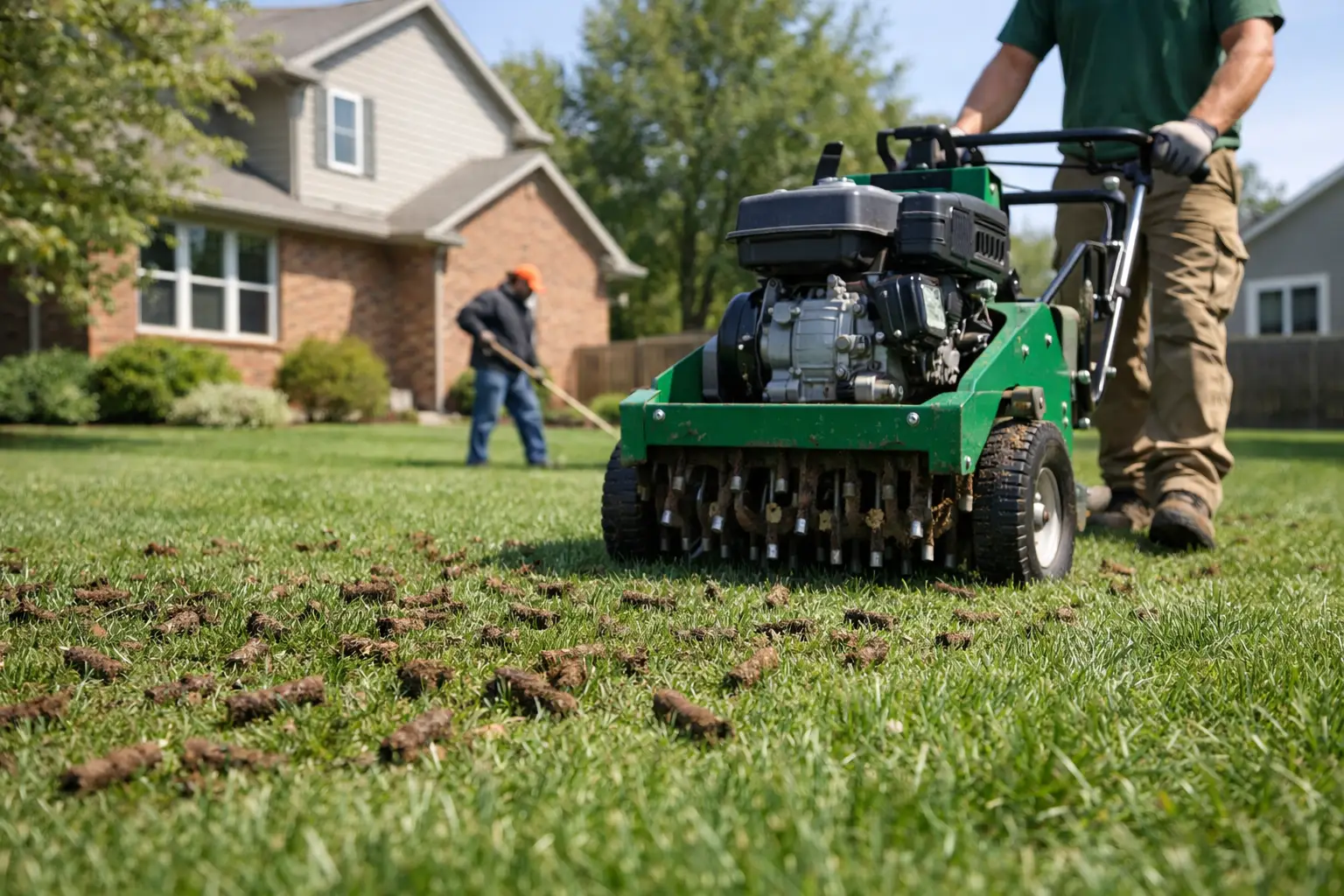
Core aeration removes small plugs of soil and turf from the lawn. Those plugs are normally left on the surface, where they break down naturally. The openings allow air, water, and nutrients to reach the root zone. This is different from simply poking holes with a spike tool, which can press already-compacted soil tighter around the hole.
Here’s what to look for
Not every lawn needs aeration every single year. A healthy lawn with lighter soil and little traffic may do well on an every-other-year schedule. But many suburban Illinois lawns benefit from annual fall aeration, especially if the soil is clay-heavy or the yard gets regular use.
Here are four signs it may be time:
- Water puddles or runs off instead of soaking in after a normal rain.
- The ground feels hard underfoot, especially near walkways, gates, patios, or play areas.
- Grass looks thin or weak even though you are mowing, watering, and fertilizing reasonably well.
- You have more than about a half-inch of thatch, the spongy layer of dead stems and roots between the grass blades and soil.
A simple test is to try pushing a screwdriver into moist lawn soil. If it is difficult to push in a few inches, compaction may be part of the problem. It is not a perfect diagnosis, but it is a useful clue.
Aeration is helpful, but it does not fix every water issue
This is where many homeowners run into trouble. A lawn that stays wet is not always compacted. Sometimes the grade slopes toward the house, a downspout empties too close to the foundation, or low spots collect water after every storm.
Aeration can help water move through the top layer of soil, but it will not correct a yard that is pitched the wrong way or a drainage system that is undersized. You do not want water sitting near your foundation, and you do not want to keep aerating a muddy area without finding out why it stays wet.
If the same places remain soggy, bare, or soft each spring, it makes sense to look at the bigger picture. Grading, downspout routing, catch basins, drain tile, or a better landscape plan may be part of the answer. A good landscape should look nice, but it also needs to work when Illinois weather brings several inches of rain in a short stretch.
Conditions that can make aeration a bad idea
Even during the right season, the ground conditions need to be right. Soil should be slightly moist, not muddy. Aerating a saturated lawn can cause ruts, tear turf, and compact the soil further under heavy equipment. On the other hand, bone-dry soil can make it difficult for the machine to pull good plugs.
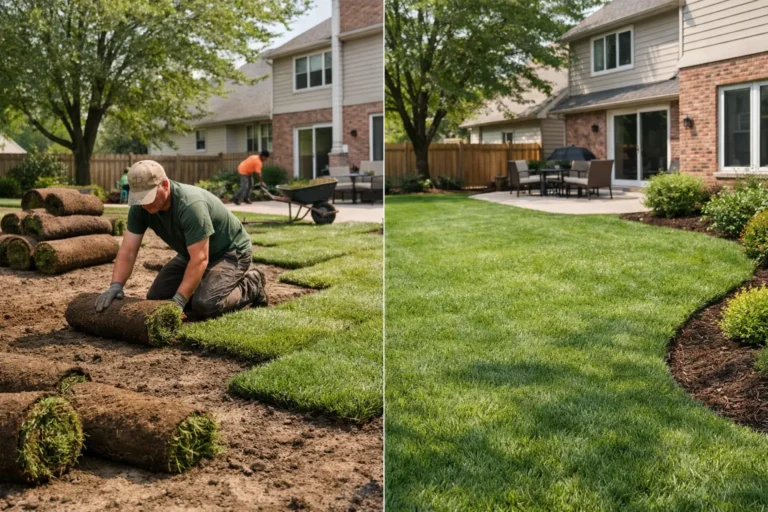
It is also wise to hold off during a major heat wave or drought. Grass already under stress does not need another challenge. If you have recently installed sod, give it time to root firmly before aerating. New lawns usually need a full growing season before they are ready.
If you are treating weeds, plan the schedule carefully. Pre-emergent weed control can interfere with new grass seed after aeration. If you want to overseed, the lawn care plan needs to account for that so you are not paying for seed that cannot establish.
Make the most of fall aeration
Aeration does its best work as part of a simple fall lawn plan. Mow the grass a little shorter than usual beforehand, but do not scalp it. Mark sprinkler heads, shallow cables, invisible dog fence lines, and any other buried items so they are protected.
After aeration, overseeding is often worthwhile if the lawn is thin or has bare patches. A good grass seed blend suited to the Chicago suburbs can help improve density and color over time. Watering matters most during the first few weeks after seeding. Keep the top layer of soil consistently damp until seedlings are established, then gradually shift to deeper, less frequent watering.
The soil plugs may look messy for a week or two, but leave them alone. Rain, mowing, and normal lawn activity will break them apart. They return soil and organic matter to the lawn, which is exactly where they belong.
How often should a lawn be aerated?
For a typical established lawn in the Chicago suburbs, once a year in fall is a solid plan if you have compacted clay soil, active kids or pets, frequent lawn use, or a history of thinning turf. Every two years may be enough for a lawn with healthy soil, limited traffic, and strong grass coverage.
There is no benefit to aerating just because the calendar says so. The condition of the lawn should lead the decision. A quick walkthrough can usually show whether the issue is compaction, thatch, drainage, shade, poor soil, or a combination of problems.
A lawn should not feel like another weekend project that never ends. If your grass looks tired, water is sitting where it should not, or the soil feels packed hard, fall is a good time to take a closer look and give the roots the breathing room they need.